Rwanda needs about $12 billion to implement its climate action plan through 2035, with most of the financing expected to depend on international support, Prime Minister Dr Justin Nsengiyumva has said.
The funding is intended to support the country’s target of reducing greenhouse gas emissions by up to 53 per cent below projected business-as-usual levels by 2035, alongside measures to protect communities and the economy from climate change.
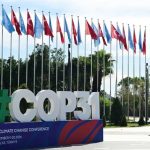
Speaking at the high-level segment of the 31st United Nations Climate Change Conference (COP31) in Antalya, Türkiye, on November 12, Nsengiyumva put the financing requirement at Rwf17.95 trillion.
He said Rwf14.36 trillion, representing 80 per cent of the total, would need to come from international support, while the remaining Rwf3.59 trillion would be mobilised through other investment sources.
Rwanda’s third Nationally Determined Contribution (NDC 3.0), submitted under the Paris Agreement in December 2025, estimates the country’s climate investment needs at approximately $12.03 billion through 2035. Of this, about $7.07 billion is allocated to adaptation measures, while $4.96 billion is intended for reducing emissions.
The 53 per cent emissions-reduction target comprises a 7 per cent unconditional reduction that Rwanda intends to finance domestically and a further 46 per cent conditional on international support. Both are measured against projected business-as-usual emissions, rather than current emissions.
Nsengiyumva called for changes in how investments in developing countries are assessed, arguing that projects in the Global South should not automatically be considered riskier than those in wealthier countries.
He said investment decisions should be based on the potential and merits of individual projects rather than the countries where they are located. Governments and private businesses, he added, should work together to make viable projects attractive to investors, expand access to finance and secure affordable capital without pushing developing countries into unsustainable debt.
The Prime Minister also called for progress in international negotiations on the Global Goal on Adaptation, particularly the development of indicators to clarify the support developing countries need and how the financing should be provided.
Rwanda plans to use its 2027 chairmanship of the Group of 77 and China to strengthen cooperation among developing countries and advance outstanding issues in climate negotiations.
Nsengiyumva also highlighted the Kigali Amendment to the Montreal Protocol, which seeks to phase down hydrofluorocarbons (HFCs), powerful greenhouse gases widely used in refrigeration and air conditioning.
He said the amendment had been ratified by 175 of the 198 parties to the Montreal Protocol. The latest available UN Ozone Secretariat record, however, puts the number at 176 as of October 23, 2026.
Full implementation of the amendment could prevent up to 0.5 degrees Celsius of global warming by 2100. Combined with improvements in cooling energy efficiency, the climate benefits could reach approximately one degree Celsius.
The Prime Minister urged countries that have not yet ratified the amendment to join the agreement, saying international climate commitments should be matched by practical action.