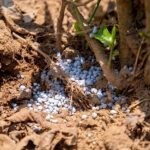
Farmers in Rwanda who have adopted conservation agriculture say the approach has significantly increased their crop yields, with some reporting harvests several times higher than those achieved through traditional farming methods.
At a gathering of about 450 farmers, researchers, government officials, private-sector representatives and development partners at the Rwanda Institute for Conservation Agriculture (RICA) on Thursday, November 12, farmers shared their experiences as participants discussed how to expand the practice across the country.
Nyirambonimpa Saidat, a farmer from Kirehe District who received training from RICA, said her harvests increased sharply after she changed the way she cultivated her land.
She said that when she relied on traditional farming methods, using a hand hoe to dig the soil, she harvested about 30 kilogrammes of maize and 20 kilogrammes of beans from five ares of land.
After adopting conservation agriculture, she said the same plot produced up to 300 kilogrammes of maize and 280 kilogrammes of beans when weather conditions were favourable.
“I used to cultivate five ares and harvest 30 kilogrammes of maize and 20 kilogrammes of beans. After RICA trained me in conservation agriculture, I now harvest up to 300 kilogrammes of maize and 280 kilogrammes of beans from the same area when the weather is favourable,” she said.
She said the techniques included avoiding deep digging, making planting holes and covering the soil with crop residues to retain moisture and reduce erosion.
Tuyizere Emmanuel, another farmer trained by RICA, said his maize harvest increased from about 25 kilogrammes to more than 70 kilogrammes per are after adopting soil-conservation practices, including mulching and applying organic and inorganic fertilisers.
Nteziryayo Ignace, a member of a farmers’ organisation in Rwanda, said the approach had also improved his production but called for greater government investment to make it accessible to more farmers.
RICA president Momar Dieng said agriculture continued to face challenges from soil degradation, erosion and climate change. Citing Rwanda’s 2025 Nationally Determined Contribution (NDC 3.0), he said more than one million hectares were at high risk of erosion, with an average of 25 tonnes of topsoil lost annually per hectare.
He said conservation agriculture was based on three principles: minimising soil disturbance, keeping the soil covered and rotating crops.
Dr. Olivier Kamana, the Permanent Secretary of the Ministry of Agriculture and Animal Resources said wider adoption would require farmers, particularly smallholders, to have better access to equipment, agricultural inputs, credit, training and markets.
He urged government institutions, financial institutions, private businesses and development partners to coordinate efforts to address those barriers.
Kamana said the success of the approach should ultimately be measured by the number of farmers adopting it, improvements in soil protection and the resulting increase in sustainable agricultural production.