Rwanda is strengthening its weather observation and forecasting systems to improve disaster preparedness and provide information for economic planning, as countries at the COP31 climate conference in Türkiye discuss the need for greater investment in climate data.
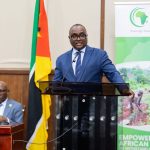
Environment Minister Dr Bernadette Arakwiye and Meteo Rwanda Director General Aimable Gahigi highlighted the country’s efforts during discussions organised by the World Meteorological Organization (WMO) in Antalya. The session examined how investment in weather and climate information can protect communities and support better decisions on public and private investment.
“Climate information is essential for forecasting and preparing for extreme weather conditions caused by climate change,” Arakwiye said.
Environment Minister Dr Bernadette Arakwiye
Reliable weather information helps authorities prepare for hazards such as floods, droughts, heavy rainfall and extreme heat. It is also important for farmers planning planting and harvesting seasons, and for engineers and urban planners designing roads, bridges and buildings that can withstand changing weather conditions.
Rwanda is investing in this capacity through a four-year project supported by the Systematic Observations Financing Facility (SOFF), with funding of $3.5 million. The initiative began in 2024 and is being implemented by the Rwanda Meteorology Agency, known as Meteo Rwanda, with the United Nations Development Programme (UNDP) serving as the implementing entity and WMO providing technical support and guidance.
The project aims to close gaps in the country’s collection of weather and climate observations and strengthen Rwanda’s contribution to the Global Basic Observing Network (GBON), a WMO-coordinated system for exchanging essential weather data internationally.
Progress has already been made. Three surface weather stations have been upgraded, increasing the number of Rwanda’s stations meeting GBON requirements from one to four by the end of 2025. The country also inaugurated its first automatic upper-air weather station in Huye in June 2026, allowing it to collect atmospheric information at different altitudes to improve forecasting.
The upper-air station collects observations twice daily. Such information, including temperature, humidity, wind and atmospheric pressure, helps meteorologists understand weather systems more accurately. Rwanda has also begun sharing surface observations internationally through the WMO Information System.
The investment comes as WMO uses COP31 to press for sustained funding of weather observation networks, forecasting services and early warning systems. The organisation says reliable observations are essential not only for predicting extreme weather but also for climate adaptation and investment decisions.
COP31 runs from November 9 to 20 in Antalya, Türkiye, bringing governments and climate organisations together to discuss measures to address climate change.