Rwandan teenager shines in one of America’s toughest cycling climbs as he takes on a historic mountain route that has tested professionals for decades
Rwandan teenager shines in one of America’s toughest cycling climbs as he takes on a historic mountain route that has tested professionals for decades
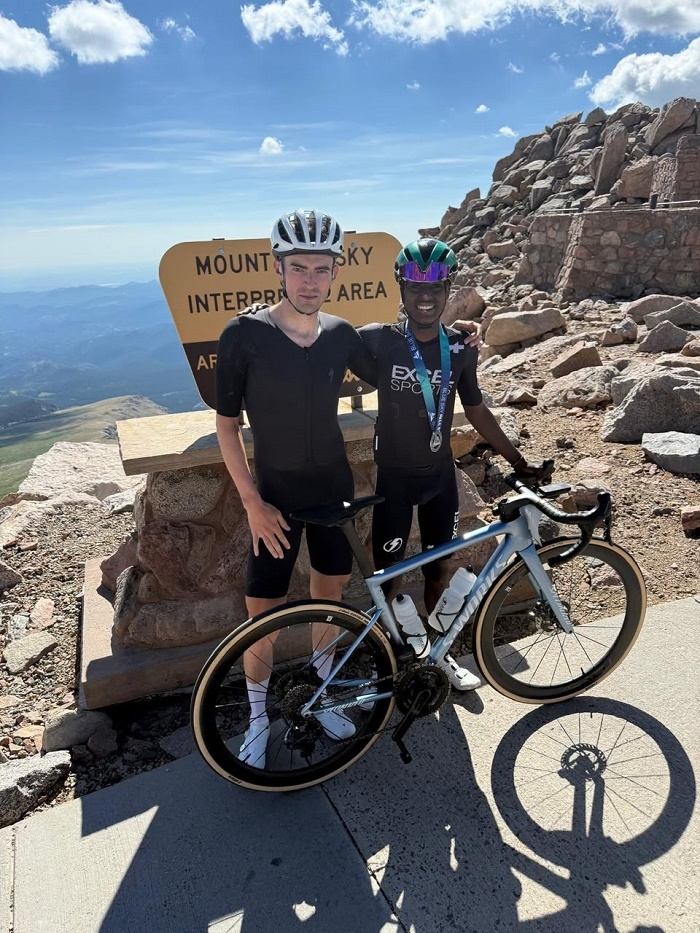
When Jonathan Muhawenimana reached the summit of Mount Blue Sky in Colorado, he was not only completing one of the most demanding climbs in American cycling — he was adding another chapter to Rwanda’s growing presence on the international cycling stage.
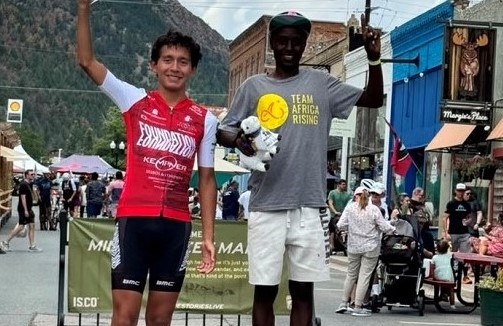
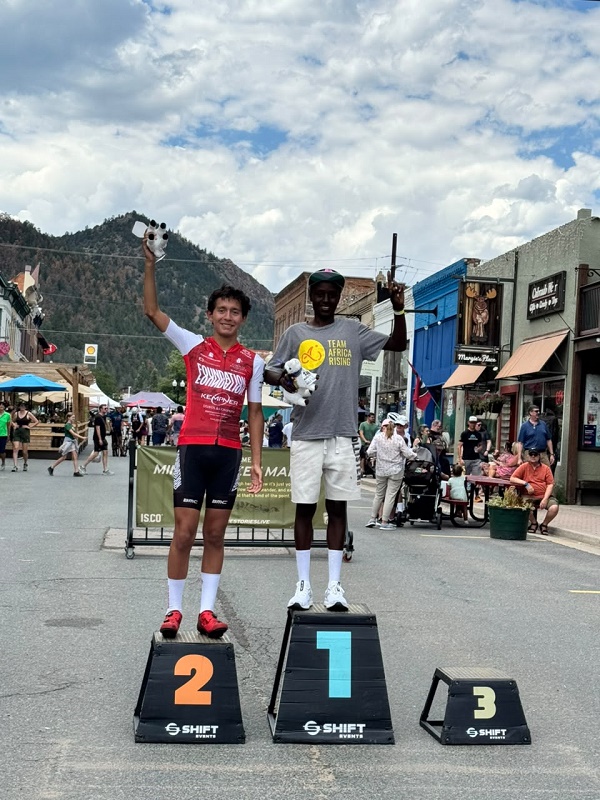
The 18-year-old Rwandan rider conquered the 27.4-mile Bob Cook Memorial Blue Sky Hill Climb on Saturday, winning the under-18 category after battling a steep ascent that rises more than 6,600 feet to the top of Mount Blue Sky, which stands at 14,130 feet above sea level.
Muhawenimana completed the climb in 2 hours, 20 minutes and 24.6 seconds, overcoming one of the biggest challenges of the course, the thin air at high altitude.
“It was pretty gradual at the start, I felt good, I’ve done good training for it,” Muhawenimana said. “But after Echo Lake, I started feeling the altitude. It was an experience; I’ve never been to high altitude. At one point, I thought my bike computer was broken.”
For the young Rwandan cyclist, the race was another step in a journey that has taken him from Rwanda’s cycling development programmes to international competitions in the United States.
Muhawenimana is part of Team Africa Rising, an organisation that develops cycling talent, mechanics and support systems across Africa. The programme has roots in Rwanda’s cycling revolution, which began attracting international attention in the mid-2000s.
Jonathan Boyer, executive director of Team Africa Rising, first visited Rwanda in 2006 and later returned in 2007, selecting the first riders for what became Team Rwanda Cycling. One of those early riders was Muhawenimana’s father, Rafiki.
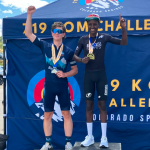
There is also a small coincidence that has not escaped those around them; both mentor and rider (picured above) share the same first name: Jonathan. people sometimes need to ask twice to know which Jonathan they are talking about.
Boyer said he has followed Jonathan’s progress since childhood and believes his qualities set him apart.
“He’s got a really high watts-per-kilo, he’s dedicated, he’s been riding since he was four, so he’s very agile,” Boyer said. “He does mountain, gravel and road bike, so he’s very unique in that respect.”
Veteran Rwandan journalist Peter Habimana, who has followed the country’s cycling journey for two decades, believes Jonathan Muhawenimana is benefiting from being guided by one of the people who helped shape Rwanda’s cycling story.
“The teen cycling is in good hands. Having Boyer the executive director alongside him is a huge advantage because it can take a whole day to fully describe what Boyer has done for Rwandan cycling,” Habimana said.
“Boyer has been with Muhawenimana since he was a child. He introduced him to his first bicycle, watched him grow, and is now helping shape his future, just like he did with Adrien Niyonshuti, Rwanda’s first Olympic mountain biker and professional cyclist, and many other riders.”
Habimana says Boyer’s influence on Rwandan cycling is still visible today, even after his departure.
“The gap he left behind is there for everyone to see. After Boyer left, we saw the sport lose some of the momentum it had built. During his time in Rwanda, the country produced Tour du Rwanda champions, he built a develpment program and established important structures, including the cycling federation (FERWACY). Muhawenimana has the right person beside him, and that gives him a strong foundation for the future.”
There is also a small coincidence that has not escaped those around them; both mentor and rider share the same first name: Jonathan. Habimana joked that with Boyer and Muhawenimana together; people sometimes need to ask twice to know which Jonathan they are talking about.
Muhawenimana spends most of his season competing in Rwanda while balancing school at an American international school near his home. He has travelled to the United States for three consecutive summers to gain racing experience and prepare for bigger challenges.
Before tackling Mount Blue Sky, he competed in Steamboat Gravel and Ned Gravel races in Colorado. His next major target is the Junior Road Cycling World Championships, for which he has now shifted his training focus.
The Bob Cook Memorial Blue Sky Hill Climb returned this year after a two-year interruption caused by a major road construction project on the Mount Blue Sky Scenic Byway.
The Colorado Department of Transportation closed the road during a 20-month repair project, preventing cyclists from reaching the mountain summit. The closure meant riders had to wait before returning to one of the most iconic uphill races in the United States.
The event, first held in 1962, honours Bob Cook, a five-time winner who died from cancer at just 23 years old.
Cyclists wind their way up the Mount Blue Sky Scenic Byway on Saturday during the Bob Cook Memorial Blue Sky Hill Climb. Reid Neureiter/ Courtesy photo
Over the decades, the race has attracted some of cycling’s biggest names, including Olympic gold medalist Alexi Grewal and professional riders who competed in the Tour de France.
This year’s edition attracted 836 cyclists across professional, open and age-group categories, all facing the same unforgiving challenge: a long climb from Idaho Springs to the summit of Mount Blue Sky.
The route begins with a gradual section before becoming increasingly difficult as riders approach higher elevations. The final kilometres test endurance, strength and the ability to cope with reduced oxygen levels.
Rwanda’s next generation
Muhawenimana’s performance in Colorado highlights Rwanda’s continued investment in cycling development.
Over the past two decades, Rwanda has built a reputation as one of Africa’s strongest cycling nations, producing riders like Adrien Niyonshitu who compete at international level and using the sport as a pathway for young athletes.
For Muhawenimana, the Mount Blue Sky challenge was not only about winning his category. It was about gaining experience on one of cycling’s toughest stages and preparing for future battles on the world stage.
Credit: This story was adapted from reporting by Ryan Summerlin of Vail Daily, who covered the 2026 Bob Cook Memorial Blue Sky Hill Climb.