Hills climbed. Jerseys won. Dreams lifted. Glory faded. Coaches came. Riders left. Stages conquered and lost. Crowds cheered and waited. The Yellow slipped away, season after season, until only memory and hope remained on our roads.
When the curtain fell on the 2026 Tour du Rwanda on Sunday, March 1, and German rider Moritz Kretschy stepped onto the podium in Yellow, the celebrations were loud and deserved. The crowds were electric. The race had delivered drama.
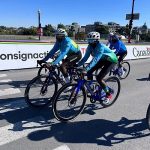
With the race just behind us, one question lingers over Rwanda’s cycling hills: in a country where cycling runs through every valley and ridge, why are our riders no longer winning on home roads? Not the overall title. Not even a single stage.
Where is the next Joseph Areruya? The next Valens Ndayisenga? The rider capable of controlling a breakaway instead of chasing one?
To understand today’s reality, we must look back, and in doing so, pay quiet tribute to what came before. The modern story of Rwandan cycling began in mid-2000s with Jonathan “Jock” Boyer. The former Tour de France rider didn’t just bring structured training; he brought belief. He discovered raw talent scattered across the land of a thousand hills and shaped it into something competitive, something that once carried the hopes of our nation.
One of those riders was Adrien Niyonshuti. Quiet, disciplined, relentless. He would go on to become Rwanda’s first professional cyclist in Europe and the first Rwandan cyclist to compete at the Olympic Games, in London 2012 and Rio 2016. That moment mattered. It told young riders that the land of thousand hills could belong on the global stage.
And the results followed.
Faustin Mparabanyi lit early sparks in the 1990s. Abraham Ruhumuriza dominated the 2000s with five Tour du Rwanda victories. Then came Valens Ndayisenga, who restored national pride between 2014 and 2018, winning the Yellow Jersey when the race was still within reach of local strength.
Joseph Areruya, 2017 Tour du Rwanda champion and 2018 African Cyclist of the Year not forgetting Janvier Hadi (prologue stage winner), these riders carried that momentum forward. In 2017, they didn’t just win, they proved riders from this small country could still dominate as the race’s level began to rise. Janvier Hadi, who twice won prologue stages at the Tour du Rwanda, brought home a gold medal at the 2015 African Games, they trained in Europe, gaining exposure that few before them had experienced.
Moïse Mugisha, too, became a symbol that many thought could carry the national flag not until not until the reality of the modern Tour began to bite. After Stage 6 in this year’s race, where he finished deep in the pack and far from contention, some fans half-joked that Mugisha is now a symbol of consistency rather than contention, always present, always fighting, but no longer frightening the favorites.
Well, his {Mugisha} 2022 stage victory, even if shaped by sportsmanship from rivals, reminded fans that Rwandan riders still had to fight. But that moment also quietly exposed the deeper issue: isolated wins are no substitute for sustained competitiveness.
Since 2019, when the Tour du Rwanda graduated to UCI Class 1 status, the race has politely informed us that the old rules no longer apply. Believe it or not, this isn’t the same Tour Ruhumuriza and Ndayisenga once ruled, this one comes with bigger engines, deeper benches, and very little mercy.
And so, with due respect, we may need to hold a small, symbolic farewell for the era of “a Rwandan will win it this year.” It served us well. It gave us hope every February. But the modern peloton has other ideas.
Realistically, it will take time, real time, before a local rider lifts that Yellow Jersey again. Not because Rwanda lacks heart, but because today’s Tour du Rwanda demands structure, depth, and experience that can’t be rushed.
The dream isn’t dead. It’s just in long-term development mode.
The Level Has Changed; And So Has the Gap
Today’s Tour du Rwanda is not the race Joseph Areruya or even early-career Hadi Javier dominated. It attracts professional squads with budgets, sports scientists, race strategists, and riders who spend most of the year competing in Europe, Asia, and on the continent.
Look at Eritrea.
While Rwanda is asking where its next star will come from, Eritrea is celebrating Biniam Girmay’s Tour de France stage wins. They are applauding Henok Mulubrhan’s continental dominance. They are backing Merhawi Kudus, who has raced consistently at WorldTour and ProTeam level.
And it doesn’t stop there.
Natnael Tesfatsion rides for Lidl-Trek. Young talents like Mewael Girmay are already in structured European development systems. These riders are not waiting for experience; they are living it every season. Just look at the continental rankings.
As one commentator on Rwanda Broadcasting Television (RBA) recently put it, Eritrea’s cycling strength may trace back to its Italian colonial past that Italy planted a cycling seed long ago. Whether or not that’s the full story, today Eritrea looks less like a country borrowing a sport and more like a tree bearing its own fruit, deep roots, strong branches, and champions ripening season after season.
The era when home advantage alone was enough is gone. That chapter has closed. Today’s Tour du Rwanda belongs to systems, structure, and sustained exposure. Rwanda is still building toward that reality.
That professional exposure changes everything. It sharpens race instinct. It builds tactical intelligence. It creates riders who understand how to suffer strategically, not just physically.
Rwandan riders train hard. No one questions that.
But training is not racing.
And over the last two years especially, the local competitive calendar has been thin. Fewer international races. Fewer invitations abroad. Long gaps between high-level competition. That matters more than people admit.
You cannot simulate race pressure on a training ride in Musanze, Nyagatare, Rubavu or Nyamata. You learn positioning by fighting for it. You learn timing by getting it wrong first. You learn how to defend a leader by doing it repeatedly against better teams. That is what Eritreans have mastered.
Right now, our local riders simply do not get enough of those repetitions, and we may need to quietly mourn that lost rhythm, that vanished era when constant racing built instinct as naturally as the sun rises.
There are real efforts underway.
The Youth Racing Cup has introduced monthly competition for boys and girls aged 11 to 19. The Field of Dreams facility in Bugesera, supported through international partnerships, gives young riders structured circuits to develop handling skills and tactical awareness.
This is important work. It’s foundational work.
But development in modern cycling requires layers, grassroots racing, junior competition, continental exposure, European stints, performance analysis, nutrition programs, recovery science, and certified coaching systems that evolve with the sport.
That’s where our local cycling still trails.
The Coaching Question
Allow me to say this: coaching rarely gets the spotlight, unlike in football, and maybe that’s the unsung lament of cycling, where the right guidance can make the difference between promise and podium.
Cycling has changed. Data drives training, thanks to Team African Rising Cycling. Recovery is monitored. Tactics are rehearsed. Performance is measured in watts and marginal gains.
Rwanda’s technical bench has experience, yes. But experience alone is not enough in 2026. Coaches must constantly refresh, certify, and evolve. Modern systems require updated UCI training pathways, exposure to international workshops, and collaboration with sports science professionals.
Contrast that with Adrien Niyonshuti’s trajectory. After retiring from pro racing, he took up coaching, opened up a cycling academy internationally and now leads Benin’s national program, applying lessons learned from professional racing in Europe. That pipeline, from rider to internationally trained coach, strengthens systems.
At one point, I remember asking former coach Jock Boyer why he chose Adrien Niyonshuti over Janvier Hadi, even though Hadi had qualified Rwanda for the Olympics. With a quiet, thoughtful tone, he said simply: “Adrien has more experience, he can finish the race.” That brief answer spoke volumes, it was a lesson in why coaching matters, the kind of guidance that can shape a rider’s career, weigh tough decisions, and turn raw talent into results.
Rwanda needs more of that continuity. Coaches like Sempoma Felix bring invaluable experience, but even the best need to sharpen their tools from time to time. Think of it like a master carpenter: experience guides the hand, but a fresh plane and saw make the work sharper and stronger. Investing in coach development ensures riders get the guidance they need to compete at the highest level.
Not criticism. Evolution.
Because if riders are expected to compete at WorldTour pace, their support structures must operate at similar standards.
So Where Does the Next Champion Come From?
That’s the quiet question circulating in local cycling circles.
Who is the next Areruya?, The next Ndayisenga or Niyonshuti?. The next rider capable of controlling a breakaway instead of chasing one?
The talent exists. Shadrack Ufitimana and others from the youth ranks show promise. The passion is unquestionable. The fan base remains unmatched in Africa.
The path ahead will demand more than hope, Building a future for domestic cycling will require steady international racing, clear professional pathways abroad, coaches who constantly sharpen their craft, and structured performance systems from junior to elite.
At the center of it all, patience,FERWACY must take the wheel, guiding the next generation so that local riders no longer ride in the shadow of others.
Because dominance is no longer cyclical. It’s structural. Rwanda once shocked the continent. Eritrea has since built a machine.
The next chapter for our local cycling will depend on whether it builds one too.
And when that Yellow Jersey finally returns to local shoulders, it won’t just be a victory for one rider.
It will be proof that the system worked.