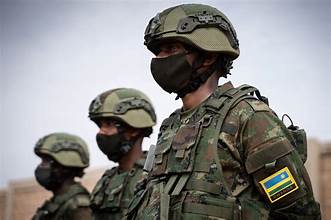
In a diplomatic move that has raised tensions; the Trump administration has imposed sanctions on the Rwanda Defence Force (RDF) and four of its senior commanders, following accusations of military support for the M23 rebel group in eastern Democratic Republic of the Congo (DRC). The sanctions come amidst escalating violence in the region, with both sides accusing each other of breaching ceasefire agreements.
On March 2, 2026, the U.S. Treasury announced sanctions targeting the RDF as an institution, along with four high-ranking Rwandan military officials: Chief of Defence Staff Gen. Mubarakh Muganga, Army Chief of Staff Maj. Gen. Vincent Nyakarundi, Maj. Gen. Ruki Karusisi, and Special Operations Force Commander Stanislas Gashugi.
The U.S. government has accused the RDF of providing operational support to the M23, a rebel group that has been active in eastern Congo for over a decade. Washington stated that Rwanda’s actions violated commitments made under the Washington Accords, a peace agreement signed between Rwanda and DR Congo on December 4, 2025, aimed at ending the violence and establishing stability in the region.
“We demand the immediate withdrawal of Rwandan Defence Force troops, weapons, and equipment from the region,” said Scott Bessent, U.S. Treasury Secretary, emphasizing the need for Rwanda to respect its obligations under the peace agreement.
However, Rwanda has strongly rejected the sanctions, labeling them as an unfair and one-sided response to the conflict. The Rwandan government issued a statement on Monday, accusing the U.S. of misrepresenting the facts of the situation in eastern DRC and failing to take into account the broader context of the conflict.
“The sanctions issued today by the United States unjustly target only one party to the peace process,” the statement said, “misrepresenting the reality and distorting the facts of the conflict in eastern Democratic Republic of Congo.”
Rwanda argued that it is acting in defense of its national security, noting that the country has long faced threats from armed groups operating from DRC territory. According to the Rwandan goverment, the Congolese coalition, which includes foreign mercenaries, local militias known as Wazalendo, and the genocidal Democratic Forces for the Liberation of Rwanda (FDLR), continues to pose a significant threat to Rwanda’s security.
The Rwandan government pointed out that under the Washington Accords, DR Congo had committed to an “irreversible and verifiable end to state support for the FDLR and associated militias.” However, Rwanda claims that DR Congo has failed to take meaningful steps to fulfill this commitment, which it views as essential to ensuring peace in the region.
“Protecting our country is a badge of honor which the Rwanda Defence Force carries very proudly,” the Rwandan statement added, stressing that Rwanda’s involvement in the DRC conflict is driven by national security concerns.
Rwanda also accused DR Congo of violating the ceasefire agreements through ongoing “indiscriminate drone attacks and ground offensives” that have resulted in civilian casualties. The statement highlighted the recent escalation of violence in the Minembwe region, where Congolese forces have carried out drone strikes against Banyamulenge villages, exacerbating the humanitarian crisis.
In response, the spokesperson for the M23 rebel group, Lawrence Kanyuka, condemned the Congolese attacks, calling them “deliberate and sustained.” Kanyuka reiterated M23’s commitment to protecting civilians and defending their land from what he described as “terror” imposed by the Congolese government.
“The M23 will defend every threatened land and protect civilians from the terror imposed by Kinshasa,” Kanyuka said in a statement, further complicating the situation as Rwanda’s allies in the conflict face continued accusations of human rights violations.
Despite these tensions, Rwanda has maintained that it remains committed to the peace process, urging for an “even-handed approach” from international partners in addressing the situation. Rwanda’s government reiterated that it is ready to disengage its forces, provided DR Congo also implements its obligations under the Washington Accords.
“We are fully committed to disengagement, but it must be done in tandem with the DRC fulfilling their obligations,” the statement concluded. “We call for an even-handed approach from all partners involved in the peace process.”
As the conflict continues to rage in eastern Congo, international observers and diplomats are calling for renewed dialogue between Rwanda and DR Congo, as well as a more balanced approach from global powers to address the underlying issues driving the violence.
The situation remains volatile, and while the U.S. sanctions are seen as a direct challenge to Rwanda, they have also sparked renewed calls for peace and accountability from both sides of the conflict.