Thirty-two years ago, Rwanda’s agriculture lay in ruins. The 1994 Genocide against the Tutsi had torn families and communities apart, displaced millions and disrupted the livelihoods of a country where farming was, and remains, the backbone of the economy. Survival came before farming. The question was not how big the harvest would be, but who was still alive.
When World Vision began working in Rwanda in 1994, it focused on life-saving emergency
interventions, supporting displaced communities and helping reunite children with their families. As the country rebuilt its institutions and communities, the organisation gradually shifted from emergency relief to long-term development.
By 2000, it had established area programmes spanning education, child sponsorship, health and nutrition, water, sanitation and hygiene, and household economic empowerment. Today, agriculture is increasingly at the centre of that empowerment effort.
Building resilience through agriculture
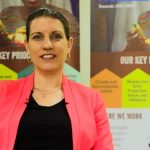
“Our approaches are community- led,” says Innocent Mutabaruka, Integrated Programs Director at World Vision Rwanda. That principle underpins the Transforming Households Resilience in Vulnerable Environments (THRIVE) project, which works with vulnerable households to build sustainable livelihoods. Launched in September 2024, THRIVE 2030 has three components: an empowered worldview, saving for transformation, and inclusive market knowledge and access (iMKA).
Innocent Mutabaruka the Integrated Programs Director at World Vision Rwanda
Overall, the project aims to reach 324,010 households, across 14 districts by 2030. The iMKA component, which focuses on agriculture, has its own target of 97,203 households and has so far reached more than 55,000 across four value chains: maize, horticulture, piggery and poultry.
The iMKA component uses a market systems development approach. World Vision believes that handovers and asset provision can create dependency among small producers. Instead, it engages market actors to see smallholders’ challenges as business opportunities, rather than solving those challenges itself.
Farmers, in turn, are helped to spot opportunities in the market, tap into them and understand how complex markets work. Through improved farming practices, savings groups, producer organisations and access to financial services, households build the skills and capital to invest and grow.
The approach complements Rwanda’s Gira Wigire strategy for sustainable graduation from poverty. Households form or join savings groups, progress into producer groups and, where appropriate, are linked to financial services through Vision Fund.
“We understand what they are doing, so we can equip them with the skills and knowledge they need to move beyond subsistence farming and run successful businesses,” Mutabaruka says. Turning small farms into businesses.
The change is visible among farmers who have turned modest beginnings into growing enterprises.
Noel of Gatsibo District began commercial farming in 2020 on leased land. Today he owns a one-hectare farm beside a stream, which allows him to irrigate and harvest throughout the year.
For others, poultry has been a practical way into the market. In Buranga Cluster, Northern Province, Christine borrowed Rwf15,000 from her savings group in 2018 and bought 50 chicks.
She now keeps more than 250 hens and sells eggs to shops and restaurants. World Vision supports poultry farmers to develop markets for eggs, chicks and meat, and encourages households to see farming as an enterprise rather than simply a source of food.
The benefits often reach beyond the farm. Some farmers have invested agricultural income in transport, retail businesses, boutiques or small shops, creating new income streams and reducing their dependence on a single livelihood.
Producer groups are also becoming better connected to financial institutions. According
to Mutabaruka, some cooperatives now access loans of more than Rwf5 million, enabling farmers to expand production and better withstand shocks such as pests and diseases.
Resilience also means preparing for a changing climate. Through its financial services partners, World Vision supports access to agricultural insurance that protects farmers against risks such as prolonged dry spells, and government subsidies have made that cover more affordable.
For Venant, a pig farmer in Kiramuruzi, Eastern Province, the support has brought confidence and stability. “I can access a loan, buy food to feed my family and pay my family’s health bills,” he says. Through THRIVE he was able to access a water tank, which lets him harvest and store water for his pigs and household.
The journey is not without obstacles. Mutabaruka acknowledges that limited resources mean THRIVE cannot reach every community in the districts where it operates. Farmers also continue to struggle with access to inputs and markets.
Poultry and pig farmers can find affordable feed hard to come by and may travel long distances to buy it, which raises production costs. Because hatcheries remain limited, some poultry farmers have to travel to Kigali for chicks.
Markets are another constraint. As production grows, farmers need reliable buyers and stronger processing infrastructure. A farmer producing hundreds of pigs needs slaughter, processing and packaging facilities able to absorb that supply, while maize growers who cannot sell their whole harvest see prices come under pressure.
Closing these gaps, World Vision says, requires stronger links between farmers, government and private investors.
The ambition goes beyond bigger harvests. It is to build farmers who can produce, save, invest, access finance, withstand shocks and sell competitively.
For Rwanda’s predominantly agricultural economy, that shift from farming to survive to farming as a sustainable business could be one of the most important investments in the future of rural households.