Following global disruptions that pushed fertilizer prices higher, the Rwandan government increased fertilizer subsidies from Rwf39 billion to Rwf64 billion in an effort to protect farmers from rising costs. However, many smallholder farmers say fertilizer remains too expensive despite the support, raising concerns about the long-term sustainability of the country’s food production strategy.
Rwanda Dispatch journalist Muhinde Jejje spoke in a one-on-one interview with Samuel Iyokwizerwa, Founder and Executive Director of AG Expert Consult, an agribusiness consulting firm operating in East Africa.
Mr. Iyokwizerwa, an agriculture expert specializing in climate-smart agriculture, precision farming, and agribusiness development, shared his views on what is driving fertilizer price increases, why prices may not return to previous levels, and what farmers and policymakers can do to build a more sustainable agricultural system.

Question: Fertilizer markets have become increasingly vulnerable to global disruptions. What factors have contributed to the recent rise in fertilizer prices, and what does this mean for farmers in Rwanda?
Mr. Samuel: Fertilizer prices have become highly exposed to global shocks, and this started becoming more visible after the supply chain disruptions caused by COVID-19 in late 2019.
The challenge is that many of the raw materials used to manufacture fertilizers comes from a few major global suppliers. Russia for instance. .While strict export quotas from Chine and recent geopolitical conflicts disrupting shipping routes in the Middle East have further choked the global supply of urea and phosphates. These combined tensions make it incredibly difficult for countries, especially and expensive for landlocked countries like Rwanda, to access these important agricultural inputs.
As a result, fertilizer prices increased significantly. The government responded by introducing subsidies that covered around 30% to 40% of the cost for farmers. However, maintaining such support over a long period places a heavy burden on public resources.
Even with subsidies, fertilizer prices remained high, with farmers at one point paying NPK at 808 Rwf/kg and DAP at 932 Rwf/kg. This shows that subsidies can reduce the pressure, but they cannot completely remove the impact of global market changes.
Question: Since fertilizer prices are affected by factors beyond farmers’ control, what sustainable approaches can farmers adopt to reduce dependence on expensive chemical fertilizers?
Mr. Samuel: Farmers need to adopt approaches such as conservation agriculture, also known as climate-smart or regenerative agriculture. These methods focus on improving soil health, reducing land degradation, and lowering production costs through more natural farming systems.
For example, instead of removing all crop residues after harvesting, farmers can leave materials such as maize stalks on the field. These residues help improve soil organic matter and preserve nutrients naturally.
Farmers should also practice crop rotation. For instance, planting maize in one season and beans in another allows farmers to benefit from the natural ability of legumes to fix nitrogen into the soil.
Regenerative agriculture helps farmers reduce costs, restore soil fertility, and become less vulnerable to unpredictable global fertilizer markets.
Question: When farmers move from chemical fertilizers to organic alternatives, does this transition affect soil quality and productivity?
Mr. Samuel: Yes, it does. Soil is not just dirt; it contains a living ecosystem made up of microorganisms, often referred to as the soil microbiome. These organisms play an important role in maintaining soil health and helping plants access nutrients.
When farmers continuously rely on chemical fertilizers, especially through excessive use, they can negatively affect this natural system. The fertilizer may support plant growth in the short term, but over time the soil can lose some of its natural characteristics and become less productive.
Chemical fertilizers are designed for quick nutrient availability. For example, when a farmer applies fertilizer while planting crops such as cassava, potatoes, or beans, the nutrients are quickly absorbed by the plants. After a short period, much of what was applied may already be used up.
Organic fertilizers work differently. They are absorbed gradually by both the soil and the plants, helping maintain long-term fertility.
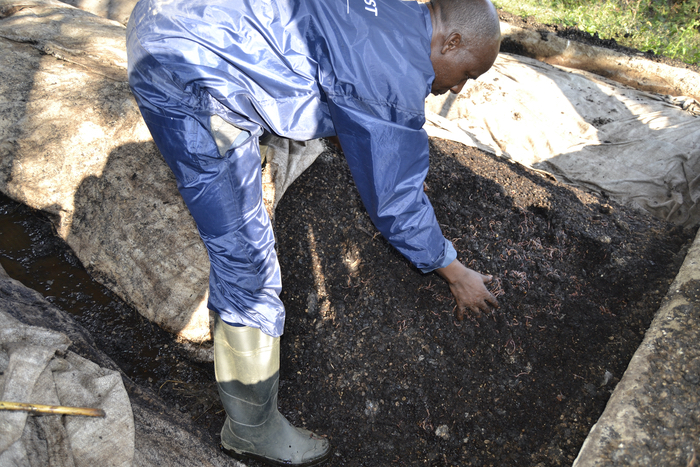
This is why farmers need to understand regenerative agriculture. It is not just about farming differently; it is about creating a circular system where waste can become a valuable resource.
Question: Do you expect fertilizer prices to significantly decline in the coming years? Why or why not?
Mr. Samuel: From my perspective, the global shocks we are experiencing are not going away. We should expect more disruptions in the future.
There were periods between 2021 and 2024 when prices had some stability, but the reality is that fertilizer prices are unlikely to return to the levels we had before. The factors affecting supply chains, energy costs, and international markets are still present.
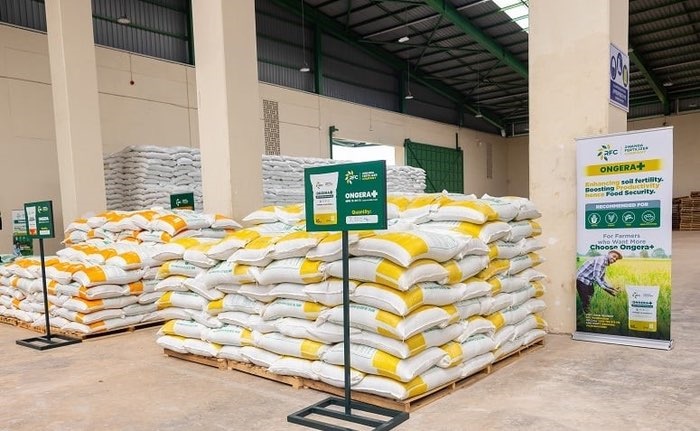
Farmers should therefore prepare for a future where depending entirely on commercial fertilizers may continue to be challenging. Even prices at companies like Yara, the global fertilizer giant operating and distributing in Rwanda.
Question: What role can technology play in helping farmers adapt to these challenges?
Mr. Samuel: Farmers need to embrace technology and create more adaptive farming systems because that is where agriculture is heading.
Today, even small-scale farmers can use technology to access information before making decisions on their farms. Data can help farmers understand soil conditions, weather patterns, and other factors that influence production.My advice to farmers is to remain resilient and continue adapting. We need farming systems that are sustainable and protect resources so that future generations can continue producing food.
If we continue farming the same way without protecting our resources, we may benefit today but leave future generations with fewer opportunities.
Question: Which parts of the fertilizer supply chain are likely to remain expensive in the long term?
Mr. Samuel: The biggest challenge will remain linked to production costs, raw material availability, transportation, and global market conditions. Since many fertilizer inputs depend on international supply chains, farmers will continue feeling the effects of global disruptions.
This is why countries need to invest in alternatives that reduce overdependence on imported inputs.
Question: Governments often respond to rising fertilizer prices by increasing subsidies. Why are subsidies alone not enough to solve the problem for farmers?
Mr. Samuel: Subsidies are important because they provide immediate support to farmers, but they cannot be the only solution. The government cannot continue carrying the entire cost of fertilizer price increments forever.
A long-term solution requires helping farmers adopt better farming practices, improve soil health, and use technologies that increase efficiency.
Question: Beyond subsidies, what long-term policies would make fertilizer use more affordable and sustainable?
Mr. Samuel: Policymakers need to focus on alternatives that create lasting benefits for farmers. Replacing a system that people already depend on is not easy, but there are steps that can be taken.
The government should provide incentives for climate-smart agriculture and invest more in training farmers on modern farming methods. Many farmers do not adopt new approaches simply because they have not been given enough information or practical demonstrations.
One effective approach would be creating model farms where farmers can see how these methods work in practice. Once farmers see the benefits, they are more likely to adopt them.
The government should also support access to training materials, local agricultural experts, and learning facilities. Agriculture needs to move beyond simply providing subsidies and toward offering farmers the knowledge, tools, and services they need to become more productive and sustainable.
Farmers need support to test new approaches, understand what works, and gradually build farming systems that can withstand future challenges.