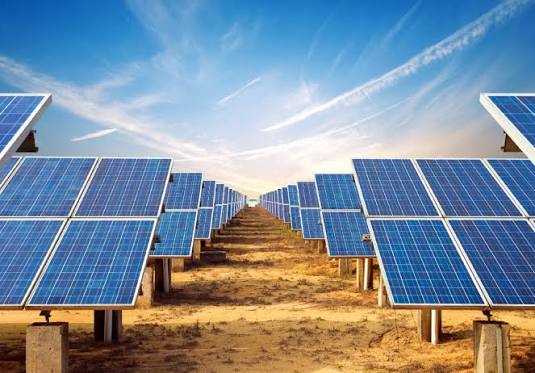
Solar power generation and electricity storage are being expanded to help address power shortages that occur in Rwanda during the dry season, when falling water levels reduce hydropower production, the infrastructure minister said Tuesday.
Damien Murwanashyaka told the Senate Committee on Economic Affairs and Finance that hydropower output can fall to nearly half its normal level during the dry season, increasing the need for alternative sources.
“We will have solar electricity replacing the power that is reduced during the dry season,” Murwanashyaka said on Sept. 22.
He said the government had already started implementing projects to address the problem and expected the shortages to be resolved by 2029.
“We have the capacity needed and we are working on it so that by 2029 this problem will have been resolved,” he said.
The government is also working on ways to store electricity generated from solar power during the day for use when it is needed, particularly when electricity from other sources declines.
“We are working on a system where we take electricity generated during the day and store it so that it can be used when needed,” Murwanashyaka said.
According to the Rwanda Energy Group (REG), the country currently has 472 megawatts of electricity generation capacity. By the end of the National Strategy for Transformation 2 period in 2029, it plans to add another 523.73 MW.
Of the planned additional capacity, 58.76 MW will come from hydropower, 300 MW from solar and 165 MW from methane gas.
Murwanashyaka said some of the projects were progressing well, with several already more than 50% complete.
Senator Fulgence Nengiyumva, chairman of the committee, said REG could consider diesel generators to address shortages during the dry season. Murwanashyaka said diesel generators would not provide a sustainable solution because of their high costs.
Instead, he said the government was focusing on expanding and diversifying energy sources, including hydropower, solar, methane gas and peat over the next five years. Nuclear energy is expected to enter the testing phase after 2030.
The government also plans to work with private companies to increase domestic production of energy equipment, including cables and solar components.
About 88% of households currently have access to electricity, with the government targeting 100% by 2029. Twenty-five cells remain without electricity, and Murwanashyaka said they would be connected by the end of the 2026/27 financial year.