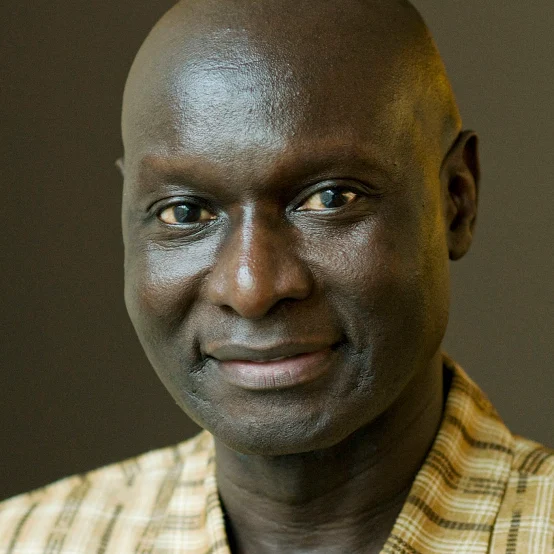
KAMPALA/UNITED NATIONS — Uganda has formally nominated veteran diplomat Olara Otunnu for the position of the next United Nations Secretary-General, unveiling a vision centered on peacebuilding, institutional reform and the responsible governance of artificial intelligence.
The nomination, announced on Sunday, places Uganda among the countries seeking to shape the leadership of the world’s largest multilateral organization as Secretary-General António Guterres prepares to leave office when his second and final term ends on December 31, 2026.
Otunnu, a former United Nations Under-Secretary-General and one of Uganda’s most experienced diplomats, submitted a 12-page vision document titled “Outline Agenda for the United Nations,” outlining what he believes should be the organization’s priorities over the coming years.
In a statement, Uganda described Otunnu as “a distinguished Ugandan statesman and international civil servant” whose more than four decades of experience in diplomacy, peacebuilding and international governance make him well suited for the role.
“The Government of Uganda is confident that Ambassador Otunnu’s unique breadth of experience, spanning the UN Secretariat, the Security Council, national government, academia and grassroots peacebuilding, makes him exceptionally well suited to lead the United Nations at this critical juncture in global affairs,” Permanent Secretary Vincent Bagiire said.
Uganda formally submitted Otunnu’s nomination, curriculum vitae and vision statement to the United Nations on July 24. The documents were circulated to all 193 UN member states the following day by General Assembly President Annalena Baerbock and Security Council President Zénon Mukongo Nga, officially placing Uganda in the race.
A call to renew the United Nations
In his vision statement, Otunnu argues that the United Nations is facing one of the most defining moments since its creation after the Second World War.
He says rapid advances in artificial intelligence and scientific innovation offer unprecedented opportunities to reduce poverty, eradicate disease and improve lives worldwide. However, he warns that escalating conflicts, geopolitical tensions, economic uncertainty and emerging technologies also pose serious risks to international peace and security.
“It is against this backdrop of hope and great promise and the gathering threats that the United Nations is once again called upon to fulfil its historic mission,” Otunnu writes.
“It is an opportunity to reinvent and renew and to give the United Nations a new lease on life.”
Restoring trust in the UN
A central pillar of Otunnu’s campaign is restoring confidence in the United Nations through stronger moral leadership.
He argues that the Secretary-General’s greatest influence comes not from military or economic power, but from the moral authority derived from the UN Charter and the confidence of member states.
According to Otunnu, rebuilding that trust is essential if the organization is to respond effectively to today’s global crises.
Reforming the organization
Otunnu has also pledged to accelerate institutional reforms under the ongoing UN80 Initiative, saying the organization must become more efficient, accountable and financially sustainable.
He supports reducing duplication, improving operational efficiency and ensuring resources are directed toward priorities agreed upon by member states.
“The next Secretary-General should shepherd the organization and its Member States in undertaking genuine and lasting reforms,” he says.
Peace at the center of his agenda
Peace and conflict resolution feature prominently in Otunnu’s platform.
He identifies conflicts in Ukraine, Gaza, the Democratic Republic of Congo, Sudan and Iran as requiring urgent diplomatic engagement.
Among his proposals are supporting a global peace conference on Ukraine, expanding humanitarian efforts in Gaza while building on previous peace initiatives, backing implementation of the Washington Peace and Prosperity Accord between Rwanda and the Democratic Republic of Congo, working with the African Union to help end the conflict in Sudan, and supporting diplomatic engagement with Iran.
Drawing on his experience as the first UN Special Representative for Children and Armed Conflict, Otunnu also promises stronger protection for women and children affected by war.
Global rules for artificial intelligence
One of the most ambitious proposals in Otunnu’s manifesto is the creation of a dedicated United Nations institution to oversee artificial intelligence.
The proposed body would help develop international standards governing AI safety, regulation, employment and its broader impact on society.
Otunnu argues that artificial intelligence should become a tool for expanding financial and digital inclusion and lifting millions out of poverty, rather than widening inequality or creating new security threats.
Climate action and development
On climate change, Otunnu says environmental protection and economic development should advance together.
While supporting stronger implementation of the Paris Agreement, he argues that climate policies should not place disproportionate burdens on developing countries.
Instead, he proposes expanding climate finance, technology transfer and capacity-building initiatives to help poorer nations pursue sustainable development.
Bringing the UN closer to people
Beyond governments, Otunnu believes the United Nations should engage more directly with young people, women, faith-based organizations and local communities.
“We need to connect the Global to the Community,” he writes.
He also calls for a new international framework on migration that balances humanitarian responsibilities with national security and state sovereignty.
Uganda highlights Otunnu’s record
Uganda says Otunnu’s extensive international experience makes him a strong candidate for the UN’s top post.
He served as the first UN Special Representative for Children and Armed Conflict from 1998 to 2005, helping make the protection of children in conflict a permanent item on the Security Council’s agenda.
Earlier, he represented Uganda at the United Nations between 1980 and 1985 and served as President of the Security Council in December 1981. During that period, he introduced what later became known as the Otunnu Formula, a process that has influenced every UN Secretary-General selection since.
His public service also includes serving as Uganda’s Minister of Foreign Affairs between 1985 and 1986 and as a member of the National Consultative Council during Uganda’s political transition following the fall of Idi Amin.
Outside government, Otunnu has led the International Peace Academy—now the International Peace Institute, and held academic positions at Albany Law School, the American University of Paris and the Institut Français des Relations Internationales.
He has received several international honors, including the Sydney Peace Prize, the German Africa Prize and the Harvard Law School Alumni Award.
More recently, he co-founded the Roco Paco peacebuilding initiative with former Chief Justice Alfonso Chigamoy Owiny Dollo, aimed at promoting reconciliation in northern Uganda after decades of conflict.
If elected, Otunnu would become the first Ugandan to lead the United Nations.
Uganda’s nomination comes as the race to succeed Guterres begins to take shape. Other declared or officially nominated candidates include former German Foreign Minister Annalena Baerbock, former Mexican Foreign Minister Alicia Bárcena, former Costa Rican President Carlos Alvarado Quesada, and former Surinamese Foreign Minister Albert Ramdin, among others. Additional nominations are expected before the selection process gathers momentum at the United Nations in the coming months.