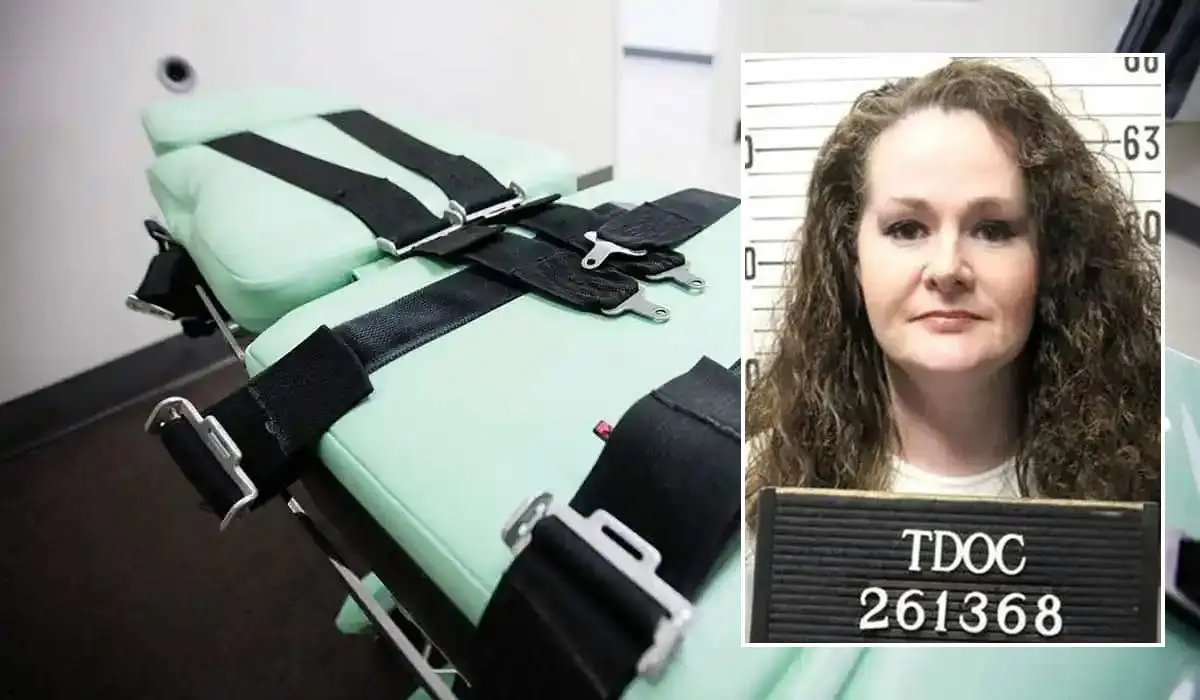
Tennessee has halted executions for the rest of 2026 and ordered an independent review after death-row inmate Christa Pike survived an attempt to execute her by lethal injection despite receiving two doses of pentobarbital.
Pike, 50, was taken to a hospital after the execution attempt at Riverbend Maximum Security Institution in Nashville on Wednesday night. Her lawyers said she was receiving life-saving treatment but had not been told of her condition.
Witnesses said Pike appeared to remain alive after the injections, with one journalist who witnessed the procedure saying she was still breathing when witnesses left the execution chamber.
The Tennessee Department of Correction said officials had followed the state’s approved execution protocol. It said the lethal-injection drug had consistently been effective and that the protocol did not allow additional procedures beyond those carried out on Wednesday.
Tennessee’s protocol provides for a second set of syringes if an inmate is not dead after the first dose, but does not clearly state what should happen if the inmate remains alive after the second dose, according to court filings and reporting by the Associated Press.
The failed execution followed a day of legal uncertainty. A federal appeals court temporarily blocked the execution shortly before it was due to begin, but the U.S. Supreme Court later allowed Tennessee to proceed. Three liberal justices dissented, arguing that Pike’s claims required further consideration.
Pike was sentenced to death for the 1995 murder of 19-year-old Colleen Slemmer at a job-training facility in Knoxville. Pike was 18 when Slemmer was killed.
Her lawyers had sought clemency, citing her age at the time of the crime, mental-health problems and a history of severe childhood abuse. Governor Bill Lee rejected her clemency request. Slemmer’s mother, May Martinez, had supported Pike’s execution.
The case is the second problematic execution attempt in Tennessee this year. In May, officials halted the planned execution of Tony Barruthers after medical staff were unable to establish intravenous access. Lee later granted him a one-year reprieve.
Lee said the state’s remaining scheduled execution for 2026 would not go ahead and ordered a “comprehensive, third-party review” of Pike’s execution attempt.
The review is expected to examine what happened during the procedure and whether changes are needed to the state’s execution process. It remains unclear whether Tennessee will seek to execute Pike again, while her medical condition was not immediately known on Thursday.