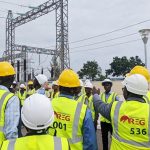
On Thursday, Rwanda inaugurated its first Automatic Upper-Air Observation Station, a $3.5 million facility officials say will improve weather forecasting, early warning systems, and climate monitoring across the country.
The station located in Karubanda village in Huye District’s Ngoma Sector collects real-time data on temperature, humidity, atmospheric pressure, and wind profiles from altitudes of up to 30 – 40 kilometers above Earth. Meteorologists say the data will improve forecasting in Rwanda’s complex mountainous terrain and strengthen national preparedness for extreme weather.
The project was developed with support from the Systematic Observations Financing Facility (SOFF), the World Meteorological Organization (WMO), the United Nations Development Programme (UNDP Rwanda), and the Finnish Meteorological Institute, which provided financial and technical assistance. It is part of efforts to upgrade Rwanda’s meteorological infrastructure to meet Global Basic Observing Network standards.
Aimable Gahigi, director general of the Rwanda Meteorology Agency, said the facility marks a major step in strengthening national forecasting capacity.
“This milestone marks a significant step forward in strengthening Rwanda’s meteorological observation capacity,” Gahigi said. “The commissioning of the country’s first Automatic Upper-Air Station enhances our ability to generate high-quality atmospheric data essential for weather forecasting, climate monitoring, disaster risk reduction, aviation safety, and the protection of lives and livelihoods.”
Environment Minister Dr. Bernadette Arakwiye, who officially launched the station, said the investment will strengthen Rwanda’s ability to respond to climate and weather risks and support regional weather services.
Dr. Bernadette Arakwiye, Minister of Environment
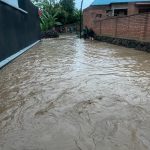
Officials said the data will feed into national early warning systems used to forecast heavy rainfall, floods, and landslides, which remain persistent hazards in Rwanda.
Meteorologists said the system will also improve aviation safety at Kigali International Airport and regional flight routes by providing more accurate information on wind patterns, cloud movement, and atmospheric pressure changes.
The station is also expected to benefit agriculture by improving the accuracy of short-term and seasonal forecasts used for planting and harvesting decisions, supporting food security in a country where much of the population depends on farming.
Data from the station will be collected twice daily at internationally synchronized times and shared with global meteorological networks for worldwide weather forecasting and climate analysis.
“This means the information generated here will not only benefit Rwanda but also support weather forecasting efforts across the region and globally,” said Védaste Iyakaremye, director of observation, data processing and archiving at Meteo Rwanda. He added that the station can collect data across a radius of about 500 kilometers.
Officials said the Huye facility is the second Automatic Upper-Air Observation Station of its kind in Africa, after a similar installation in Morocco.
Arakwiye said Rwanda has a responsibility to maintain the facility and ensure it continues to serve both national and regional needs.
“This milestone marks a significant step forward in strengthening Rwanda’s meteorological observation capacity,” she said. “The commissioning of the country’s first Automatic Upper-Air Station enhances our ability to generate high-quality atmospheric data essential for weather forecasting, climate monitoring, disaster risk reduction, aviation safety, and the protection of lives and livelihoods.”
The station is part of a four-year program implemented by Meteo Rwanda and UNDP Rwanda under the Systematic Observations Financing Facility (SOFF). The broader program also includes upgrades to surface weather stations in Karongi, Nyagatare, and Ngoma districts, equipping them with automated sensors that provide hourly data on rainfall, temperature, wind, and atmospheric pressure.
Officials said the combined system will significantly improve Rwanda’s ability to anticipate climate risks and respond to extreme weather events in a country highly vulnerable to floods, landslides, and heavy rainfall.