The Rotary Club of Kigali Virunga (RCKV) has launched a fundraising campaign aimed at raising $5 million to acquire Rwanda’s first Single Photon Emission Computed Tomography (SPECT) scanner, a specialised medical imaging machine expected to strengthen cancer diagnosis and treatment planning.
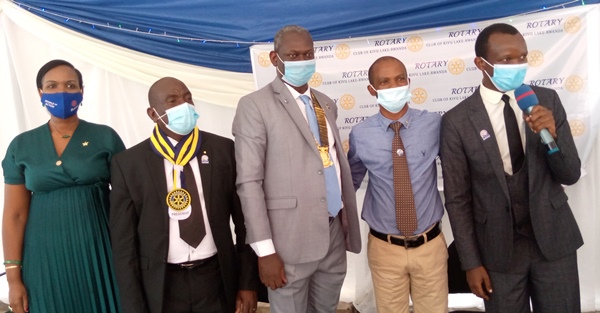
The initiative, announced on Wednesday, is being carried out in partnership with the Rotary Clubs of Rwanda, the Ministry of Health, Rwanda Biomedical Centre (RBC) and the City of Kigali ahead of the inaugural Kigali Cancer Walk scheduled for Aug. 9, 2026.
Organisers say the two-year fundraising campaign will support the purchase, installation and operationalisation of the scanner, which will help reduce the need for patients to travel abroad for specialised diagnostic services.
A SPECT scanner uses nuclear imaging technology to show how organs function, helping doctors detect cancer spread, assess treatment response and make more accurate treatment decisions. The technology is also used in diagnosing and managing heart, thyroid, kidney and neurological conditions.
Currently, patients requiring SPECT scans often travel to countries including Kenya, South Africa and India. The process can involve waiting periods of four to 12 weeks, while the scan alone costs between $1,500 and $3,000, excluding travel and accommodation expenses.
Rwanda records about 10,000 new cancer cases and nearly 7,000 cancer-related deaths annually. Health experts say late diagnosis remains one of the biggest challenges affecting cancer outcomes.
“This campaign represents hope for every family affected by cancer,” Alex Ndibwami, President of the Rotary Club of Kigali Virunga, said during the launch. “Every contribution brings us closer to providing life-saving diagnostic technology locally.”
Ben Honore Nishimwe, the project champion for the SPECT scanner initiative, said the project was identified after consultations with healthcare professionals, patients and other stakeholders highlighted advanced imaging as a major gap in cancer care.
“When a patient needs this scan today, they have to travel outside the country. Some cannot afford it, and doctors are sometimes forced to make critical decisions without the information they need,” Nishimwe said.
Cancer survivor and senior journalist Edmund Kagire said the initiative could help ease the financial and emotional pressure faced by families seeking specialised medical services abroad.
“Sometimes what affects people is not only the cancer itself, but the ability to access the diagnosis and treatment they need. This project will help many families,” Kagire said.
The Kigali Cancer Walk will serve as the first major fundraising activity for the campaign. Participants will begin at the BK Arena parking area, pass through Gishushu and the Rwanda Development Board (RDB), before ending at the Kigali Convention Centre (KCC) Roundabout.
The event will include cancer awareness activities, health education sessions and selected free screening services coordinated by RBC and partners.
City of Kigali spokesperson Emma Claudine said the initiative supports the city’s efforts to promote healthier communities and disease prevention.
“Cancer affects families, friends, colleagues and entire communities. Together, we can make a difference by raising awareness, raising funds and supporting modern equipment that improves early detection,” she said.
The city expects at least 10,000 people to participate in the walk, which will coincide with Kigali’s Car Free Day activities.
Members of the public can support the campaign by purchasing an official Kigali Cancer Walk kit at RWF25,000. The kit includes an event vest and cap, with proceeds contributing to the acquisition of the SPECT scanner.
Tickets and donations are available through the official platform; kcw.rgtickets.com
Organisers said the campaign will bring together citizens, businesses, institutions and development partners over the next two years to establish a long-term cancer diagnostic service in Rwanda.
The initiative coincides with the 25th anniversary of the Rotary Club of Kigali Virunga, which has previously supported national projects including the Kigali Public Library.