Expanding the use of high-quality seeds is essential to improving agricultural productivity, strengthening food security and helping farmers adapt to climate change, a senior official said Thursday.
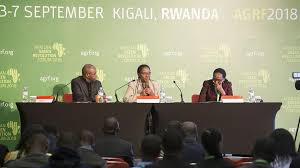
Speaking in Kigali on June 11, 2026, at a meeting marking 20 years of support from the Alliance for a Green Revolution in Africa (AGRA), Dr. Uwituze Solange, Minister of State in the Ministry of Agriculture and Animal Resources, said quality seeds remain the foundation of agricultural transformation.
Dr. Uwituze Solange, Minister of State in the Ministry of Agriculture
“Without quality seeds, it is not possible to achieve high yields, ensure food security, or build resilience to climate change,” she said.
The meeting brought together government officials, researchers and development partners working in Rwanda’s seed sector.
Officials credited AGRA with supporting improvements in seed systems through training specialists, including master’s and PhD-level experts in plant breeding and seed systems, as well as providing financial and technical assistance to seed companies.
They also said AGRA has supported policy and regulatory reforms aimed at attracting investment and strengthening seed production.
Uwituze said these efforts have helped reduce reliance on imported seeds for key crops and strengthened local seed production systems.
She said Africa continues to account for a small share of the global seed market, estimated at about $85 billion annually, with the continent holding roughly 2.2%.
She attributed the gap to weak seed quality systems, limited investment, inconsistent markets and gaps in compliance with international standards, rather than lack of capacity.
“To increase Africa’s role in the global seed economy, we must strengthen institutions, modernize regulations, accelerate innovation and build trusted seed systems that meet international standards,” she said.
Uwituze said Rwanda aims to position itself as a regional hub for seed processing, testing, certification and trade.
Jean Paul Ndagijimana, AGRA’s representative in Rwanda, said improved seeds produced in the country are already being traded across East Africa and beyond.
He said AGRA is working with the Rwanda Agriculture and Animal Resources Development Board (RAB) and the Rwanda Institute for Conservation Agriculture (RICA) to strengthen seed quality systems.
He said the share of farmers using improved seeds has risen from below 20% in 2017 to nearly 50% today, with some reporting yields that have tripled.
Ndagijimana also said nearly 90% of maize produced in Rwanda now meets commercial quality standards required by major buyers.