Members of Parliament have summoned the Ministers of Agriculture, trade, and local government to account for persistent weaknesses in the national agriculture sector, following fresh findings that point to low yields, poor seed quality, and coordination gaps affecting farmers across the country.
The Ministers, Telesphore Ndabamenye (MINAGRI), Antoine Kajangwe (Trade and Industry), and Dominique Habimana (Local Government) , have been given three months to report back to the Chamber of Deputies.
This follows the adoption of a parliamentary oversight report on Monday, June 29, based on field visits carried out across 251 sectors in all 30 districts.
Among the key concerns raised is the performance of maize seed varieties, supplied through digital program such as Tubura, One Acre Fund and Western Seed Company.
Lawmakers said that the seeds failed to deliver expected yields, contributing to a national maize output of 2.0 tonnes per hectare , below the government target of 2.26 tonnes.
The report also highlights wider challenges affecting other strategic crops. Potato seeds were found to be old, scarce and in some cases unsuitable for local soil conditions. Certified rice seed supplied by the Rwanda Agriculture and Animal Resources Development Board (RAB) was also described as insufficient, with some varieties distributed in areas where climatic conditions were not ideal.
Lawmakers further raised concern about communication gaps between farmers and agricultural authorities, saying many farmers who report challenges often receive little or no feedback and also revealed as weak coordination between RAB and district officials.
“When there is a disease outbreak, districts contact RAB, which comes to collect samples, but after that, there is often no feedback,” she said.
Parliament warned that delays in feedback on soil testing, disease outbreaks and seed performance are limiting the ability of district agronomists to respond effectively, leaving farmers exposed to continued use of underperforming inputs.
These concerns come despite a sharp rise in government investment in the sector. Agriculture funding has grown from Rwf128.7 billion in 2017 to Rwf225.4 billion in the current financial year, with projections of Rwf355.6 billion in 2026/27.
Lawmakers have also directed the Office of the Auditor General to carry out a full audit of the seed value chain, covering production, research, inspection, certification and distribution.
The developments come at a time when broader pressures are also affecting agricultural production in rural communities.
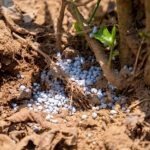
In a separate but related trend, farmers across parts of the country continue to report rising input costs, especially fertilizer, which they say is forcing them to reduce application rates and scale down production.
A recent investigation by this publication shows that while government subsidies have increased from Rwf39 billion to Rwf64 billion, many smallholder farmers still struggle to afford recommended inputs due to global price pressures and transport costs.
Farmers interviewed in Eastern Province described cutting back on fertilizer use, delaying purchases, or turning to organic alternatives, all decisions that directly affect yields and household incomes.
Agricultural experts warn that reduced fertilizer use could undermine productivity gains, especially at a time when Rwanda is targeting higher output under its national transformation plans.
According to analysts, Rwanda’s dependence on imported fertilizer, transported through long supply routes via Dar es Salaam and Mombasa, makes prices highly sensitive to global shocks, fuel costs and currency fluctuations.
Despite these challenges, government officials maintain that subsidy programmes and input distribution systems such as Smart Nkunganire System (SNS) are helping to cushion farmers and improve access.
However, auditors and civil society groups argue that gaps in distribution, monitoring and targeting continue to weaken the impact of these interventions at the farm level.
As Parliament pushes for answers from key ministries, the underlying concern remains the same: whether public investment in agriculture is translating into higher yields, better inputs, and improved livelihoods for farmers.
For now, lawmakers say they will be watching closely as the ministries prepare their responses over the coming three montSSs.