Rwanda’s Mines, Petroleum and Gas Board (RMB) says low salaries are driving skilled employees to the private sector, weakening its ability to implement audit recommendations and deliver key services.
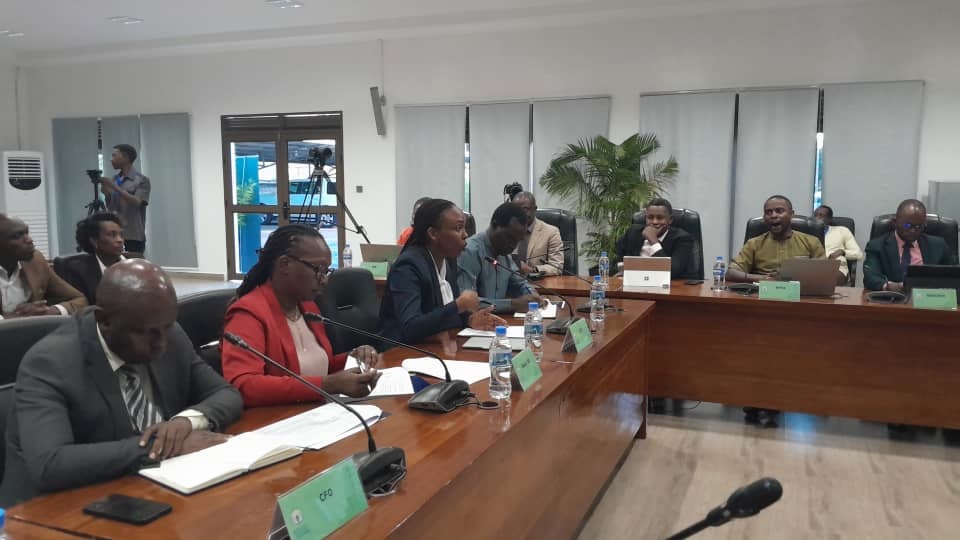
The issue emerged on Thursday when RMB officials appeared before Parliament’s Public Accounts Committee to respond to findings in the latest report by the Auditor General on the management of public funds and assets.
The staffing challenge highlights broader concerns over institutional capacity at the mining regulator, which is also facing financial reporting gaps, underperforming technical infrastructure and enforcement challenges in the mining sector.
RMB officials told lawmakers that although the agency continues to recruit qualified professionals, many leave shortly after joining for better-paying jobs in private mining firms.
“A geologist working at RMB earns about 372,000 Rwandan francs (RWF), while one in the private sector earns between RWF 1.5 million and RWF 2 million,” an official said, adding that private employers can pay up to seven times more. The agency said it is reviewing its organizational structure and job grading system to improve retention.
The Auditor General’s report identified a RWF 59 million discrepancy between procurement records and tender documents. It also found that RMB had not recorded revenue from some of its services in its financial statements and that its mineral testing laboratory was operating at only 30% of its intended capacity due to inadequate equipment.
RMB Director General Alice Uwase acknowledged the findings, saying many of the issues had already been addressed. She attributed the procurement discrepancy to an oversight in which transportation costs, insurance and taxes were omitted from a tender, and said corrective measures had been introduced.
Uwase said remaining laboratory equipment is expected to be delivered by August 2026, after which the facility should operate at no less than 50% capacity. She said limited capacity has forced RMB to rely on private firms for mineral testing, resulting in lost revenue.
Lawmakers also raised concerns over abandoned mining pits linked to illegal mining. Uwase said RMB has identified 24 sites requiring urgent attention and written to responsible contractors, but 15—mostly foreign companies that have since left Rwanda—have not responded.
She said the agency has blacklisted companies found responsible for such violations and introduced stricter licensing requirements for foreign mining firms, including maintaining local bank accounts and meeting minimum capital thresholds of $2 million for medium operators and $5 million for large-scale companies.