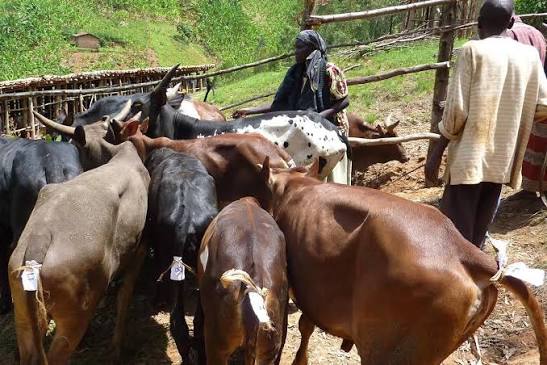
Rwanda has reopened livestock markets in four districts in the Eastern province after a decline in Rift Valley fever cases, allowing farmers and traders to resume the sale and movement of cattle, goats and sheep.
The markets in Nyagatare, Gatsibo, Ngoma and Kirehe have been cleared to resume operations as authorities gradually lift restrictions imposed to contain the disease, according to the Rwanda Agriculture and Animal Resources Development Board (RAB).
State Minister for Agriculture and Animal Resources Dr. Solange Uwituze said the reopening was being carried out gradually.
“We are reopening them gradually,” she said.
RAB placed livestock in six districts under quarantine on June 26 after Rift Valley fever was detected. The restrictions were later extended across the Eastern province and to most districts in the Northern province, except Gakenke.
The measures restricted livestock movement and trade, prohibited the slaughter and consumption of animals from affected areas.
Pudence Rubingisa, Governor of the Eastern Province said the four districts were cleared after surveillance found no new cases for about a month.
“We started with Nyagatare and Gatsibo. The livestock markets have already been held about twice,” Rubingisa said. He said animals and people had been tested daily during the monitoring period without new infections being detected.
Livestock being taken to the reopened markets must meet health and identification requirements. In Ngoma, for example, farmers have been instructed not to take cattle to market without ear tags, while buyers have been told to purchase animals only from designated market areas.
The province has scheduled livestock markets in the four districts between Aug. 21 and Sept. 28.
Nyagatare will host markets at Katabagemu on Aug. 21 and Sept. 18, Rwimiyaga on Aug. 28 and Sept. 28, and Tabagwe and Karangazi on Sept. 4 and Sept. 11, respectively.
Kirehe will hold markets at Nyarubuye on Aug. 24 and Sept. 14, while Gituku/Rukira in Ngoma will host markets on Aug. 31 and Sept. 21.
In Gatsibo, livestock markets will be held in Rwimbogo on Sept. 7 and Kabarore on Sept. 25.
Rubingisa said the schedule could be revised if the disease situation changes, with a new timetable expected after Sept. 28.
Rwamagana, Bugesera and Kayonza remain under restrictions as authorities continue to monitor the disease situation, he said.
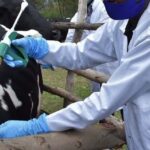
The government has also stepped up vaccination and disease surveillance. Rubingisa said another livestock vaccination campaign is planned for January 2027.
He urged farmers not to eat animals suspected of being infected and called for better hygiene in livestock shelters to reduce exposure to mosquitoes, which can transmit Rift Valley fever.
Butcheries, restaurants and consumers have also been urged to buy only meat that has been inspected. Rubingisa said anyone selling or buying meat should ensure there is documentation showing that it was tested before sale.
Rift Valley fever is a viral disease that mainly affects livestock but can also infect people. Mosquitoes are among the main vectors that spread the disease, particularly in areas with wetlands and standing water.