Edward Munyaburanga Turned a Vision for His Children into One of Rwanda’s Top-Performing Private Schools
Like many other Rwandans who returned home after the 1994 Genocide against the Tutsi, Edward Munyaburanga settled in Bugesera, in Rwanda’s Eastern Province—a region that had long been marginalized and often referred to as the “forgotten land.”
As a student, Munyaburanga lived with his elder brother and vividly remembers how difficult it was to travel from Bugesera to Kigali.
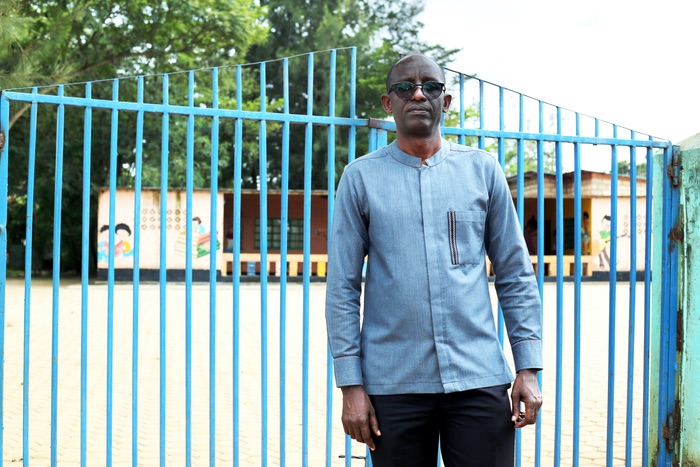
Edward Munyaburanga Turned a Vision for His Children into One of Rwanda’s Top-Performing Private Schools
“The journey to Kigali was a grueling three- hour marathon. The area was underdeveloped, and the idea of modern transformation was not even in anyone’s wildest dreams,” he recalls.
After university, Munyaburanga returned to the district and began working in local government. As infrastructure gradually improved and the wheels of development began to turn, he found himself with a front-row seat to Bugesera’s transformation.
Seeing the district open up for development gave Munyaburanga a real turning point. Inspired by the rapid growth he observed while working at the district office, he felt it was time to venture into the private sector.
That moment came in 2008 following the birth of his firstborn child. As a concerned parent, he looked at the education landscape in Bugesera and noticed a major gap. He began to wonder where his son would eventually go to school.
“Imagine, by then, there was only one French school in the district,” he remembers. “Then the government switched from French to English as the language of instruction.”
In 2009, armed with hope and a modest plot of land in Nyamata town, he registered HighLand School. It started with just 20 students and four teachers, operating from rented, dilapidated buildings in a Catholic convent.
The early days were challenging. The area was still isolated, and convincing parents that high-quality education could exist outside Kigali was an uphill battle.
However, Munyaburanga refused to compromise on quality. He recruited some of the best teachers from across the region and hired a committed administrator to ensure the school operated with professionalism and precision as the school’s moto states: Knowledge is Wealth.
The gamble paid off.
By 2013, HighLand School’s first cohort sat for national examinations, and the results sent shockwaves across the district. Since then, the school has consistently ranked among the top- performing in the country.
In the 2023/2024 academic year, the Ministry of Education recognized HighLand School as the best performer in the national leaving examinations.
The school’s physical growth has been equally impressive. In 2017, it moved to a modern and expansive campus. Today, the original 20 students have all graduated from higher education and the school’s enrollment has grown to more than 1,100 students.
“My target was never just profit; it was the child’s transformation,” Munyaburanga explains. “When you focus on quality over money, you become accountable to both the country and God.”
One of his proudest achievements is seeing the first intake of 20 students successfully graduate from university.
“This shows that we achieved excellent performance at the national level,” he says.
Munyaburanga is also proud that the school has become a magnet for students from across Rwanda. With all its 80 employees fully covered by health insurance and pension schemes, HighLand School has become an important pillar of the local community.
Nonetheless, the biggest victory is not just the school’s growth, but the satisfaction of parents and the positive impact the institution has had on Bugesera.
Beyond the Classroom
Highland School’s impact extends far beyond academics.
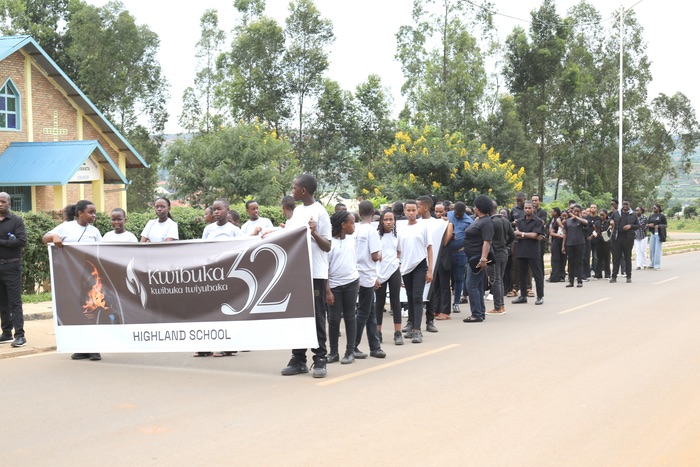
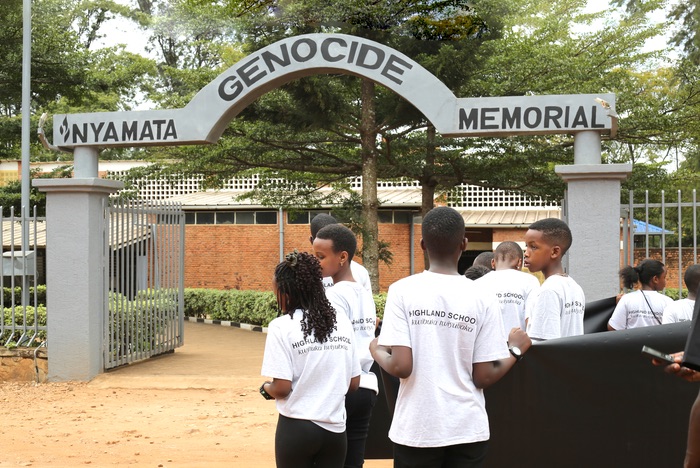
Today, the institution is actively involved in uplifting the community through various corporate social responsibility initiatives. These include supporting survivors of the 1994 Genocide against the Tutsi, contributing to the development of Bugesera Football Club, and providing essential support to 50 pupils and other vulnerable members of the community.
Munyaburanga is not finished yet.
Within the next two years, he plans to launch a secondary school wing and introduce a Cambridge International section to attract students from across the globe.
“The role of a school has changed,” he says. “It is no longer just about literacy and numeracy; it is about parenting and shaping the next generation of citizens. The driving force behind Highland School has always been—and still is—to produce competent learners who will become true agents of positive transformation in a changing world.”