Not long ago, the journey from Nyamata to Kigali felt like an endurance test. The trip could stretch to three hours along dusty, unreliable roads, cutting through a landscape where signs of modern development were scarce. At the time, the idea of a thriving commercial hub seemed distant—almost unimaginable.
Today, that same journey takes a fraction of the time, and visitors arriving in Nyamata are greeted by modern buildings, bustling businesses and expanding infrastructure. Among the structures that symbolise this transformation stands a landmark commercial building developed by the Bugesera Investment Group (BUIG), a local investment body by residents who chose to become active participants in the district’s development.
Initially conceived as a public-private partnership project to be developed at every District level, it has been achieved only in Bugesera District.
The story of BUIG is closely intertwined with the story of Bugesera itself. This district has overcome a difficult history to emerge as one of Rwanda’s fastest- growing economic frontiers.
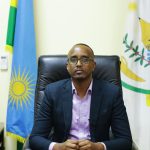
Ambassador Joseph Nsengimana, Chairman of Bugesera Investment Group (BUIG)
“Bugesera was historically isolated and left out of many development opportunities that other regions enjoyed,” says Ambassador Joseph Nsengimana, Chairman of BUIG. “For many years, people associated Bugesera with hardship. Yet today we are witnessing tremendous progress because of good leadership and the determination of citizens to contribute to their own development.”
Ambassador Nsengimana knows that history well. He recalls how families, including his own, were relocated to Bugesera in 1959 during the colonial era. At the time, the district’s harsh environment, characterised by dry savannah plains and tsetse fly infestations, made life unbearable.
Those experiences, he says, taught many residents resilience and the importance of building for future generations.
The district faced even greater devastation during the 1994 Genocide against the Tutsi, when countless lives were lost, and communities were torn apart. In the years that followed, however, Bugesera began a gradual recovery. New schools were established, health facilities expanded, banking services arrived, roads improved, and housing programs helped vulnerable survivors rebuild their lives.
As the district developed, local business leaders increasingly saw opportunities to contribute to its growth.
That vision led to the formation of the Bugesera Investment Group. Bringing together entrepreneurs, professionals, and community leaders from various sectors, BUIG was established with a simple but ambitious objective: to invest in projects that would support community development while creating value for local investors.

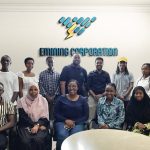
Officials of Bugesera Investment Group
“We wanted to do more than watch development happen,” says Eugene Higiro, a businessman and member of BUIG. “We wanted to be part of it. The idea was to identify investments that could benefit both our members and the wider community.”
The group’s earliest discussions focused on addressing some of Bugesera’s long-standing challenges. One proposal explored processing and commercialising water to help tackle the area’s historical water shortages. Although the initiative did not materialise, it reflected the cooperative’s commitment to investing in projects with a meaningful impact.
As Bugesera continued to attract businesses and financial institutions, members identified another pressing need: modern commercial infrastructure.
At the time, several businesses, including banks, were seeking suitable premises to operate from. BUIG saw an opportunity to fill that gap while contributing to the modernisation of Nyamata’s town centre.
Pooling resources and securing financing, BUIG embarked on the construction of a modern multi-storey commercial building—an ambitious undertaking for a district that was only beginning to experience rapid urban growth.
“The concept was new for many people,” Ambassador Nsengimana recalls. “Some wondered whether businesses would occupy such a building. But we believed the district’s development would create demand, and we remained confident in the future of Bugesera.”
That confidence has since been rewarded.
Today, the building is fully occupied and serves as a vibrant hub of economic activity. Housing a range of businesses and services, it has become one of Nyamata’s most recognisable commercial landmarks and a visible symbol of local investment driving local development.
The project has also demonstrated the strength of collective action. Members of BUIG contributed not only financial resources but also professional expertise and business experience, helping transform a shared vision into reality.
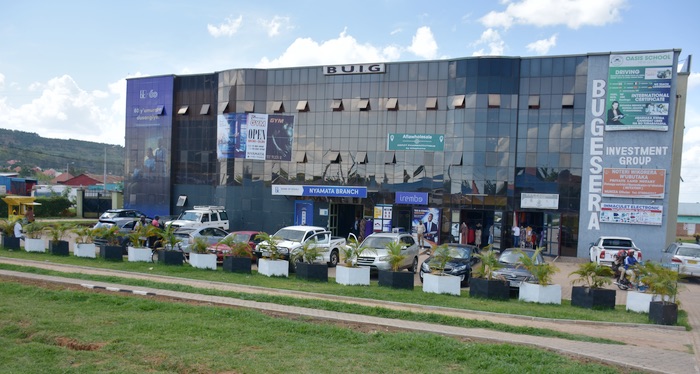
“The success of this building belongs to all the members,” says Nsengimana. “Everyone contributed according to their capacity, and together we created something that has become an important part of Bugesera’s development.”
With the project’s loan repayment nearing completion, BUIG is already planning its next chapter. Members are exploring opportunities linked to the district’s rapid growth, including investments around the forthcoming international airport, the industrial zone, tourism- related businesses, and developments that leverage Bugesera’s strategic location near the border with Burundi.
BUIG’s journey reflects a broader lesson about development. Its story is not just about a building— it is about a mindset. It reflects a shift from waiting for change to actively creating it.