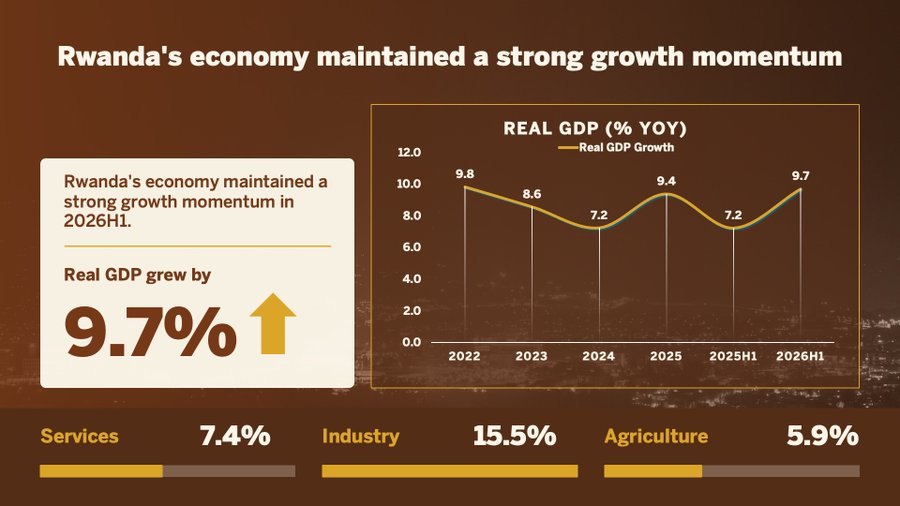
Rwanda’s economy grew 9.7% in the first half of 2026, but inflation accelerated to 15.7% in August, putting price stability at the centre of the central bank’s policy concerns even as the financial system remained resilient.
Real gross domestic product expanded by 9.7% in the first six months of the year, with growth broad-based across industry, services and agriculture. Construction and manufacturing were among the key contributors, National Bank of Rwanda Governor Soraya Hakuziyaremye said on Thursday while presenting the Monetary Policy and Financial Stability Statement.
National Bank of Rwanda Governor Soraya Hakuziyaremye
“Despite the shocks our economy has gone through this year, GDP growth of 9.7% in the first six months is very high,” Hakuziyaremye said.
The strong expansion has come alongside a sharp rise in prices. Headline inflation averaged 11.2% in the first half of 2026, up from 7.3% in the second half of 2025, as core, fresh food and energy prices came under pressure. By August, headline inflation had risen to 15.7%, the bank said.
The NBR has responded by tightening monetary policy, raising its Central Bank Rate to 8.75% in August following earlier increases during the year. The interbank rate averaged 7.43% in the first half of 2026, compared with 6.54% in the same period a year earlier.
The bank expects headline inflation to remain above its 2%-8% target range in the second half of 2026 before easing in 2027 as domestic cost pressures subside and earlier shocks fade. It said adverse weather and continued tensions in the Middle East remained key risks to the outlook.
The bank said it remained ready to act if inflationary risks materialise, with the aim of keeping inflation expectations anchored and preventing temporary price pressures from becoming persistent.
Despite the pressure from inflation, the financial system entered the second half of the year from a position of resilience, supported by capital and liquidity buffers above regulatory requirements.
Banks recorded a Capital Adequacy Ratio of 22% and a Liquidity Coverage Ratio of 279%, while microfinance institutions recorded ratios of 30% and 65%, respectively. Insurance institutions also maintained capital and liquidity above regulatory requirements.
Total financial-sector assets reached Rwf17.5 trillion in June, up 22.8% from a year earlier. Financial-sector assets rose to the equivalent of 68% of GDP from 66% in June 2025, indicating deeper financial intermediation.
Lending also increased, with loans issued by financial institutions rising 22% to Rwf7 trillion. The quality of loans in banks and microfinance institutions remained broadly sound, with loan quality staying below the regulatory maximum of 5%, according to the NBR.
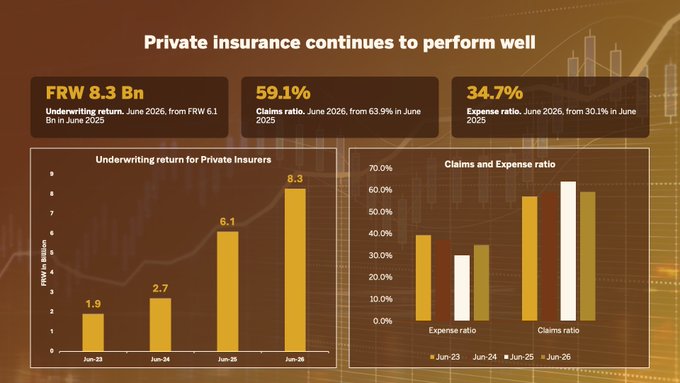
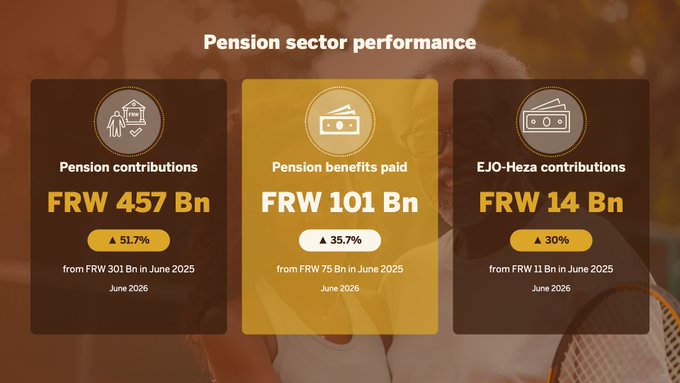
Private insurers’ underwriting returns reached Rwf8.3 billion in June, while pension contributions rose to Rwf457 billion, an increase of 51.7% from June 2025.
The pension sector’s growth was supported by higher contributions, investments in safe assets and improvements in information technology and operations, said Bernard Nsengiyumva, the NBR’s Executive Director for Financial Stability.
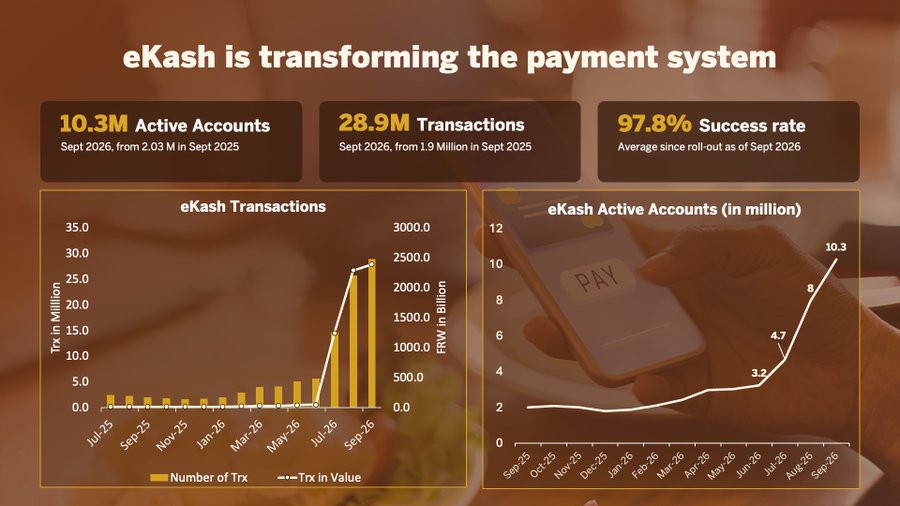
Digital payments also continued to expand. By September, e-Kash had 10.3 million active accounts and had processed 28.9 million transactions, with an average success rate of 97.8% since its rollout.
The value of electronic payments reached the equivalent of 341% of GDP in January-June 2026, up from 321% in the same period last year, as the financial sector continued its digital transformation.
Financial inclusion reached 96%, but Deputy Governor Nick Barigye said the next challenge was to turn access to financial services into greater financial well-being.
That would require stronger financial health and resilience, wider access to insurance and credit, and helping people prepare for future economic shocks, Barigye said.
The NBR also identified global uncertainty, credit and deposit concentration, concentration of investments in non-bank institutions, fraud and cyber risks as areas requiring continued vigilance.
Chief Economist Thierry Kalisa said policy action and coordination would remain important for maintaining confidence in the economic outlook, including tighter monetary policy, fiscal measures to address supply pressures and expectations that major shocks would ease.
Hakuziyaremye said Rwanda’s ambition to become an upper-middle-income country by 2035 would require the country to build resilience and sustain growth above 9% under the second National Strategy for Transformation.
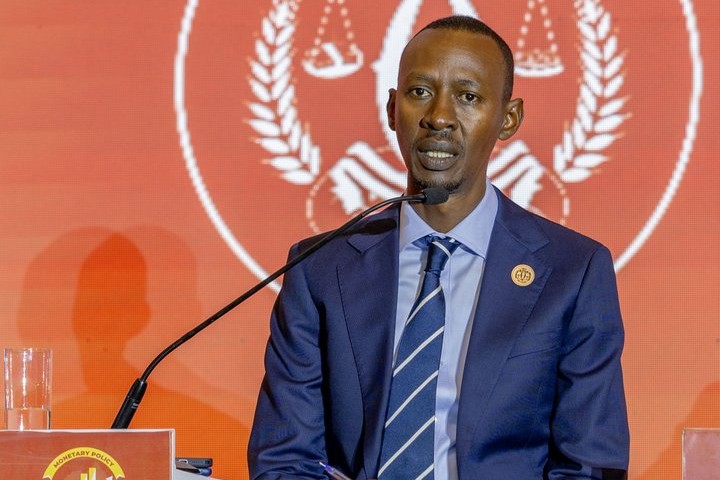
Deputy Governor Nick Barigye
Barigye said maintaining the momentum while safeguarding stability would require continued cooperation among government, the financial sector, businesses and development partners to support sustainable growth and strengthen the resilience of the financial system.