Construction and mining powered a strong second quarter. Prices are rising faster than many household budgets can handle.
Rwanda’s economy grew 9.4% between April and June, yet with inflation at 15.7%, many households are struggling to see the benefit.
At Kayonza Market, Marie Claire, a mother of four who sells produce, says food prices have risen steadily in recent months. Transport is adding to the cost of getting goods to market, she says.
New buildings are going up across Kigali and factories are busy. But the national figures show a more uneven picture.
The National Institute of Statistics of Rwanda (NISR) released its figures on Tuesday, putting GDP for the quarter at Rwf7,174bn. That is measured at current prices, so it includes the rise in prices. The 9.4% is real growth once inflation is stripped out. A year earlier growth was 7.8%, and in the first quarter it was 10%.
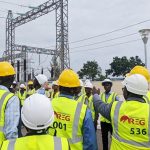
Industry did most of the work. It grew 18% and on its own added 3.9 percentage points to growth. Construction rose 24% and mining 26%, while production of metal products, machinery and equipment jumped 51%.
Industry outpaced the rest of the economy
Annual growth by sector, Q2 2026
Services, about half the economy at 51%, grew 7%. Wholesale and retail trade rose 18% and public administration shrank 3%.
Health services fell 39%, after contracting 18% in the first quarter. In February the government revised contributions to the Mutuelle de Santé community health insurance scheme and expanded the services it covers, but no official has tied that change to the GDP figure.
Farming lagged. Agriculture is 21% of GDP but grew just 4%, down from 8% in the first quarter, and added a single percentage point to growth. Food crops rose 5% and livestock 6%. Export crops fell 20%, mostly because coffee production dropped 33%.
Launching the report at NISR headquarters, Finance Minister Yusuf Murangwa did not soften it. “Four percent increase in agriculture is not enough,” he said. Output has not fallen, he added, but the sector needs to grow nearer 10% to deliver stability.
Much of the money is going into building. Investment, measured as gross capital formation, grew 32% and now makes up a quarter of GDP.
In real terms, exports rose 19% and imports 36%. The central bank puts the goods trade deficit for the quarter at $821.9m, up 13.8% from $722.3m a year earlier, as imports of goods rose 28% and exports 51%.
Industry outpaced the rest of the economy
Annual growth by sector, Q2 2026
Inflation, measured by the urban index the central bank uses as its headline gauge, reached 15.7% in August, up from 14.5% in July and 13.6% in June. It was 12.9% in May and 7.2% in November, so it has more than doubled in nine months. The national index, which includes rural areas, was 13.8% in July. In the year to August, transport prices rose 24.2% and food 16.3%.
The National Bank of Rwanda (BNR) raised its benchmark rate in August for the third consecutive time this year, by 50 basis points to 8.75%. That is the highest since 2009.
The bank expects inflation to average 13.1% this year, down from its earlier forecast of 13.9%, and 7.9% in 2027. It does not expect inflation to return to its 2% to 8% target range until the second half of 2027.
Meanwhile in the region, neighbours are faring better. In June, Rwanda’s urban inflation was 13.6% and its national rate 12.7%. Kenya’s national rate was 6.4%, Tanzania’s 4.0% and Uganda’s 3.7%.
The International Monetary Fund (IMF) had already flagged the strain, when it approved a $250m programme for Rwanda in June, it said inflation had risen above the central bank’s target range and that growth would moderate to below 6.8% in 2026, as higher oil and fertiliser prices linked to the war in the Middle East added pressure.
Growth in the first half has run well above that forecast. IMF noted that, Rwanda’s economy had remained “resilient amid successive shocks”, but that risks were tilted to the downside. That was before inflation reached 15.7%.
Independent economist Jean-Marie Vianney Ryabarasa, said the surge in construction and machinery reflects investment and infrastructure projects, while weak farming and the fall in export crops hold the economy back. “Until agriculture achieves sustained growth, high GDP figures will feel disconnected from everyday household budgets,” he said.