East African small businesses must look beyond their domestic markets and take advantage of regional trade opportunities if they are to grow into competitive enterprises, Prime Minister Justin Nsengiyumva has said.
Opening the 26th East African Community (EAC) Small and Medium Enterprises Trade Fair in Kigali on November 3, Nsengiyumva urged entrepreneurs to set bigger ambitions, while calling for closer regional cooperation to address barriers that limit cross-border business.
Prime Minister Justin Nsengiyumva
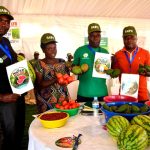
The exhibition, running from October 30 to November 8 at the Gikondo Expo Grounds, has attracted about 1,500 exhibitors from EAC countries and elsewhere in Africa. Its theme centres on strengthening regional value chains in leather and horticulture, including fruits, vegetables and flowers.
“Set big goals and be bold. We want small and medium-sized businesses to grow and eventually reach the level of major enterprises. We are here to help you achieve that,” Nsengiyumva told exhibitors.
He said the growth of businesses in one EAC country was closely connected to economic progress in neighbouring states, whose markets and economies complemented one another.
The Prime Minister identified high borrowing costs, difficulties securing reliable buyers and expensive transport as some of the constraints facing small businesses seeking to sell across borders.
He called for the removal of non-tariff barriers, simpler customs procedures, improved transport and logistics systems, and wider access to financing for cross-border trade.
Nsengiyumva said businesses should also look beyond the EAC to opportunities under the African Continental Free Trade Area (AfCFTA) and the Southern African Development Community (SADC).
Digital commerce and compatible payment systems, including the Pan-African Payment and Settlement System (PAPSS), could also make transactions between countries faster and less costly, he said.
This year’s exhibition places particular emphasis on leather and horticulture, sectors the Prime Minister said offered opportunities to retain more value within the region.
In horticulture, he urged businesses to invest beyond farming and harvesting by developing storage, refrigeration, packaging, processing and distribution facilities. In the leather industry, he called for greater capacity to process hides and skins and manufacture finished products such as footwear rather than relying mainly on raw material exports.
Nsengiyumva said Rwanda was investing in industrial zones, stronger links between farmers and processors, and trade infrastructure, including the Kigali Logistics Platform and a modern wholesale market for horticultural produce.
The annual trade fair, which began in 1999, has provided businesses with a platform to identify markets and establish partnerships. The Prime Minister said SMEs were important to job creation and innovation, particularly for women and young people.
He also cited Rwanda’s target of creating 250,000 jobs annually and increasing non-traditional exports, including horticultural products, from $1.4 billion to $3.2 billion over five years.
He urged entrepreneurs to treat the EAC as a shared market and build partnerships that could help their businesses reach customers across Africa.