For the past year, Rwanda’s economy has been sprinting, posting an impressive 9.4 percent growth rat. But as 2026 unfolds, government appears to be pulling the handbrake.
According to the April 2026 Economic Bulletin, growth is projected to slow to 6.8 percent this year. While such a drop would trigger market anxiety, policymakers are framing it as a deliberate, strategic maneuver, an attempt to shield the economy from an increasingly volatile global environment.
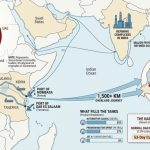
The escalating crisis in the Middle East has disrupted global trade routes such as the energy infrastructure, oil wells and Liquid Natural Gas (LGN) reducing global supply. At the heart of this crisis lies the Strait of Hormuz, a narrow maritime corridor (around 27km) that carries nearly a fifth of the world’s oil and gas supply.
As a result, energy prices have surged, petro is up by 47.7% and diesel has jumped to 13.2%. The consequences are now felt not just globally also by consumers in Rwanda. Analysts are projecting high levels if the conflict continues.
For Rwanda, which depends heavily on imported fuel, the effects are immediate: supply shortages have forced Rwanda Utility Regulatory Authority (RURA) to scramble with alternative fixed fuel prices which are pushing headline inflation to 9.2 percent since March 2026.
The current energy CPI (Consumer Price Index) has already reached 25.5% year-on-year, reflecting how quickly these pump prices are passing through to the rest of the economy.
The insurance is not spared; insurance premiums have also skyrocketed above $1m per vessel due to the risk. This has led to delays, rising transport costs, and eventually, higher prices for goods worldwide.
The slowdown by government is already visible in key sectors. The services industry, long considered the economy’s engine, is expected to cool from 9 percent growth to 6.1 percent, as global uncertainty dampens international travel and demand.
In response, the National Bank of Rwanda has taken a firm stance. In February, its Monetary Policy Committee raised the central bank rate to 7.25 percent, a classic tightening move aimed at containing inflation and protecting household purchasing power. The trade-off is clear: slower growth today in exchange for greater stability tomorrow.
Yet beneath the surface, there are signs of long-term positioning. The trade deficit widened by 4.4 percent last year, but some economists see this not as a red flag, but as an investment phase.
“It is like a farmer buying a high-tech tractor during a drought,” one analyst notes. “Your current cash flow suffers, but you are preparing for a much larger harvest.”
Agriculture, the backbone of the economy is also not spared. Last year, the sector expanded by 7 percent, with export crops, particularly coffee and tea, recording a 32 percent surge in value. Fertilizer prices are rising due to global energy costs and supply chain disruptions, farmers now have to pay significantly more despite government subsidies..
Still, the outlook for 2026 is more cautious, with growth projected at 3.7 percent. And here, the biggest risk is not policy, but nature. Adverse weather conditions could disrupt production, push food prices higher, and stall improvements in the unemployment rate, currently at 11 percent.
Ultimately, Rwanda’s economic “cool-down” is exactly what it claims to be: a calculated gamble. The question is whether the slowdown remains controlled, or whether external shocks will turn a strategic pause into a harder landing.