When Turanezerewe Fidel finished secondary school in 2020, he returned home with little prospect of finding a job. His family gave him a small plot of land, so he turned to farming.
At first, the returns were limited. Today, the young farmer says his vegetable harvest has doubled and his annual income from the crops has increased by several million francs.
Fidel, who represents the Terimbere Youth Kaboko group in Nyagatare District, attributes much of the change to training received through the Commercialization and De-Risking for Agricultural Transformation (CDAT) project.
“I used to harvest about seven tonnes of chillies or green beans, depending on what I planted. Now I harvest up to 14 tonnes,” he said.
His income from the crops has risen from about 5 million Rwandan francs to 8 million francs, he said. He has also built a house valued at about 12 million francs and started buying green beans from other farmers for resale to companies.
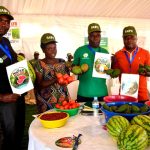
Fidel is among young farmers in Matimba and Musheri sectors who have received training in commercial vegetable and fruit production under CDAT.
The project has also helped farmers find markets for their produce by connecting them with companies that buy their crops. Fidel said this has reduced the risk of produce going to waste and helped farmers avoid selling at very low prices.
The benefits have extended beyond crop production.
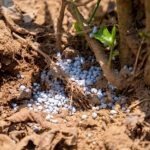
Uhiriwenimana Emmanuel, another member of Terimbere Youth Kaboko, said the group was trained to produce organic fertiliser using improved methods and later reached an agreement with CDAT to supply it.
The group recently had 552.2 tonnes of fertiliser tested and sold it to CDAT at 35 francs per kilogramme, according to Uhiriwenimana. The deal is worth more than 19 million francs.
CDAT agriculture officer Muhoza Chantal said working through cooperatives allows the project to train larger numbers of farmers at once.
CDAT agriculture officer Muhoza Chantal
The five-year project was launched by the Rwanda Agriculture and Animal Resources Development Board in 2022 to support agricultural commercialisation and help farmers increase production and incomes.
It currently works with 74 cooperatives in 15 districts and has trained 470 young people who completed different levels of education in vegetable and fruit farming.
The project says supporting women and young people is one of its priorities. Of the 70,527 people who have obtained jobs through the project, 35.7% are women.
For farmers such as Fidel, the shift is already visible in the size of their harvests and the businesses they have built around them.