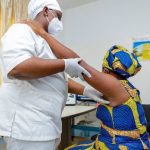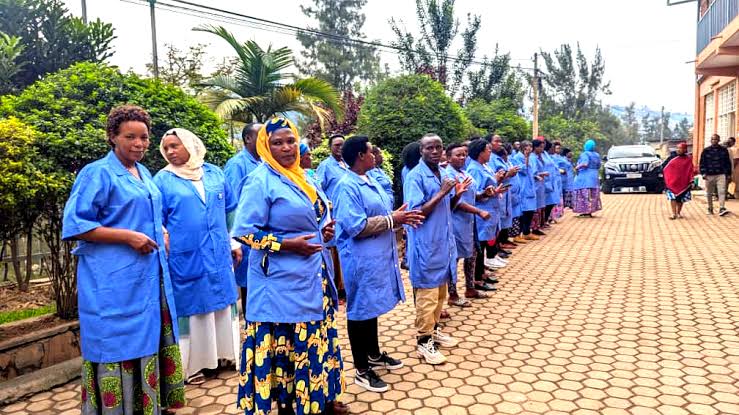
Community health workers have started teaching women how to collect samples for cervical cancer screening at home, as health authorities seek to make early detection easier to access.
The new approach was launched in Gatsibo District on Tuesday, Sept. 15, by the Rwanda Biomedical Centre (RBC) in partnership with the district.
RBC plans to use community health workers to reach 1.2 million women across the country. In Gatsibo, 30,870 women aged 30 to 49 are expected to undergo cervical cancer screening in September and October, while 31,737 women aged 50 to 69 are targeted for breast cancer screening.
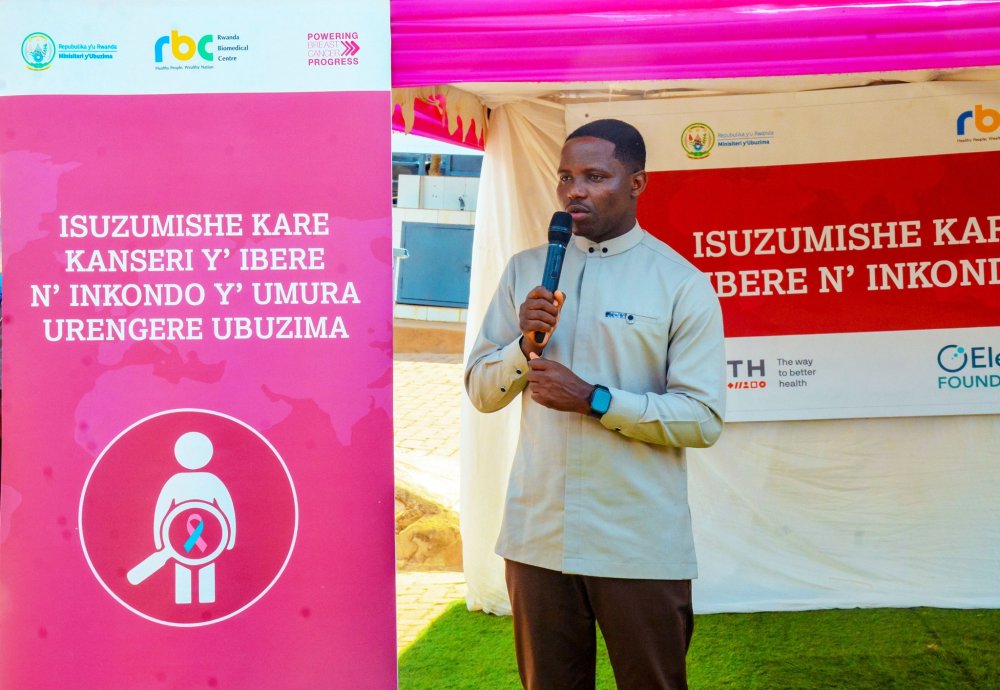
Dr Jean de Dieu Hategekimana, an official in RBC’s non-communicable diseases department, said 570,000 women in 12 districts had already been screened through the approach.
“The self-screening method is not painful. We train community health workers to teach women at home. The samples are taken to health centres and then to hospitals for testing,” Hategekimana said.
Rwanda’s cervical cancer elimination plan calls for community-based self-sample collection led by community health workers and aims to have 70% of women aged 30 to 49 screened. The country is working to eliminate cervical cancer by 2027 through HPV vaccination, screening and timely treatment.
WHO reported that about 1.63 million eligible women had undergone HPV DNA-based cervical cancer screening in Rwanda by October 2025.
Kayitesi Josephine, a community health worker in Ntende II village, Gihuta Cell in Rugarama Sector, said she had helped 14 women screen for cervical cancer in the two weeks since receiving training.
She said some women initially refuse screening but can change their minds after receiving an explanation about its importance.
A woman from Gihuta Cell, who asked not to be named because she does not want to appear in the media, said she was used to being screened at a health facility but found the new approach easier after receiving guidance from a community health worker.
“Rather than being afraid to know your health status, it is better to get screened,” she said.
RBC figures for 2024 show that 539 women were diagnosed with cervical cancer that year, while breast cancer was diagnosed in 616 women and 16 men.