Health officials are urging women to seek early screening as Rwanda intensifies efforts to eliminate cervical cancer, a disease that affects about 700 women nationwide each year but is highly treatable when detected early.
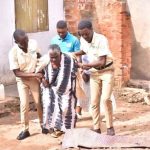
The call came on Nov. 17, 2025, as the country joined global commemorations of the International Day for the Elimination of Cervical Cancer. The event also marked the launch of a nationwide awareness campaign at the COR-UNUM Health Center in Kigali’s Nyarugenge District, where health workers demonstrated screening procedures and encouraged women to take advantage of free services.
Dr. François Uwinkindi, who heads the non-communicable diseases program at the Rwanda Biomedical Centre (RBC), said most severe cases occur among women who do not get screened early. He emphasized that early detection remains the strongest tool in preventing deaths.
“People get the disease when they haven’t been screened early enough,” Uwinkindi said. “We want people to come for testing. If symptoms are present, we treat them immediately, and if someone is diagnosed with cancer, they are referred for specialized care and can still be cured.”
Uwinkindi said health centers throughout the country are now equipped to detect and treat cervical cancer. He noted that all Rwandans, including those covered by Mutuelle de Santé, the community-based health insurance program, can access screening and treatment.
Eloge Nzabonankira, a trainer with the Rwanda Non-Communicable Diseases organization, said vaccination remains an important preventive measure but does not completely eliminate the risk of developing cervical cancer. The HPV vaccine significantly reduces the severity of potential disease, but vaccinated women must still undergo routine screening.
He added that testing positive for the human papillomavirus (HPV) does not mean someone has cancer. Instead, additional examinations are performed to detect early cellular changes that could lead to cervical cancer. These changes can be treated in hospitals and health centers across the country.
Women who attended the screening event said community health workers played an essential role in encouraging them to get tested. Kayitesi Solange, 37, said she had never considered screening until a health worker explained that cervical cancer can affect any woman.
“I used to hear about cervical cancer, but I thought it didn’t concern me,” she said. “After getting more information, I decided to come.”
The Ministry of Health aims to eliminate cervical cancer nationwide by 2027, three years ahead of the global target set by the World Health Organization.