This Africa Cup of Nations (Afcon) semi-final against Senegal feels bigger than a football match for Mohamed Salah. It feels like a deadline.
At 33, Salah the Egyptian King has nothing left to prove in Europe. League titles, Champions League glory, individual awards, he has collected them all. Yet in Africa, one empty space still follows his legacy. An Afcon title. And with every passing tournament, that absence grows louder.
Egypt may be Africa’s most decorated football nation, but their dominance belongs to the past. Their last continental triumph came in 2010, long before Salah became the face of Egyptian football. Since then, expectations have risen, but silverware has not followed. Salah has been central to every attempt, and painfully present in every failure.
Two lost finals. A humiliating home exit, an injury-ravaged tournament. The story has repeated itself too often. This is why the 2025 Afcon feels different. Not because Egypt are flawless, but because time is no longer forgiving.
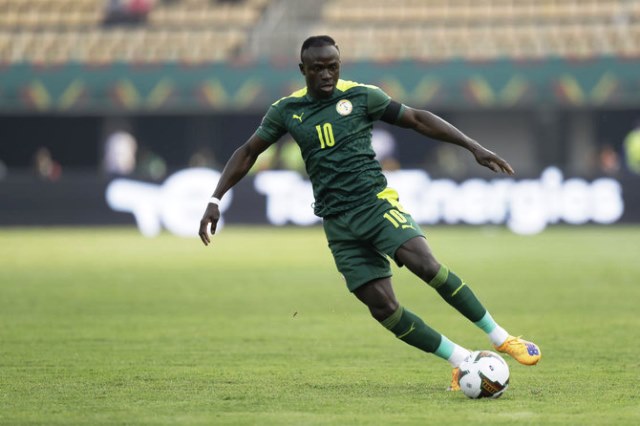
Senegal, and Sadio Mane in particular, embody everything that has denied Salah his moment. Their history is unavoidable. When these two nations have met with real stakes, Senegal have emerged stronger, calmer, and ultimately victorious. Penalty shootouts have been cruel to Egyptian Pharaoh’s and especially to their captain, whose misfortune in those moments has shaped the narrative around him.
Mane has already crossed the line Salah is still chasing. His Afcon triumph transformed how he is viewed across the continent. The same cannot yet be said for Salah, despite his global profile and consistent brilliance.
That is the uncomfortable truth African football often acknowledges quietly like it or not: greatness at club level does not automatically translate into continental immortality. Afcon still carries a unique weight. It defines legacies differently. And for players like Salah, it can be unforgiving.
What makes this tournament compelling is how Salah has responded to pressure. He arrived in Morocco amid club-level uncertainty and criticism, but the noise has faded quickly. On the pitch, he has been decisive, sharp, and visibly driven. These are not cosmetic goals. They have dragged Egypt forward, rescued difficult matches, and reminded everyone why he remains one of the continent’s most feared players.
Egypt, too, feel more balanced than in recent tournaments. They are not solely dependent on Salah, and that may be their greatest strength. Support from across the frontline has eased the burden, allowing their captain to focus on impact rather than rescue missions.
Still, Senegal represents the ultimate test no question about it. They are deeper, more settled, composed and built around a core that understands what it takes to win Afcon. Mane may no longer be their only weapon, but he remains their emotional compass. Experience, structure, and confidence give Senegal an edge Egypt cannot ignore.
This is why this semi-final matters so much. Not tactically, but historically.
Afcon is set to move to a four-year cycle, meaning opportunities will become rarer. Salah’s window is narrowing. Another defeat; especially to Senegal; would be more than just another chapter of disappointment. It would cement a narrative he has spent years trying to escape.
Victory, on the other hand, would change everything. Not overnight, but permanently. It would shift how Salah is remembered in Africa, how his career is discussed, and how his leadership is judged.
This is no longer about revenge or rivalry. It is about relevance, legacy, and timing.
For Mohamed Salah, Wednesday night is not just a semi-final. It is a referendum on his place in African football history. And as an old African proverb reminds us, no matter how long the night, the day is sure to come.