The United States House of Representatives this week overwhelmingly approved a three-year extension of the African Growth and Opportunity Act (AGOA), offering renewed hope to African exporters after months of uncertainty.
The trade programme, which grants duty-free access to the US market for more than 34 sub-Saharan African countries, expired last September, putting thousands of jobs at risk and forcing exporters to absorb steep tariffs.
The bill passed on Tuesday by a decisive 340–54 vote and now heads to the US Senate for debate. While most African countries are expected to retain their eligibility, the extension has revived long-running trade tensions for some; starting with Rwanda.
Rwanda’s relationship with AGOA has been shaped by its bold decision to restrict second-hand clothing imports, a move that cost the country preferential access to the US apparel market but aligned with its long-term industrial goals. And
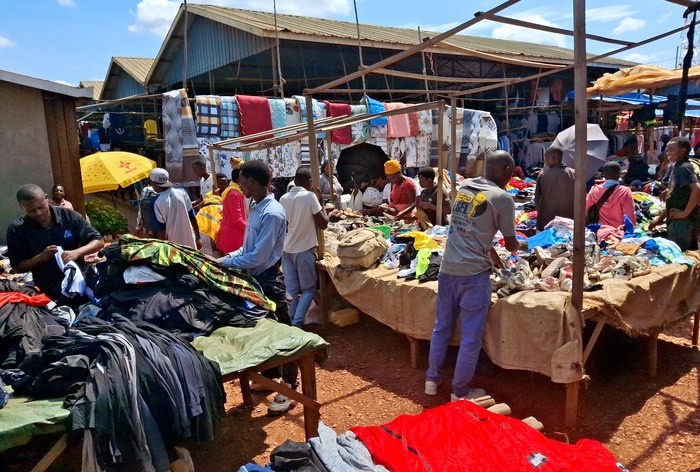
For decades, used clothes; locally known as “chaguwa”; dominated Rwandan markets, offering affordable options for consumers and livelihoods for traders.
In 2016, however, the government sharply increased tariffs on second-hand garments, raising duties from about $0.20 per kilo to $2.50. The aim was clear: protect local manufacturers and build a domestic textile and garment industry.
That policy came at a cost. The US viewed the tariffs as a trade barrier, and in 2018, during President Donald Trump’s administration; Rwanda lost its AGOA duty-free benefits for apparel. As a result, Rwandan clothing exports to the US were hit with tariffs, making them less competitive.
Despite the setback, Kigali has stood its ground. President Paul Kagame has refused to back down. “Rwanda and other countries in the region that are part of AGOA, have to do other things, we have to grow and establish our industries,” Kagame said in August 2024.
Trade and Industry Minister Prudence Sebahizi has repeatedly defended the policy, arguing that lifting restrictions on second-hand clothing would undermine Rwanda’s emerging garment sector.
Read More: Smuggled to Sell: The Hidden Trade Behind Rwanda’s Used Clothes Market
According to government figures, the share of second-hand clothes in textile imports fell from 32 percent in 2015 to just 7 percent by 2021, while “Made in Rwanda” garment exports grew from around $3 million in 2016 to more than $12 million by 2023.
Still, the transition has not been painless. Many low-income consumers continue to rely on second-hand clothes, and higher prices have pushed some traders into smuggling or toward cheaper imports from Asia. As AGOA discussions resume in Washington, Rwanda has signalled it is open to dialogue; but not at the expense of its industrial ambitions.
For some other sub-saharan countries, political friction is clouding trade benefits. For instance, South Africa’s position under AGOA may prove even more complicated. Africa’s most industrialized economy has recently had a strained relationship with the Trump administration, which accused Pretoria of persecuting white citizens; an allegation South Africa has denied.
Members of the US Congress have also questioned South Africa’s foreign policy choices, particularly its participation in naval exercises alongside China, Russia and Iran. Although Pretoria later asked Iran to withdraw from the drills, some US lawmakers suggested the damage had already been done.
Jim Risch, chair of the Senate Foreign Relations Committee, went as far as describing South Africa as an adversary of the US, arguing that trade deals should no longer be used to bridge political divides.
Yet South Africa was the single largest beneficiary of AGOA before it expired. In 2024, the automotive sector alone accounted for 64 percent of trade under the scheme, with exports valued at about $1.6 billion. That sector has also been among the hardest hit by Trump’s broader tariff measures.
Despite the tensions, South Africa welcomed the House approval. Trade Minister Parks Tau has said the country values its long-standing trade and investment relationship with the US but stressed the urgency of securing the extension.
“We need to keep the pressure up,” Tau told AFP. “The sector is slowing down and continues to suffer from cash-flow challenges and other external pressures.”
Elsewhere on the continent, the House vote has been met with relief. In Kenya, one of AGOA’s biggest success stories, manufacturers have said the programme has been vital to job creation and investment.
Pankaj Bedi, chief executive of United Aryan Factory; which exports Wrangler and Levi’s jeans to the US; described the vote as “a very positive sign”. Before AGOA expired, the programme anchored billions of Kenyan shillings in investment, supported about 66,000 apparel jobs, and sustained nearly 660,000 people whose livelihoods depend on the sector.
Similar stakes apply across Africa, where AGOA has long been seen as more than trade preferences; but as a pillar of industrial growth, employment and export diversification.
As the bill moves to the US Senate, African governments and exporters will be watching closely. President Trump has repeatedly criticized free-trade agreements and imposed sweeping tariffs on multiple countries, injecting uncertainty into global trade.
For countries like Rwanda, the debate is about balancing market access with long-term development goals. For others, including South Africa and Kenya, it is about preserving jobs and keeping export industries alive.
The AGOA extension offers breathing room; but it also highlights how trade, politics and national policy choices remain tightly intertwined.