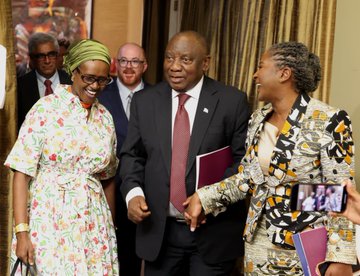
The executive director of the Joint United Nations Programme on HIV/AIDS, Winnie Byanyima, urged global leaders Tuesday to ensure equitable access to the new HIV prevention drug lenacapavir, warning against repeating historical delays that left millions in the Global South without life-saving medicines.
Speaking at the G20 High-Level Meeting “From Breakthrough to Access: Making Lenacapavir Affordable for All,” co-hosted by Unitaid and the South African Department of Health, Byanyima described lenacapavir as “the closest thing to a vaccine against HIV we have ever had.”
“My urgent call is that lenacapavir must not become another breakthrough that goes out only after a decade to those who need it most,” she said, adding that innovation without equity undermines global solidarity.
Byanyima highlighted persistent disparities in global health. “Breakthrough health technologies reach the Global North, while millions in the Global South wait — and die. We must invest in research and development, regional manufacturing, and universal health coverage to end inequalities and save lives,” she said.
UNAIDS has supported governments in negotiating fair pricing, challenged industry practices, convened global partners, and collaborated with civil society to ensure people remain central to HIV prevention efforts.
Her remarks come as South Africa prepares to roll out lenacapavir in early 2026. With roughly 8 million people living with HIV and about 1,000 adolescent girls and young women newly infected each week, experts say the rollout could mark a turning point in the country’s fight against the virus.
“Science continues to offer us new tools, but innovation alone is not enough. Communities, especially young women and key populations, have waited too long for HIV prevention they can trust and use with dignity,” said Eva Kiwango, UNAIDS country director for South Africa.
Developed by Gilead Sciences, lenacapavir will initially be available to 450,000 people at high risk through a $29 million Global Fund grant. South Africa is among nine countries selected for the first phase of distribution.
At the forum, Byanyima, who chairs the Global Council on Inequality, AIDS, and Pandemics, said inequality continues to shape global health outcomes.
“Inequality is not inevitable — it is a choice. Surviving the next pandemic could depend on where you live. Ending the inequality crisis requires bold political will — but it can be done,” she said.
The meeting, part of South Africa’s G20 presidency under President Cyril Ramaphosa, adopted the theme “Solidarity, Equality, Sustainability.” Ramaphosa praised Byanyima and her colleagues for their leadership.
“Inequality is a betrayal of people’s dignity, an impediment to inclusive growth, and a threat to democracy itself,” he said.