Uganda’s decision to withdraw its troops from Somalia is raising questions about the country’s ability to sustain security operations against al-Shabaab as it prepares to take greater responsibility for its own defence after nearly two decades of support from African forces.
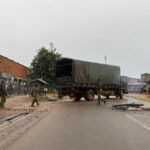
The Uganda People’s Defence Forces (UPDF) began withdrawing troops deployed under a bilateral security arrangement with Somalia’s federal government on Monday, November 2. The move is the first stage of a wider drawdown that will see all Ugandan forces leave Somalia by the end of 2027.
UPDF spokesperson Col. Chris Magezi said the first group of soldiers had already returned to Uganda. The withdrawal of troops serving under the bilateral arrangement is expected to be completed within days, according to the military.
“UPDF has embarked on the drawdown of troops deployed in Somalia under bilateral arrangements with [Somalia’s] Federal Government, effective immediately,” Magezi said in a statement.
He said the phased withdrawal would also cover Ugandan soldiers serving under the African Union Support and Stabilization Mission in Somalia (AUSSOM), the force mandated to support Somalia’s security transition and fight against al-Shabaab.
Uganda has about 4,500 troops serving under AUSSOM, according to Ugandan state media. The number of additional soldiers deployed under the separate bilateral arrangement has not been established.
The planned exit has already prompted concern within the African Union mission. In a letter dated October 31 to the United Nations Support Office in Somalia, AUSSOM warned that the withdrawal could leave parts of the Lower Shabelle region vulnerable to attacks by al-Shabaab, according to two diplomatic sources who verified the correspondence.
Somalia’s State Minister for Foreign Affairs, Ali Omar, told Reuters that the situation was not immediately critical but warned that a sudden departure could create security problems.
“Things are not dire now, but it could create problems if their troops suddenly pull out,” he said.
The concerns come as Somalia faces a wider transition in its international security and political support. The United Nations Transitional Assistance Mission in Somalia closed on October 31 after more than three decades of involvement in the country, although UN agencies and a separate UN office supporting African Union troops and Somali security forces will continue operating.
Somali authorities have presented the changes as part of a shift towards managing the country’s own security and affairs. However, the transition is taking place while al-Shabaab continues to mount attacks and questions remain over the country’s political stability and the capacity of its security forces.
Uganda was the first country to deploy troops under the African Union Mission in Somalia (AMISOM) in March 2007. Its forces, alongside contingents from other African countries, helped Somali authorities push al-Shabaab out of parts of Mogadishu and other strategic locations.
The mission later became the African Union Transition Mission in Somalia (ATMIS) before being replaced by AUSSOM in January 2025. The successive missions have supported Somali forces in confronting al-Shabaab while working towards transferring security responsibilities to national institutions.
Al-Shabaab, an armed group linked to al-Qaeda, has fought the Somali government for about two decades, seeking to overthrow it and impose its interpretation of Islamic law. It continues to carry out bombings and armed attacks against military and civilian targets.
Uganda’s withdrawal will therefore test how far Somalia’s security forces can take over responsibilities previously supported by foreign troops, and whether the African Union mission can maintain its operations during the transition.