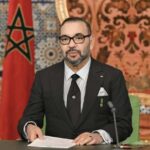
Over twenty-seven years, the Kingdom has steadily pursued a state-led vision of modernization anchored in institutional reform, strategic infrastructure, industrial upgrading, social inclusion and stronger national resilience.
Today, that trajectory is visible across multiple fronts. From investment and industrial development to social protection, infrastructure, renewable energy and water security, the Kingdom is consolidating the foundations of a more resilient and competitive development model.
Investment as the engine of transformation
A major feature of this phase is the growing role of investment in driving growth. Morocco has put in place a new architecture designed to stimulate private initiative, with the Mohammed VI Fund for Investment serving as a key catalyst and the new Investment Charter creating a more incentive-based framework for productive capital.
Since the new Investment Charter became operational in March 2023, it has enabled the signing of 391 investment agreements representing a total volume of some MAD 520 billion, with a strong emphasis on stable job creation, territorial rebalancing and the emergence of future industrial sectors. This momentum reflects a broader effort to make investment a central engine of the Kingdom’s economic transformation through 2035.
Small and medium-sized enterprises are also being integrated more directly into this strategy. New support mechanisms now target projects valued between MAD 1 million and MAD 50 million, linking incentives to employment creation, strategic sectors and territorial equity.
An industrial base moving up the value chain
Morocco’s industrial transformation is another defining achievement of the reign of His Majesty King Mohammed VI. Industry now accounts for 25 percent of GDP, driven by the emergence of high-value sectors such as automotive, aerospace, agro-industry, chemicals, renewable energy and green hydrogen.
Automotive manufacturing has become the country’s leading export sector, while aerospace has developed into one of Morocco’s most advanced industrial success stories. The aerospace industry now includes more than 140 companies, employs over 25,000 people, has reached around 40 percent local integration and generated more than MAD 30 billion in exports in 2024, up about 15 percent from the previous year.
This industrial rise has been supported by investment in infrastructure, logistics and skills. Morocco has expanded specialized training pathways, developed supplier ecosystems around major investors and improved industrial deployment timelines, with some factories now able to become operational in only a few months.
Health sovereignty: a continental vaccine hub
Health has become a strategic front of its own. In Benslimane, Morocco is developing one of Africa’s largest vaccine and biotechnology manufacturing complexes, launched under royal impetus to give the Kingdom – and the wider continent – the capacity to produce vaccines and biotherapeutic products at scale.
Conceived in the aftermath of the pandemic, when unequal access to vaccines exposed the vulnerability of import-dependent health systems, the project aims to cover a large share of national needs and to supply African markets. Combining fill-and-finish operations with local manufacturing, it is designed to anchor a broader ecosystem of research, specialized skills and supplier industries around the life sciences, and to position Morocco as a regional platform for pharmaceutical production and health security.
Social protection at the center of the model
Social reform has also become a central pillar of the Kingdom’s transformation. More than 20 million beneficiaries are now covered by compulsory health insurance, marking a major step toward universal social protection.
The first family allowances have already begun to be disbursed through the Unified Social Registry, while pension reform is gradually moving toward a framework that could eventually bring public and private schemes closer together. These reforms reflect a broader effort to ensure that economic progress is matched by wider access to social rights and public support mechanisms.
At the same time, Morocco continues to address territorial disparities through infrastructure and regional convergence policies. Catch-up programs in regions such as the Oriental and Beni Mellal-Khenifra, along with new investments linked to major international events, reflect a determination to spread development more evenly across the national territory.
Infrastructure on a national scale
Infrastructure remains one of the most visible expressions of this long-term transformation. In the aviation sector, Morocco’s Airports 2030 strategy aims to raise national airport capacity to 80 million passengers, backed by nearly MAD 28 billion in investment.
Casablanca’s Mohammed V Airport, with a new hub-type terminal and an additional runway, is designed to accommodate up to 40 million passengers a year, while Marrakech is being expanded toward 16 million. Rabat-Salé and Fez are also increasing capacity, as Morocco seeks to position itself more strongly as a regional hub for air transport and tourism.
Rail infrastructure is advancing on a similar scale. Morocco plans to acquire 168 trains, while rail infrastructure and service upgrades are expected to mobilize MAD 96 billion by 2030, including MAD 53 billion for the Kenitra-Marrakech high-speed line and regional rail development.
The country’s port strategy is also entering a new phase. Nador West Med, scheduled to enter service in 2026 at a cost of MAD 12.5 billion, is expected to strengthen Morocco’s position as a maritime and energy hub, while the Dakhla Atlantique port project, valued at around MAD 12.65 billion, is advancing as a cornerstone of the Kingdom’s wider Atlantic vision – a strategy meant to connect the southern provinces to national and international trade routes and to open a maritime gateway toward West Africa.
Sport as a lever of development and global standing
Sport, too, has become an instrument of development and international visibility. After hosting the 2025 Africa Cup of Nations, Morocco is preparing to co-host the 2030 FIFA World Cup alongside Spain and Portugal, in an edition that will symbolically bridge continents.
The centerpiece of this effort is the new Grand Stade Hassan II, rising near Casablanca at El Mansouria, designed to seat around 115,000 spectators and set to rank among the largest football stadiums in the world. Around it, a national program of new and renovated stadiums – in Casablanca, Rabat, Marrakech, Tangier, Agadir and Fez – together with upgraded training centers, transport links and hospitality capacity, is turning a sporting calendar into a catalyst for infrastructure, tourism and job creation across several regions.
Modernizing the state and public enterprises
Governance reform is another major component of the current transition. Morocco’s public-enterprise reform agenda now covers more than 57 public enterprises and around 340 subsidiaries, which together represent a substantial share of public investment and value creation.
This portfolio accounts for 67 percent of turnover and 96 percent of value added in the merchant public sector. Current reforms include streamlined governance bodies, specialized committees, the appointment of independent directors and the gradual adoption of IFRS-based financial consolidation.
In parallel, six major entities – ONDA, FEC, OMPIC, MAP, ONHYM and ONP – are being transformed into joint-stock companies in a move intended to improve agility, governance and access to financing instruments. These reforms are part of a broader effort to modernize public action and strengthen the efficiency of the state’s strategic economic role.
An accelerating energy transition
Energy transition is equally central to Morocco’s emerging model. By the end of January 2025, renewable energy represented 45.3 percent of installed electricity capacity, totaling nearly 5,400 MW, including around 2,400 MW of wind, 2,100 MW of hydropower and roughly 900 MW of solar.
Morocco now appears on track to reach its national target of 52 percent renewable installed capacity before 2030. To support this objective, the pace of energy investment is expected to increase sharply by 2027, with around MAD 70 billion planned for new renewable capacity and 60 percent of that effort projected to come from the private sector.
Green hydrogen is also emerging as a strategic frontier. Selected projects are expected to generate around 20 GW of renewable energy, 10 GW of electrolyzers and nearly 8 million tonnes of green hydrogen derivatives, underscoring Morocco’s ambition to position itself in future clean-energy value chains.
Securing water for the future
Water security, meanwhile, has become one of the Kingdom’s most urgent priorities. In response to structural water stress, the National Program for Drinking Water Supply and Irrigation 2020-2027 has been expanded, with its budget rising from MAD 115.4 billion to MAD 143 billion.
The strategy combines dam construction, wastewater reuse, inter-basin transfers and large-scale desalination. Morocco plans to build nine new large dams between 2025 and 2028, with a combined storage capacity of 2 billion cubic meters and an estimated cost of MAD 13.83 billion.
Desalination is becoming a key pillar of long-term water policy. Morocco aims to mobilize more than 1.7 billion cubic meters of water annually through desalination and to cover more than half of its drinking-water needs by 2030, with the future Casablanca desalination plant alone expected to reach 300 million cubic meters per year once operational phases begin from 2027.
A long-term project, still unfolding
As Morocco marks the 27th anniversary of the accession of His Majesty King Mohammed VI to the Throne, the picture that emerges is one of continuity, adaptation and long-term ambition.
The Kingdom’s progress has not been linear and challenges remain, particularly in employment, human capital and implementation capacity, but the scale of the transformation achieved over twenty-seven years is unmistakable.
Throne Day thus stands as both a national celebration and a reminder of a broader state project: building a modern, competitive and socially grounded Morocco under the guidance of His Majesty King Mohammed VI. (End)