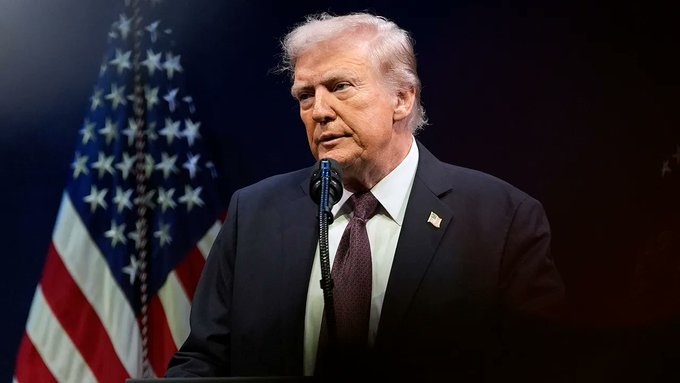
President Donald Trump announced on Monday that he has directed the U.S. military to delay planned strikes on Iranian power plants and energy infrastructure for five days, following what he described as “good and productive conversations” with Tehran.
Posting on his Truth Social platform, Trump said: “I am pleased to report that the United States of America, and the country of Iran, have had, over the last two days, very good and productive conversations regarding a complete and total resolution of our hostilities in the Middle East.” He added that the military would hold off on any attacks “subject to the success of the ongoing meetings and discussions.”
The announcement follows a dramatic escalation last weekend, when Trump gave Iran 48 hours to reopen the Strait of Hormuz to all vessels, warning that failure to comply would result in the U.S. “obliterating” Iran’s power infrastructure. Tehran had threatened to fully close the strategic strait—a vital passage for roughly one-fifth of the world’s oil supply—in retaliation and signaled that it could target energy facilities in Israel and other Gulf nations.
The blockade has already sent shockwaves through global markets. Oil prices have surged, while several Asian countries are grappling with shortages of cooking gas. Fatih Birol, head of the International Energy Agency, warned on Monday that the situation in the Middle East is “very severe,” describing it as more intense than the energy crises of the 1970s combined.
Meanwhile, the Islamic Revolutionary Guard Corps (IRGC) issued a stark warning to Washington, saying that any U.S. attacks would provoke strikes on power plants supplying electricity to American bases, as well as industrial, economic, and energy infrastructure in which U.S. interests are involved.
The coming days will be crucial, as the U.S. and Iran navigate high-stakes diplomacy against a backdrop of escalating tension and global energy uncertainty.