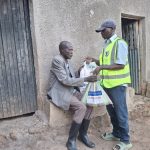
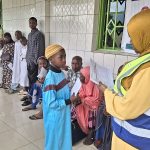
With just a few days left in Ramadan, the Abdulallah Kiromba Foundation (AKF) spent time visiting families across different districts in Rwanda. The goal wasn’t just to ask questions, but to truly listen; to understand what this sacred month looks like in their daily lives. From the quiet discipline of early morning routines to the long, demanding afternoons at work, each family shared what Ramadan means to them in real terms.
Iragena Madina — Gisenyi, Western Province, Rwanda
Iragena Madina, 35, a widow is raising four children in Rubavu District. At dawn she is awake, tidies the house, and gathers herself for the day ahead after preparing her children for school. Like many women in her situation, she crosses the border into the Democratic Republic of Congo (DRC) from Rwanda each morning in search of work.
She doesn’t have steady employment. Most days, she survives on small jobs washing clothes, cleaning homes, doing whatever household work she can find. What she earns is what feeds her family.
“We thank Allah for what He gives us during this fasting period,” she says quietly. “Life is becoming more difficult, especially for a single mother someone like me.”
Her children fast, too; all except the youngest. At school, things can be complicated. During lunchtime, her older children collect their meals like everyone else. But instead of eating, they quietly give the food away. They pretend they’ve eaten to avoid being questioned or punished by school authorities who expect every child to have lunch.
“It’s not easy for them,” Madina explains. “As parents, we have to talk to the school administration. Even though it’s a mixed school, our children should be allowed to practice their religion freely.”
Recently, she bought a prayer mat so her children can pray at school.
By mid-morning, Madina is usually in Mubirere, just across the border in the DRC’s Goma city. She waits there near a church alongside other women, hoping someone will come looking for workers. Families who need help know where to find them.
In the evening, she crosses back into Rwanda to prepare iftar.
“On a good day, I come home with something,” she says. “On a bad day, I return with nothing.”
Prices have risen sharply. Potatoes, rice, beans, even basic items cost more now. The Rwandan franc has lost value, and inflation has made every purchase feel heavier.
“You go to the market thinking you have enough money,” she says, “but what you can actually buy keeps getting smaller.”
Despite everything, she insists that Ramadan is about staying grounded.
“What’s important in this month is to function normally,” she says. “We have to be intentional about how we spend our time; what we watch, what we listen to; and make sure we pray five times a day, even while struggling to work.”
Some days feel isolating. Fasting while working long hours, worrying about food, and carrying responsibility alone can make the world feel smaller. Still, she holds onto her faith.
“As Muslims, we believe in unity,” she says. “Even if you feel alone, you are not alone.”
As a sole provider, she has no choice but to keep going. She leaves early, returns late, and does everything she can to put food on the table. If she’s delayed at work, her older children prepare iftar. Sometimes they eat as late as 9:00 p.m. before sleeping and waking again for suhoor.
She smiles faintly when recalling her favorite Ramadan.
“It was in 2015,” she says. “My husband was still alive then. He passed away in 2017 from natural causes.”
Her voice moderates.
“That Ramadan was beautiful. The children were happy. Their father provided everything. Eid was unforgettable; the food, the neighbors, the friends who came to celebrate. The masjid was full during prayers. It felt magical. MashaAllah.”
Now, survival is her daily focus.
“Right now, I’m praying to at least earn 2,000 francs today,” she says. “With that, I can buy sweet potatoes. My children love them. We will break our fast with that.”
Sometimes, she admits, breaking the fast is as simple as water and whatever small food they can manage. It’s not ideal, especially for children, but they adapt.
“My children understand,” she says. “If I don’t get work, we improvise.”
For Madina, Ramadan is resilience in motion; faith carried through uncertainty, gratitude expressed in small meals, and strength drawn from memory and hope.
How does Ramadan truly shape daily life; from the stillness before dawn to the fatigue of late afternoon? What is the hardest part of fasting in Rwanda today? Has the rising cost of living changed how families prepare for iftar? And beyond abstaining from food and drink, what does this sacred month mean on a personal level?
For Madina, Ramadan is resilience in motion; faith carried through uncertainty, gratitude expressed in small meals, and strength drawn from memory and hope
Uwimana Madina: Mageragere, Nyarugenge District
Uwimana Madina, is a mother of three girls living in Mageragere Sector, in Nyarugenge District. Not long ago, she had a small diner business that helped support her family. But as customers dwindled, she was forced to close it.
Now, like many others, she is navigating Ramadan while adjusting to financial uncertainty.
“During this period of Ramadan, we fast like everyone else. Alhamdulillah, we thank Allah for keeping us alive and healthy,” she said. “It’s not easy, but we continue to pray that Allah makes everything easier.”
Her daughters attend school alongside non-Muslim students. She says the school has understood, Muslim children are allowed to pray, and communication with the administration is ongoing, especially during Ramadan.
“We stay in touch with the school to make sure the girls are doing fine,” she explains. “Sometimes children lose energy while fasting. By afternoon or evening classes, they struggle to concentrate.”
Still, she finds comfort in knowing that teachers are parents too.
“They understand the situation. They know how to handle a child who is fasting. And if anything happens, the school informs us.”
For Uwimana, the physical toll of Ramadan is real, especially at the beginning.
“As parents, and even as adults, the first days can make you feel weak. That’s natural,” she says. “Sometimes you feel dizzy from hunger. But after a few days, your body adjusts.”
What carries her through is the shared experience.
“You don’t feel alone. You know others are fasting too. By the mercy of Allah, that gives you strength,” she says. “Not every day goes smoothly. Some days, I just tell my girls to be patient.”
To Uwimana, Ramadan is deeply personal. It’s not just about abstaining from food and drink.
“Ramadan means becoming a better person and drawing closer to Allah,” she says. “It’s about stepping away from negativity, ego, and distractions.”
Fasting from dawn to sunset, for her, represents discipline and inner strength, the ability to overcome challenges, both physical and spiritual.
“As a mother, Ramadan is beautiful, but it’s also exhausting,” she admits. “I have to think about feeding my children, and myself, and sometimes helping others where I can. But at the same time, it makes me feel connected, to my community and to millions of Muslims around the world. We’re all hungry together, all hoping together.”
That shared experience gives her a strong sense of identity.
“It reminds me who I am and what truly matters.”
Ramadan also gives her space to pause.
“It’s a time to reflect and reset,” she says quietly.
Right now, her biggest challenge is financial. Since stepping away from her small diner business, preparing iftar has become harder.
“You can find everything you need in the market,” she says. “But having the means to buy what you want, that’s the problem.”
Even so, she chooses gratitude.
“All my Ramadan’s have been good,” she says with a soft smile. “Al-hamdu lillah.”
Abdul Karimu Munyaneze — Kayonza District, Rwanda
Abdul Karimu Munyaneze, 38, is a master welder in Kayonza District. When he talks about Ramadan, he speaks with calm certainty, the kind that comes from living what you believe.
“To me, being Muslim means generosity and self-discipline,” he says. “During Ramadan, we fast from Fajr to Maghrib, no food, no drink. It’s a religious duty that teaches patience, self-control, and empathy for those who have less.”
Most of his days are spent inside his workshop, sparks flying as he welds metal to earn a living. Providing for his family is his priority, even while fasting. In between work, he steps away for prayer.
“In simple words, Ramadan is a time of spiritual renewal,” he explains. “It’s about discipline, community, and a deep personal connection with your faith.”
This year, he feels especially grateful. The last harvest was good, and with the rainy season underway, he’s preparing his land again.
“In Rwanda, agriculture is the backbone of life,” he says. “Even though I have my workshop, I can’t forget farming. Welding gives me income, but it’s seasonal. Some days I have clients, maybe someone building a house or needing repairs, and some days I don’t. But farming feeds my family.”
Beyond welding, he considers himself an agriculturalist and livestock farmer. The crops and animals provide food for his household, especially during Ramadan. The workshop income helps cover other responsibilities, like school fees for his children.
“My wife sells produce at the market,” he adds. “After we harvest, we keep what we need at home and sell the rest. Alhamdulillah, Allah provides.”
When asked about his favorite Ramadan, he pauses.
“It’s hard to choose just one,” he says honestly. “It’s not about a single day or moment. It’s the whole atmosphere — the night prayers, the family gatherings, giving charity, the sense of peace.”
For him, Ramadan isn’t about highlighting one special memory. It’s about the entire experience.
“From the first fast to the last night, every part has its beauty,” he says. “During this month, your heart feels lighter. Life feels more meaningful.”
As a father, he sees Ramadan as a responsibility as well as a blessing.
“My role is to guide my family,” he says. “To educate and encourage them to love Allah, the Almighty. He is the One who provides everything.”
He ends his reflection with a warm greeting:
“ Salaamu Alaikum Warahmatullahi Wabarakatuh. Peace be upon everyone during this Ramadan.”