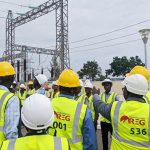
A carbon-financed water project in Rwanda is expected to provide about 1.8 million people with access to safe drinking water through the distribution of 300,000 ceramic filters, following its authorisation under a carbon market agreement between Rwanda and Singapore.
Singapore’s National Environment Agency (NEA) announced the approval on November 14, describing it as the first carbon credit project authorised under the Singapore-Rwanda Implementation Agreement and the first across six of Singapore’s operationalised bilateral carbon market agreements.
“These authorisations will support projects that mobilise carbon financing for emissions reductions and sustainable development,” the agency said.
Developed by Climate Bridge International, the Safe Water Supply Project will distribute the filters to households and early childhood development centres across Rwanda, with a particular focus on the Western Province.
The filters are designed to provide safe drinking water without requiring households and centres to boil water using firewood or charcoal. This is expected to reduce fuel consumption, emissions and indoor air pollution.
“By reducing reliance on these fuels for water treatment, the project will also reduce associated emissions and indoor air pollution,” the NEA said.
An initial 10,000 filters began to be distributed in June 2026, while the remaining units are expected to be rolled out progressively in 2027.
The agency estimates that the project will reduce emissions by about 780,000 tonnes of carbon dioxide equivalent between 2026 and 2030.
It also expects reduced demand for firewood to save time that would otherwise be spent collecting it, allowing more time for education, income-generating activities and community participation.
The project falls under the implementation agreement signed by Rwanda and Singapore on May 6, 2025, which provides a framework for the two countries to cooperate in generating and transferring carbon credits under Article 6 of the Paris Agreement.
Under the arrangement, carbon credit projects in Rwanda can attract financing linked to emissions reductions, while credits that meet the required standards may be transferred to Singapore to support its climate targets.
The authorisation does not mean that all projected carbon credits have already been issued. The process includes further stages, including approval by both countries, verification of emissions reductions and the issuance and transfer of eligible credits.
Singapore said more than 20 other projects were undergoing assessment under the agreement, with further information on authorised projects expected to be published.