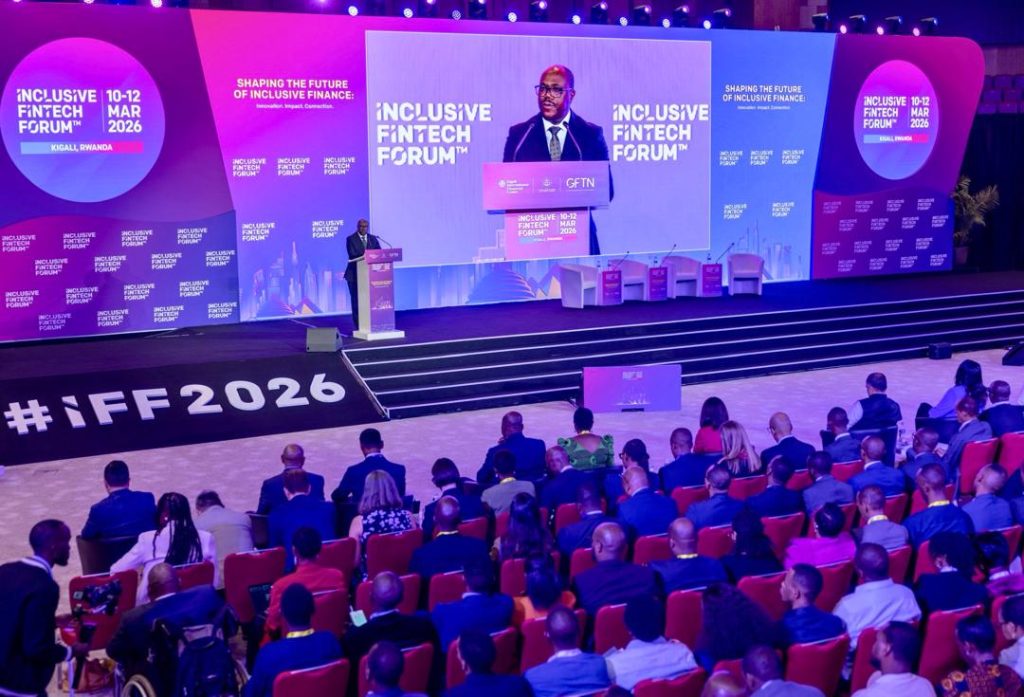
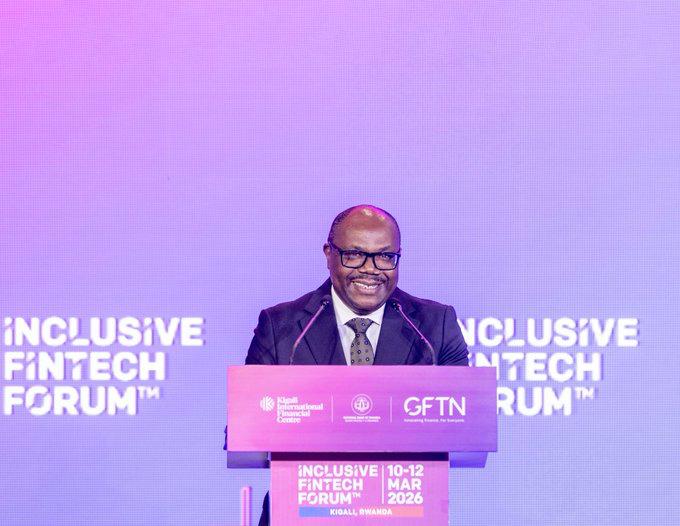
Rwanda has made significant strides in building a resilient, technology-driven financial sector, with 92% of adults now reached by digital financial services, Prime Minister Dr. Justin Nsengiyumva said Wednesday.
He spoke at the opening of the 3rd Inclusive Fintech Forum in Kigali, an international conference on advancing technology in inclusive financial services.
“Rwanda has embraced this responsibility and continues to commit itself fully,” Dr. Nsengiyumva said. “Over the past 20 years, we have invested heavily in modern technology as a foundation for sustainable economic growth. Today, nearly all citizens have access to 4G internet. Government services have been digitized through platforms like IremboGov, ensuring efficient, transparent, and accessible services.”
The prime minister said digital payments are increasing across large, small, and informal businesses, expanding access to financial services.
“Currently, 92% of adults in Rwanda are reached by financial services,” he said. “A rural farmer can receive payments instantly. A young entrepreneur can secure a loan via their phone. Even small businesses can reach international markets from anywhere.”
Dr. Nsengiyumva said more work is needed to make technology fully inclusive and to foster innovation.
“Our goal is to create an even more conducive environment for innovation and investment,” he said. “Recent steps include drafting legislation on digital assets, which will unlock new opportunities while providing confidence to investors and consumers.”
He highlighted challenges across Africa, including high costs of capital, expensive cross-border transactions, and inconsistent regulations.
“Africa cannot achieve financial independence relying on weak systems,” he said. “Tools and agreements such as the African Free Trade and Cooperation Agreement require strong commitment from all stakeholders.”
He emphasized that infrastructure development, including electricity, modern facilities, and industrial capacity, is critical for supporting human capital growth.
“Digital finance plays a central role,” Dr. Nsengiyumva said. “It expands access to funds, reduces transaction costs, and allows millions of people and businesses to participate fully in the formal economy.”
The prime minister said Rwanda has invested in technology for more than two decades, enabling rural citizens to access financial services via mobile phones. These efforts have helped increase digital transactions, with 96% of Rwandans reached by financial services in 2024, 92% through banks or mobile money.
Soraya Hakuziyaremye, governor of the National Bank of Rwanda, said financial inclusion has grown from 21% in 2008 to 92% today.
“There is a need for cooperation among financial regulators across African countries to share knowledge, technology, and safeguard national currencies,” she said. “Digital money, advanced payments, and financial intelligence are no longer concepts—they are transforming how we transfer funds, invest, and regulate financial institutions globally.”
Currently, more than 75% of Rwandan adults have bank accounts, compared with 25% a decade ago, illustrating rapid progress in financial inclusion.