A new 30-month programme is set to give Rwanda’s artists what talent alone cannot: training, funding, networks and a way into international markets.
The initiative, called Shaping Futures, was launched on 18 November 2026 at the Centre Culturel Francophone du Rwanda. It is funded by the European Union and coordinated by the Institut Français du Rwanda, together with the Goethe-Institut Rwanda and Ishyo Arts Center.
It runs from January 2026 to June 2028 and focuses on music, visual arts and performing arts.
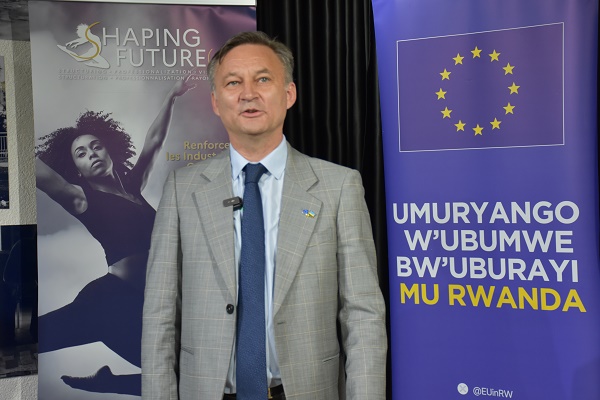
Speaking at the launch, EU Ambassador to Rwanda Jérémie Blin said the project is worth €800,000. He was clear that it cannot reach every young artist in the country. Anyone can apply, he said, but the organisers will pick the strongest candidates and help them grow, in Rwanda and beyond.
“We want Rwandan artists to be able to make a living from their talent and to reach audiences across the region,” Blin said. He added that culture is essential to society, not a luxury, and can create jobs, support businesses and attract visitors.
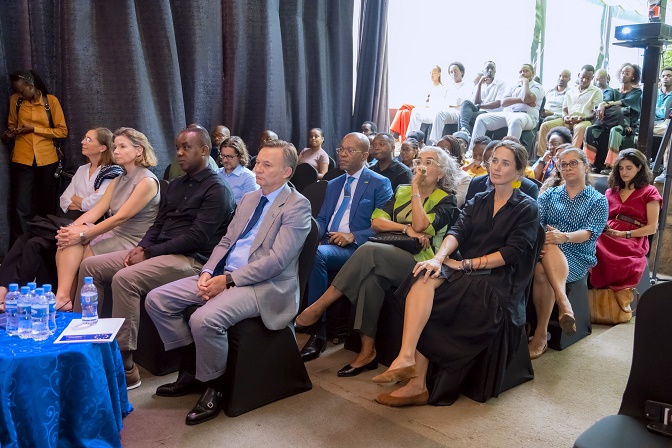
Several guests attended the launch /Courtesy photos
Support will come as residencies, seminars, training, mentorship and grants.
Lee Fou Messica, Director of the Institut Français du Rwanda, pointed to a 2023 British Council survey of the sector. In it, 76% of creative professionals said access to funding was a serious or very serious challenge, and 65% said they had few chances to network or collaborate.
“What they need is what talent can’t create alone,” Messica said.
The music component will cover production, post-production, mixing and mastering, and music export. The programme expects to train 47 music professionals, host two musicians in residencies and support the production of new albums.
Beyond the artists
Anisha Soff-Ochieng, Director of the Goethe-Institut Rwanda, said a stronger sector also needs the people around the artists: curators, cultural managers, producers, galleries and festivals. The programme will cover cultural management, entrepreneurship, exhibitions and even the use of artificial intelligence in the arts.
She said that professionalisation should not turn every artist into a businessperson. “It means creating better conditions for people to pursue their artistic and cultural work professionally and sustainably,” she said.
Carole Umulinga Karemera, Executive Director of Ishyo Arts Center, said the programme was shaped through consultations with stakeholders, institutions and government representatives. Inclusion is central, she said, with places reserved for women, young people, persons with disabilities and creatives without formal organisational backing.
Ishyo will lead support for theatre, playwriting, directing, lighting and set design, and festival production. It will also look at how professional artists can contribute to arts education in public schools.
Speaking on behalf of government, Parfait Ishungure, Permanent Secretary at the Ministry of Youth and Arts, said the sector contributes to jobs, innovation, social cohesion and access to regional and international markets. Talent is not enough, he said.
“Our creatives need more than just opportunities to produce. They must also be able to access networks, resources, financing, professional spaces, audiences and new markets,” Ishungure said.
Mr. Blin said arts and youth support is only one part of the EU’s partnership with Rwanda, which he described as built on mutual interest and shared values. He said the EU also works in health, where it helped finance the installation of the BioNTech vaccine manufacturing facility in Rwanda, and in agriculture.
Applications and opportunities will be announced gradually over the 30 months. The partners urged young artists to follow the announcements and take part.