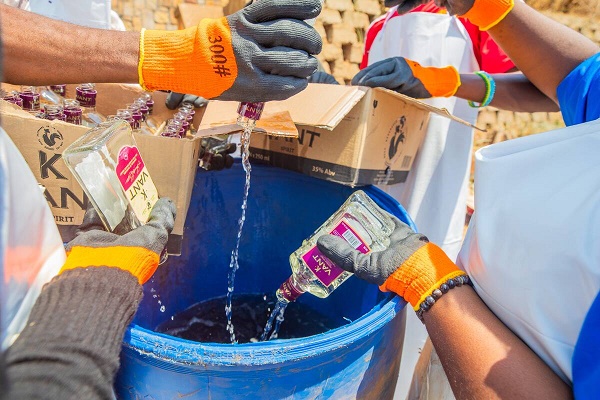
What began as a domestic crackdown on illicit alcohol is now turning into a regional regulatory dispute.
Kenya has pushed back against Rwanda’s suspension of five Kenyan-made alcoholic beverage brands, with the Kenya Bureau of Standards (KEBS) insisting that the products meet the required safety and quality standards.
In a statement issued after Rwanda FDA announced the suspensions on August 5, KEBS said the affected products had undergone certification, factory inspections, market surveillance and laboratory testing. It said the products carried valid standardisation marks and complied with applicable East African standards covering alcohol content, methanol and other safety parameters.
KEBS said it went a step further after Rwanda’s announcement, conducting fresh inspections of the manufacturers between August 7 and 10 and collecting new samples for testing. It said the results again showed the products complied with the relevant standards.
The Kenyan regulator is now engaging Rwanda FDA and other East African regulatory bodies to understand the basis for Rwanda’s decision and seek a technical resolution through existing regional frameworks.
The response comes as Rwanda’s crackdown intensifies at home. More than 150 people have been detained, according to the Rwanda Investigation Bureau, over suspected involvement in the production and distribution of illicit alcohol. Rwanda FDA has also shut down liquor businesses and suspended the importation of dozens of brands, alongside restrictions on ethanol and methanol imports.
The government says the measures are driven by public-health concerns. Health Minister Dr Sabin Nsanzimana has reported hundreds of people treated after consuming illicit brews this year, including dozens of deaths and cases of vision loss. In Kigali alone, more than 360 bars have reportedly been closed, with some owners arrested.
But Kenya’s response introduces a new question: when one country says a product is safe under its standards and another suspends it on safety grounds, which standard should consumers trust?
That question is particularly important in the East African Community, where goods are supposed to move under common standards and regional trade rules.
For Rwanda, the issue is no longer only about shutting down dangerous alcohol at home. It is also about explaining, with evidence, why products certified in a neighbouring country are being stopped at its border.
Rwanda FDA had not responded to requests for comment at the time of publication.
The dispute also comes as international warnings about alcohol safety in Rwanda gain attention, with the United Kingdom updating its travel advice to flag risks linked to counterfeit alcohol and methanol contamination.