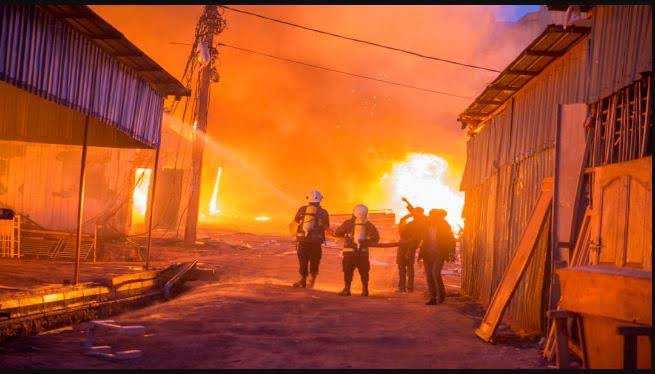
Rwanda is assessing its firefighting and emergency response systems after 1,380 fires killed 28 people across the country over the past five years, with authorities seeking to strengthen preparedness as cities, businesses and industries expand.
The assessment is part of a project launched Aug. 20 by the Ministry of Internal Security with funding from Poland through the United Nations Industrial Development Organization (UNIDO).
The 12-week exercise will examine fire stations, firefighting vehicles and equipment, infrastructure, staffing, emergency deployment and coordination among institutions. It will be conducted in Kigali and nine districts: Musanze, Nyagatare, Rwamagana, Muhanga, Huye, Rusizi, Rubavu, Kayonza and Gatsibo.
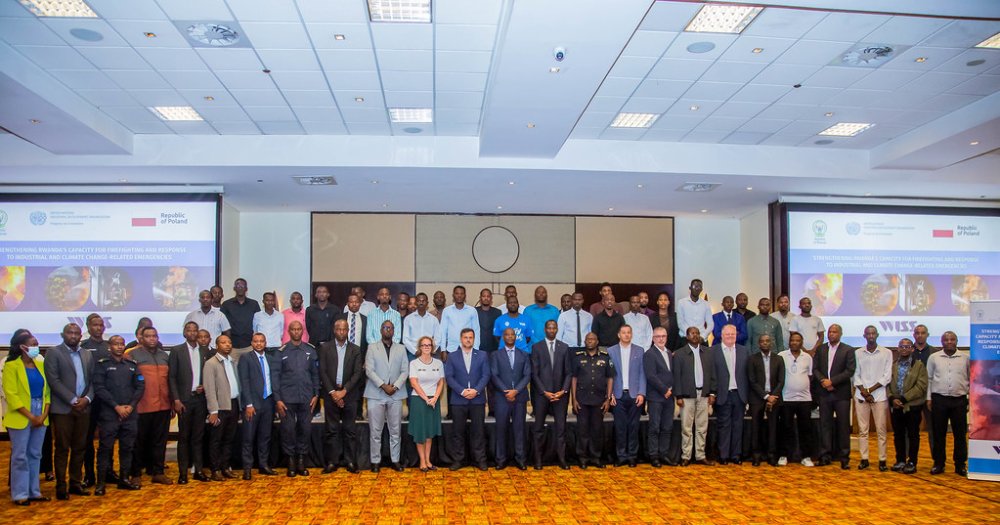
Benjamin Sesonga, permanent secretary at the ministry, said the country must regularly review its ability to respond to fires as economic activity and urban areas grow.
“We have to keep assessing whether our strategies, capacity, equipment, infrastructure, laws, personnel and coordination mechanisms are adequate to respond to fires,” Sesonga said.
He said the consequences of fires extend beyond financial losses, as they can destroy homes and businesses and claim lives.
A key focus of the project will be expanding community involvement in fire prevention and early response. Sesonga said the Rwanda Police, which handles firefighting, cannot reach every incident simultaneously, making trained community members and volunteers important in emergencies.
“If we work with communities, we can reach every citizen,” he said.
The assessment will also identify areas that may be difficult to reach quickly because of the distribution of fire stations. It will review the use of modern firefighting vehicles, specialised rescue equipment, communication systems and technology for responding to industrial accidents and disasters linked to climate change.
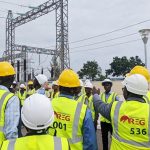
The project will examine how young people, volunteers, industrial workers and communities can contribute to preventing fires and responding before professional teams arrive.
Jonas Munyurangabo, UNIDO’s representative in Rwanda, said Rwanda’s focus on anticipating risks helped drive the partnership.
“Rwanda is a country that thinks about the future. It does not wait for problems to emerge before looking for solutions,” he said.
The project was first conceived in 2023, followed by a Rwandan delegation’s visit to Poland in September that year to study firefighting and emergency response systems, including volunteer participation.
The Rwanda Police says it has trained more than 90,000 people in fire prevention and response.