
Rwanda records more than 23,000 teenage pregnancies each year, Health Minister Dr. Sabin Nsanzimana said Friday, warning that the trend continues to threaten girls’ health, disrupt education and slow national development.
Dr. Nsanzimana made the remarks during a Youth Forum on Accelerating Action to Prevent and Eliminate Teenage Pregnancy in Kigali, where government officials, development partners and young people discussed ways to reduce the number of adolescent pregnancies.
He said the country continues to face an average of about 60 teenage pregnancies every day, describing the situation as a major public health and social concern that requires coordinated action across families, schools and communities.
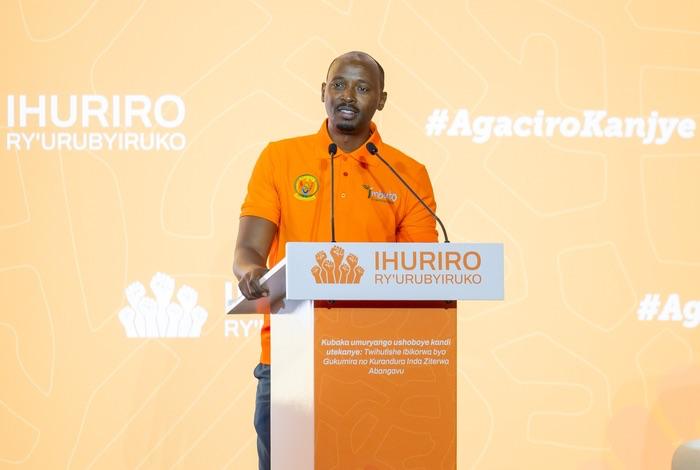
Health Minister Dr. Sabin Nsanzimana
Teenage pregnancy, he said, exposes girls to higher risks of complications during childbirth because their bodies are often not fully developed. “No one should die while giving life, but these are risks we can prevent,” Nsanzimana said.
He added that babies born to adolescent mothers are more likely to be born prematurely and suffer from stunted growth. He said nearly one-third of stunted children in Rwanda are born to teenage mothers.
Nsanzimana attributed the problem to several factors, including school dropout, misinformation about sexual and reproductive health, peer pressure and sexual violence.
He said girls who leave school before completing secondary education are five times more likely to become pregnant during adolescence than those who remain in school, stressing that keeping girls in school is one of the most effective prevention tools.
The minister also warned against persistent myths circulating among young people, including false beliefs that having sex once cannot result in pregnancy or that sexual intercourse can cure certain conditions.
He said while adults often play a role in exploitation, boys and young men must also take responsibility in preventing teenage pregnancies.
“Young people often say adults are responsible for teenage pregnancies. Adults do have a role, but so do the boys sitting among you,” he said.
Nsanzimana urged parents and teachers to support girls who become pregnant instead of stigmatizing or abandoning them.
“When a child becomes pregnant, it is not the time to insult or reject her,” he said. “It is a problem the family shares.”
Shami Elodie, director general of Imbuto Foundation, described teenage pregnancy as a serious challenge to Rwanda’s development, saying each case involving a minor has lasting consequences for the child, the family and the country.
“Every pregnancy involving a child is a crime,” she said. “Most of these cases could be prevented before they happen.”
She said social media and online content are increasingly exposing young people to misinformation and risky behavior, making parental guidance and open communication more important.
Shami highlighted the Parent-Adolescent Communication Forums (PAC), launched in 2010 at the initiative of First Lady Jeannette Kagame, as one of the key platforms promoting dialogue between parents and children on sexual and reproductive health.
The forum also heard testimony from Pelagie Kuradusenge, who became pregnant as a teenager after believing misinformation that a single sexual encounter could not lead to pregnancy.
She said she initially feared telling her mother but eventually disclosed the pregnancy and received support that allowed her to continue her education after giving birth.
Kuradusenge later completed her studies, found employment and started a fish farming business on Lake Kivu.
“I thought my life was over,” she said. “But after accepting what had happened and receiving support, I was able to rebuild my future.”
Dr. Cyprien Iradukunda of the Ministry of National Unity and Civic Engagement said efforts to reduce teenage pregnancy must also involve men and boys, arguing that responsibility has too often been placed only on girls.
“No pregnancy happens without the involvement of a man,” he said, calling for broader education on reproductive health and responsible parenthood.
Officials at the forum said sustained progress will depend on keeping girls in school, improving access to accurate reproductive health information, strengthening child protection systems and encouraging stronger parental involvement.