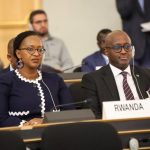
Rwanda reaffirmed its position as one of the world’s leading contributors to United Nations peacekeeping missions while warning that modern conflicts are becoming more complex due to armed groups, misinformation and hate speech amplified by digital platforms.
Foreign Affairs Minister Olivier Nduhungirehe said Rwanda would continue to play an active role in global peace operations and called for stronger, more coordinated international strategies to address the root causes of conflict.
He made the remarks Wednesday during a ministerial conference on peacekeeping operations in Francophone countries held in Rabat, Morocco.
According to United Nations data as of April 2026, Rwanda is the second-largest troop contributor among 117 participating countries, with 5,880 personnel deployed. Nepal leads with 6,029 troops, followed by Bangladesh, India and Pakistan. Rwanda remains the top contributor among Francophone countries.
More than 53,000 military, police and civilian personnel are currently deployed in U.N. peace operations worldwide.
Nduhungirehe said peacekeeping missions are operating in increasingly volatile environments marked by terrorism, armed groups, mercenaries and fast-evolving conflicts. He said the spread of disinformation and hate speech through digital platforms is further destabilizing fragile settings.
He warned that hate speech and false information often precede mass atrocities and genocide, adding that such trends undermine civilian protection and erode trust in international peacekeeping efforts.
“Peacekeeping alone is not enough,” he said, stressing that it must be integrated into broader political strategies aimed at addressing the root causes of conflict.
He urged Francophone countries to adopt a coordinated approach built on three pillars: preventing conflicts before they occur, maintaining peace during crises and supporting post-conflict recovery.
The minister also called for stronger African early-warning systems and enhanced capacity within the African Union Peace and Security Council’s advisory mechanisms to detect and respond to emerging threats more effectively.
Nduhungirehe highlighted the growing role of technology, including artificial intelligence, in improving the efficiency, transparency and coordination of peacekeeping operations. He said such tools must be used in line with international humanitarian law and accountability standards.
He reaffirmed Rwanda’s commitment to peacekeeping operations and praised the International Organisation of La Francophonie for supporting language training and cooperation for deployed personnel in Francophone missions.
The Rabat meeting was the second ministerial conference on peacekeeping in Francophone countries, following the inaugural session held in Paris in 2016.