Rwanda is looking to scale up solar energy to meet growing electricity demand, but financing and policy barriers are slowing progress.
The country aims for universal electricity access by 2030, using both on-grid and off-grid solutions. As of February 2025, 82% of households had electricity, with 57% connected to the national grid and 25% powered by off-grid systems, mainly solar.
Rwanda’s total installed capacity is 406 megawatts (MW). Hydropower provides roughly 39%, while solar accounts for only 1%. Experts warn that heavy reliance on hydropower leaves the country vulnerable to climate impacts and increases the need for imported power.
High solar irradiance averaging 4.5 kilowatt hours per square meter per day—gives Rwanda a major opportunity. The Least Cost Power Development Plan 2024–2050 aims to add nearly 1,500 MW of solar photovoltaics with battery storage by 2050.
Financing remains a key challenge. The country will need $3.6 billion to meet energy needs by 2035, including $69 million for solar projects. Between 2035 and 2050, total generation costs could reach $38 billion, with solar investments alone projected at $16 billion. Climate mitigation and adaptation efforts tied to Rwanda’s NDC will require another $11 billion.
The energy sector is managed under the Ministry of Infrastructure. Rwanda Energy Group oversees generation and distribution through two subsidiaries: Electricity Utility Corporation Limited, which handles utility operations, and Energy Development Corporation Limited, which manages planning and electrification rollout.
Private companies can participate only in power generation through independent power producers. The Electricity Utility Corporation acts as the sole off-taker and negotiates power purchase agreements individually.
Some incentives, like tax reliefs, exist, but experts say more standardization is needed. Cost-reflective power purchase agreements and extended feed-in tariffs could attract more investors and reduce emerging market risks.
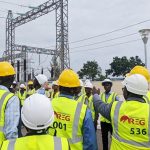
In October 2025, a workshop convened by the World Resources Institute in Kigali highlighted financial and policy solutions to support grid-scale solar projects. Addressing these barriers will be critical for Rwanda to reach its renewable energy targets and expand access to affordable electricity.