Rwanda and the Democratic Republic of Congo (DRC) have agreed to take “concrete steps” aimed at reducing tensions and advancing the peace accord they signed last year, according to a joint statement released following talks in Washington, D.C.
Conflict in eastern DRC, a mineral-rich region where the M23 armed group controls key towns, has persisted despite the peace deal brokered with the involvement of former U.S. President Donald Trump.
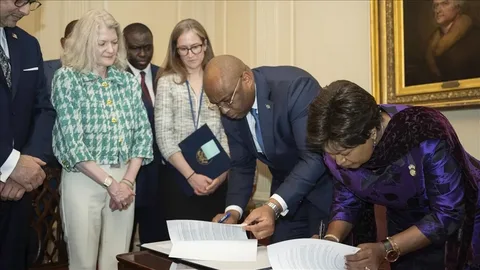
“On March 17-18, 2026, representatives from the DRC and Rwanda met in Washington and agreed to concrete measures to move forward on last year’s agreement,” the joint U.S.-DRC-Rwanda statement said.
The renewed commitment comes just days after the United States ramped up pressure on Rwanda, imposing sanctions on its military and restricting visas for several senior officials.
U.S. Treasury Secretary Scott Bessent said that thousands of Rwandan troops are deployed across eastern DRC, where they are “actively engaged in combat operations and help maintain M23 control over territory.”
Rwanda, however, pushed back against the sanctions, calling them one-sided and unfair. The Rwandan government accused the DRC of violating the peace deal, citing “indiscriminate drone strikes and ground offensives,” and reiterated its long-standing position that it does not support M23.
Kigali has also pressed Kinshasa to take stronger action against the Democratic Forces for the Liberation of Rwanda (FDLR), Hutu militants linked to the 1994 genocide.
The joint statement on Wednesday highlighted a new series of coordinated steps between the two countries to reduce tensions and ensure progress on the ground. Among the agreed measures are:
Mutual commitments to respect each other’s sovereignty and territorial integrity
Scheduled disengagement of Rwandan forces in specified areas within DRC territory
Time-bound, intensified efforts by the DRC to neutralize the FDLR
And measures to ensure the protection of civilians
The announcement reflects a cautious but important move toward implementing last year’s peace deal, showing that both Kigali and Kinshasa are attempting to navigate a complex mix of security, diplomacy, and regional stability, all while under international scrutiny.