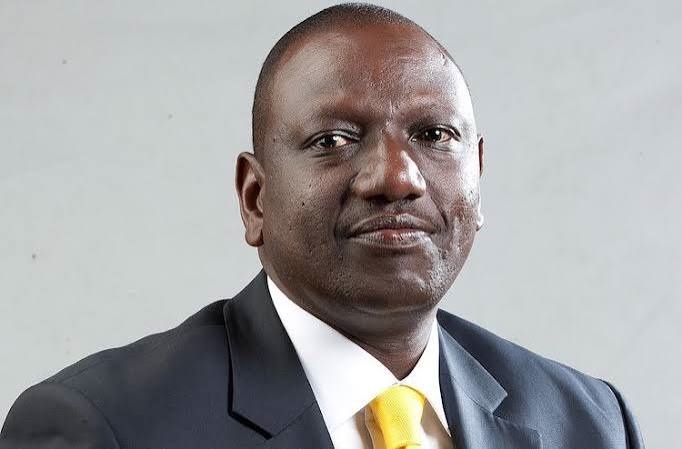
President William Ruto has publicly softened his stance on foreign traders, telling Kenyans this week that foreigners are “free to work” in the country and that no citizen has the right to harm them. The remarks, delivered at a hospital groundbreaking in Bomet County, are his most direct attempt yet to contain the fallout from a crackdown that spiraled into attacks on Burundian traders and a formal protest from Bujumbura.
“Every person, from wherever they come from, will be treated fairly, in accordance with the law,” Ruto told the crowd, adding that Kenya would “continue to be an open society because that is the DNA of Kenya.”
The comments cap ten turbulent days: a directive that triggered violence, a diplomatic ultimatum from Burundi, and a chorus of Kenyan opposition figures accusing Ruto of using foreigners as a political scapegoat.
The order traces back to a September 2 meeting between Ruto and Kenyan traders protesting tax reforms. Afterward, Ruto directed authorities to shut down small-scale businesses run by foreign nationals, with a compliance deadline of Monday, September 7.
The Ministry of Investments, Trade and Industry, led by Trade CS Lee Kinyanjui, argued that many foreign operators had violated visa or work-permit conditions, entering as tourists or investors while working informally.
The directive landed hardest on Burundians, after Kenyan lawmakers had already singled out Burundian labor in public remarks, with one legislator alleging construction firms favored Burundian workers because they were cheaper to hire.
Once the order dropped, confusion over exactly who it covered spread quickly, and vigilante groups took it as license to act, attacking Burundian traders in the days that followed.
Hundreds were seen lined up outside their embassy in Nairobi and at the Busia and Malaba border crossings seeking emergency travel documents home.
The UN refugee agency estimates roughly 16,000 Burundian refugees and asylum seekers live in Kenya, many in small-scale trade.
Burundi’s response came in two stages. First, Foreign Minister Édouard Bizimana warned on X, tagging Kenya’s Parliament: “Kenyans live peacefully in Burundi. But if this hate speech against Burundi continues, things will certainly change. The Kenyan government is responsible for the lives of Burundians living in Kenya.” He added that letting Kenyan civilians take on the role of police “gives the impression of a failed state,” pointing to violence, looting and xenophobia.
Then, on September 5, Bizimana chaired an urgent meeting in Bujumbura with ambassadors from every East African Community member state, including Kenya’s envoy, Henry Wambuma.
According to a readout published by Burundi’s Ministry of Foreign Affairs, Bizimana told the gathering his government had “received with regret” earlier remarks by a Kenyan MP, made in June, suggesting Burundians should return home because they had no right to petty jobs in Kenya, remarks he said were followed by “a speech by the Kenyan President, which exacerbated tensions and provoked violence targeting Burundian citizens.” While affirming that Burundi respects Kenya’s sovereign right to regulate trade, Bizimana said any such measures must comply “with fundamental rights and human dignity,” and invoked the EAC as a “family” in which “no citizen should be treated with indignity.”
The ministry’s statement closed with a direct warning: Kenya “will be held responsible for anything that happens to Burundian citizens,” and Burundi “reserves the right to take the necessary measures within the framework of reciprocity.”
Bujumbura also confirmed it was sending buses to Kenya and that its Nairobi embassy would issue free emergency travel passes to citizens wanting to leave.
Kenya’s ambassador told the meeting that bilateral ties were strong enough that “no incident could jeopardize them,” and pledged his government would act to protect the dignity and safety of Burundians in Kenya.
The crackdown drew sustained, on-record criticism at home. Former Chief Justice David Maraga, in a statement on X, argued the enforcement rested on a presidential directive rather than an enacted law, pointing to the still-pending Local Content Bill, 2025, and called it “scapegoat policy,” saying Kenya’s economic hardship could not reasonably be pinned on foreign small-scale traders.
Former Justice Minister Martha Karua, leading the People’s Liberation Party, issued two statements days apart. On September 7, she called the directive discriminatory and inconsistent with Kenya’s constitutional values: “No person should be targeted merely because of nationality. No African should become a convenient scapegoat for unemployment, the cost-of-living crisis or failures of economic policy.” She added that the stance was “a unilateral political position of President William Ruto and his administration” that did not reflect ordinary Kenyans.
Two days later, she framed it as a pattern, warning against letting “economic frustration become xenophobic rhetoric”: “There is nothing wrong with putting Kenyans first, but that cannot simply mean finding someone else to blame for the failures of government.”
Wiper leader Kalonzo Musyoka argued that corruption and erratic tax policy, not foreign hawkers, are the real threat to small traders, calling instead for “diplomacy, dialogue, and respect for the rule of law.” Nairobi Senator Edwin Sifuna criticized the rollout itself as “very bad for investment and consequently job creation.”
Kenya’s own human rights watchdog, the KNCHR, said it had received complaints from migrant and refugee communities alleging threats, intimidation and discriminatory treatment, warning the crackdown could trigger wider rights violations if enforcement wasn’t conducted lawfully.
The Police Reforms Working Group Kenya separately said the enforcement lacked clear legal backing and called for an immediate halt, noting that traders from Burundi and the Democratic Republic of Congo were disproportionately affected.
Foreign Affairs Principal Secretary Korir Sing’Oei apologized to Kenya’s Burundian community, acknowledging that many had been “attacked by their neighbors and their friends.” He visited the Burundian Embassy in Nairobi and later met Ambassador Evelyne Habonimana alongside UNHCR and IOM representatives, pledging tighter security in areas with large Burundian populations.
State House replaced the immediate shutdown with a 90-day window for foreign nationals to regularize their immigration, work-permit, registration and licensing status, saying strict enforcement would only begin once that period closes.
Ruto’s remarks in Bomet are his clearest attempt yet to move past the episode, framing it as a matter of legal compliance rather than nationality. The reassurance may be arriving too late for some, however: despite the amnesty window, a number of Burundians are reportedly still seeking travel papers to leave rather than stay and regularize their status.
And Burundi’s warning about “reciprocity” leaves open how the relationship holds up if further incidents occur before that window closes, with Kenya heading into an election year in which Ruto is seeking a second term.