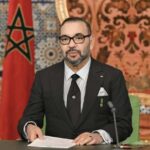
Prime Minister Justin Nsengiyumva has urged religious leaders to work with the government to combat illicit and substandard alcoholic drinks while helping strengthen families and promote social development.
Nsengiyumva made the call Sunday as more than 40,000 Rwandans and friends of Rwanda gathered at Amahoro Stadium in Kigali for the annual “Rwanda Shima Imana” thanksgiving event.
He said religious organizations have an important role in promoting positive values and helping communities avoid practices that undermine their health and development.
Prime Minister Justin Nsengiyumva
“Help us fight ‘ibyuma’ because they harm our youth, destroy families, hinder their development and can also cause conflicts,” Nsengiyumva said, referring to illicit alcoholic drinks that do not meet required safety standards.
He urged religious leaders to continue educating their followers, particularly young people, about excessive alcohol consumption and other behaviors that could undermine their lives.
Nsengiyumva also called on faith groups to support efforts to reduce child stunting, encourage school attendance and improve living conditions.
He said strong families were essential to building a strong country and urged religious organizations to promote households based on love, respect and understanding.
“Just as a strong house is built on a strong foundation, a strong country depends on strong families,” he said.
The prime minister praised religious organizations for their contribution to peace, social cohesion and the promotion of values, describing them as important partners in national development.
The gathering also celebrated Rwanda’s progress since the 1994 Genocide against the Tutsi.
Rev. Pastor Isaie Ndayizeye, president of ADEPR in Rwanda and head of Rwanda Shima Imana, said the country had moved from a history of division, poverty and violence to one of greater peace, development and international recognition.
Ndayizeye cited improvements in access to clean water, education and financial services as examples of the country’s progress. He said access to clean water had increased from about 30% in 1994 to more than 85% today.
He said primary school enrollment had nearly doubled, while secondary enrollment had increased 18-fold and higher education enrollment 25-fold. Access to financial services, he said, had risen from about 20% to more than 90%.
Ndayizeye also said Rwanda’s economy had grown more than 130-fold between 1994 and 2025 and praised the country’s contribution to international peacekeeping efforts.
Rwanda Shima Imana began in 2012 and brings together members of different religious denominations each year to give thanks for what organizers describe as the country’s achievements and progress.