African countries need to strengthen governance and build institutions capable of attracting investment if the continent is to close its water and sanitation gap, Prime Minister Justin Nsengiyumva said Tuesday.
Nsengiyumva said the challenge goes beyond finding money for water projects, arguing that investors also need institutions that can manage funds responsibly and deliver reliable services.
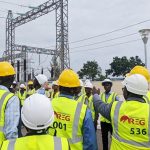
He made the remarks while opening the Africa Water and Sanitation Systems Leadership Symposium 2026 in Kigali. The four-day symposium brings together African leaders, experts, financiers and development partners to discuss reforms and investment in the sector.
Across Africa, 418 million people lack basic water services, while 779 million lack basic sanitation and 839 million lack basic hygiene services, Nsengiyumva said.
He said African countries have invested in pipelines, boreholes and water treatment plants, but some facilities are failing to provide the services for which they were built.
“Building infrastructure is important, but to a large extent, it is only the beginning,” Nsengiyumva said. “Ensuring that the built infrastructure functions effectively and reaches communities over the long term is the real measure of success.”
Nsengiyumva said better governance, sustainable financing and accountable leadership could help turn the water sector into a more attractive destination for investment.
He cited an African Union panel on water investment as estimating that improved governance, including effective tariffs, revenue collection and disciplined financial management, could unlock about $11.5 billion annually. Improved domestic resource mobilization could generate another $17.5 billion, he said.
“While foreign partnership is important, we see that foreign assistance is a modest line in the accounts,” Nsengiyumva said. “Africa’s water future can and should be paid for by Africans.”
He also acknowledged challenges facing Rwanda’s water sector, including efforts to reduce non-revenue water. He said treated water that is pumped but does not reach consumers represents both wasted resources and lost services.
Infrastructure Minister Damien Murwanashyaka said Africa must move beyond infrastructure delivery and focus on providing sustainable services.
“We must build reliable, affordable, safe, resilient and sustainable water and sanitation systems that can serve our growing population and economies over the long term,” he said.
United Arab Emirates Assistant Minister of Foreign Affairs for Energy and Sustainability Abdulla Ahmed Balalaa said climate change, population growth and urbanization were increasing pressure on water systems.
He said stronger institutions, investable projects, technology and political leadership could help attract financing while supporting jobs, productivity, food security and long-term economic growth.