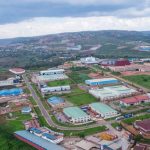
Companies operating in Rwanda’s industrial parks will start paying an annual maintenance levy of $1 per square metre from January 2027, as authorities seek to address infrastructure gaps in industrial zones while tightening oversight of factories operating outside designated areas.
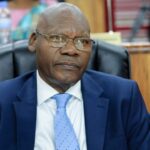
The new charge was announced on August 3, 2026, when Trade and Industry Minister Antoine Marie Kajangwe appeared before the Senate to present the government’s response to concerns raised by lawmakers over the state of industrial park infrastructure across the country.
The levy will finance the repair, upgrading and maintenance of industrial park facilities, with officials saying it will help reduce the pressure on public resources while ensuring manufacturers operate in a more reliable environment.
Kajangwe, who presented the government’s position on behalf of the Prime Minister, said investors operating in industrial parks would contribute annually based on the size of the land allocated to them.
“New arrangements have been introduced where investors operating in industrial parks will pay one dollar per square metre annually,” Kajangwe told senators.
The new arrangement means a company occupying 1,000 square metres of industrial land will pay $1,000 every year, equivalent to about Rwf1.5 million.
The minister said the funds would initially support rehabilitation work in industrial parks in Muhanga, Rwamagana and Musanze, before being extended to other industrial zones.
Rwanda has invested in industrial parks as part of its strategy to grow manufacturing, create jobs and increase exports. However, some industrial zones have faced challenges related to infrastructure maintenance, including roads, utilities and water supply.
The government expects industrial parks in Rwamagana, Muhanga, Musanze and Bugesera to have the infrastructure needed under the second National Strategy for Transformation (NST2), enabling manufacturers to produce goods that can compete on international markets.
Kajangwe said a dedicated account and management framework would be established to ensure the money collected from industries is properly managed and directed towards maintenance work.
“It will help reduce the burden on government in managing and repairing infrastructure in industrial parks,” he said.
The proposal was welcomed by senators, who said the new funding model would help protect industrial investments and ensure facilities remain functional.
Senator Amandin Rugira said the creation of a maintenance fund would improve the sustainability of industrial infrastructure.
“The project to establish a fund for repairing and upgrading infrastructure, supported by one dollar per square metre from those allocated plots in industrial parks, is something that will help infrastructure last longer,” he said.
But lawmakers also raised concerns about factories operating outside designated industrial areas, especially those located in residential neighbourhoods.
Senator Uwizeyimana Evode questioned how some factories had obtained approval to operate in areas not planned for industrial activities, citing the Kanzenze area in Bugesera District where some small industries operate near homes.
“Who gives these people operating permits when some of these industries are not located in designated industrial areas?” he asked.
Kajangwe said authorities would strengthen inspections to identify factories operating in inappropriate locations and require those affecting communities to relocate.
He said some people had converted residential buildings into industrial facilities, creating challenges for neighbouring residents.
“The challenge we have is that some people take buildings meant for residence and turn them into factories, affecting those living nearby. During the inspections we plan to carry out, we will identify such factories and ask them to relocate their activities,” he said.
The minister did not give a specific timeline for the relocation of factories operating in residential areas, saying the process would be carried out gradually depending on available resources.
Senators also raised concerns about unreliable water supply, which they said affects industrial production, particularly during dry seasons.
Kajangwe acknowledged that water infrastructure has not always matched the pace of industrial growth, but said additional supply projects were planned for industrial areas in Kigali, Rwamagana and Muhanga.
Authorities say improving industrial infrastructure and ensuring factories operate in appropriate locations will be essential as Rwanda seeks to expand manufacturing and attract more investment.
They have also warned that industries operating close to residential communities can expose residents to risks including pollution, noise, waste-related problems and possible industrial accidents.