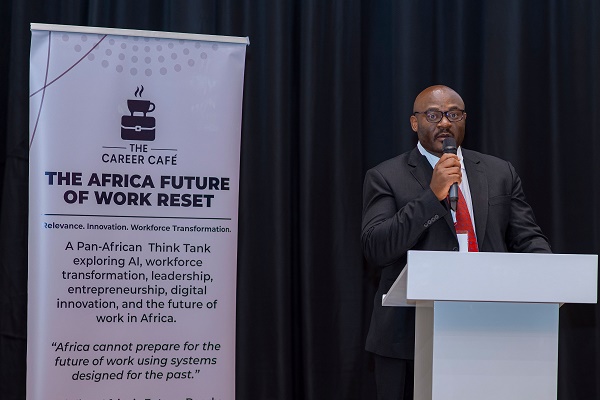
“The cover letter you wrote with AI will snitch on you in the first interview.” That line, dropped from the stage at the Career Café Forum this week, set the tone for a day that had little patience for AI hype and a lot more interest in an older question: what actually happens when someone sits down across from an employer.
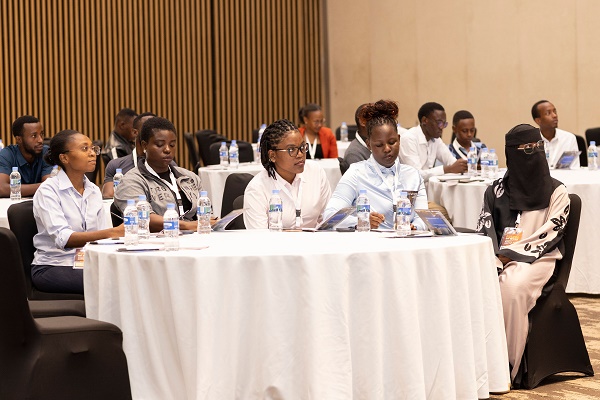
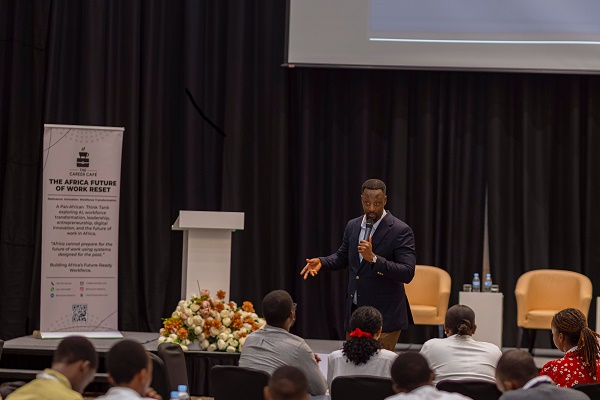
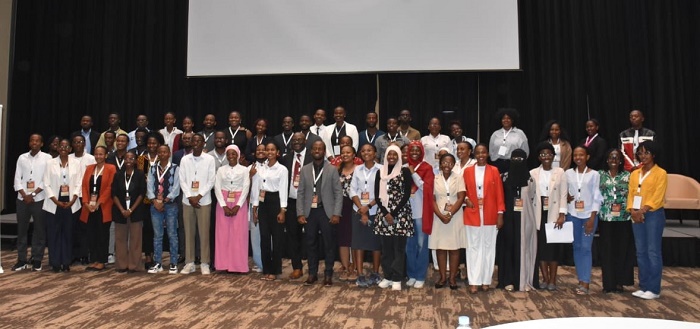
Held at the Kigali Convention Center and organized by The Career Café Africa and AG Expert Consult, the one-day forum drew students, entrepreneurs and investors for a day of frank talk about Rwanda’s job market.
It followed two earlier workshops this year in Nairobi and Kigali that dug into the gap between what African universities teach and what employers need. Organizers said the timing isn’t accidental: Africa’s working-age population is expected to climb to 1.1 billion by 2034 and pass two billion by 2063.
Dr. Luchuo Engelbert Bain, who founded Career Café Africa, told the participants the forum marked a shift, with less talk about how AI is changing the rules and more work on building something to deal with it.
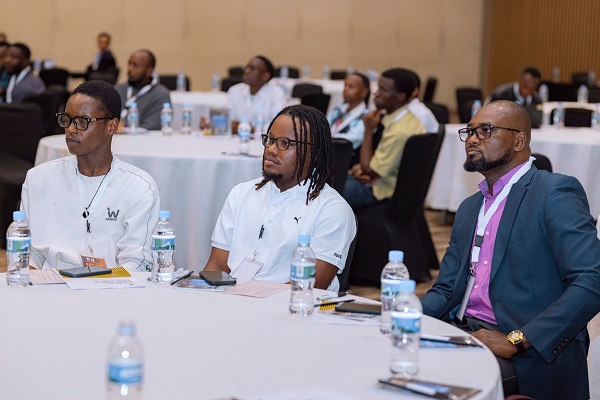
Speaking to Rwanda Dispatch, Samuel Iyokwizerwa, who runs AG Expert Consult, said the idea came from something simple he kept noticing: young people leave school with degrees but without much sense of how the job market is shifting, particularly with AI now part of the equation. Turnout beat expectations, he said, and the goal was making sure graduates don’t walk out without a plan, whether that means chasing a job or starting something of their own.
A second, bigger forum is coming in November with speakers flying in from abroad. “This is the beginning,” he said. “The best is yet to come.”
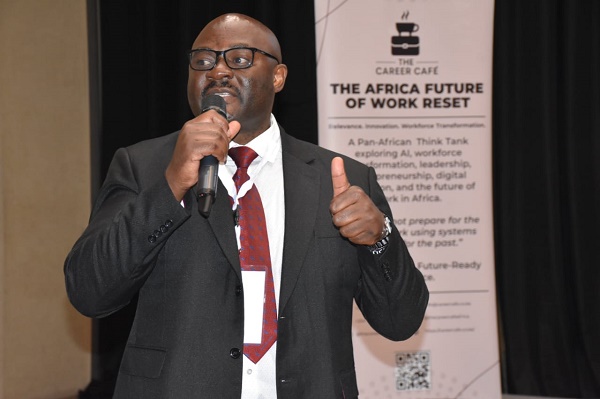
Junior Kanamugire, Director of Operations and Strategy at AISCA, ran one of the day’s more direct sessions. He asked how many people had actually finished a Coursera course in the last three months, not just signed up for one, and used the silence to make his point: free training doesn’t mean much if nobody’s using it. “A person brings skills. They don’t bring value,” he said, arguing that companies hire for problem-solving, not task completion. His suggestion was to keep score on your own work the way golfers track theirs, so you’ve got something concrete to point to in an interview.
Kanamugire didn’t hold back on AI-written cover letters either, after reading plenty of applications lately, he said the gap between the polished version on paper and the person who walks in for an interview shows up fast. His advice for anyone eyeing a specific role: read ten job postings for it and treat the overlap as your syllabus. And instead of asking someone for a job outright, ask what the job is actually like. “People are much more generous with information than you think,” he said, “as long as they don’t feel like you’re coming for their seat.”
Rolanda Kabanga, a trainer at the forum and a certified business and performance coach, entrepreneur and founder of Speed Coaching Ltd, took the human-value angle further. “Today we looked at human value, agaciro ko muntu,” he said, using the Kinyarwanda phrase for a person’s inherent worth. People who don’t recognize their own value tend to undersell it, he argued, and get underpaid as a result. On AI, he was more measured than others: it’s useful, but “it should not ruin our work, our journey, or our operations in business.”
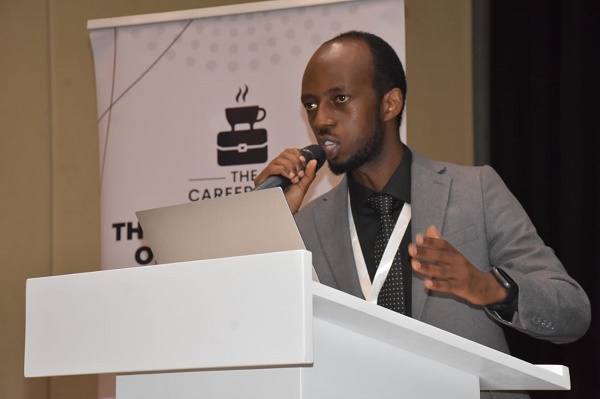
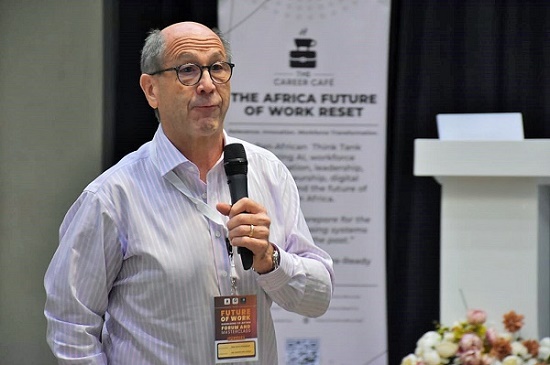
Iyokwizerwa took the floor for a session on smallholder farmer financing, a problem familiar to anyone who’s tried to get a loan in rural Rwanda.
He estimated 70 to 80 percent of farmers can’t access credit, not because banks won’t lend, but because there’s no reliable data to judge the risk. His fix is a shared digital platform pulling data from across the agricultural chain, timed so loans land when farmers actually need them.
In a separate session on fiscal policy, he argued that predictable government finances protect the value of people’s money and give investors a reason to commit long term. And in a fourth session, on why good hires sometimes flame out, his answer wasn’t a skills gap but weak systems: figure out what skills a company needs, build them through mentorship, and give people room to use what they’ve learned.
Not everyone was there to job-hunt. Prince Shimwe, who co-founded the robotics startup Phantom Ignition Company, came to learn how AI could help his own business. “We learned that AI is important at work, but most especially knowing how to verify information for accuracy,” he said, describing AI as “not there to do your job, but to be your partner.”
Nancy Sabrine Ishimwe, who runs the software-training startup Cooking Ford Fudge in Nyamirambo, said the day gave her something she’d been missing. “I learned how to value who I am, how to be confident to achieve my goal, and how to network as a company,” she said.
Oke Keshein, who’d traveled from Ghana, said the forum exceeded her expectations. “It was really a big one to be here,” she said.
Organizers say Kigali is just one stop. More sessions are planned across West, Central, Southern and North Africa, building toward a continental Future of Work Summit in November, where the first pilot projects are expected to be unveiled.