Rwanda’s new sustainable finance roadmap will focus on preparing businesses to attract investment, expanding financing options for green projects and strengthening carbon-market infrastructure, as the country seeks to turn its climate ambitions into economic opportunities and community benefits.
Launched by the Kigali International Financial Centre (KIFC) on Thursday on the sidelines of the Carbon Markets Africa Summit in Kigali, the Sustainable Finance Roadmap 2.0 sets out 54 initiatives to be implemented by 2030, with responsibilities assigned across institutions.
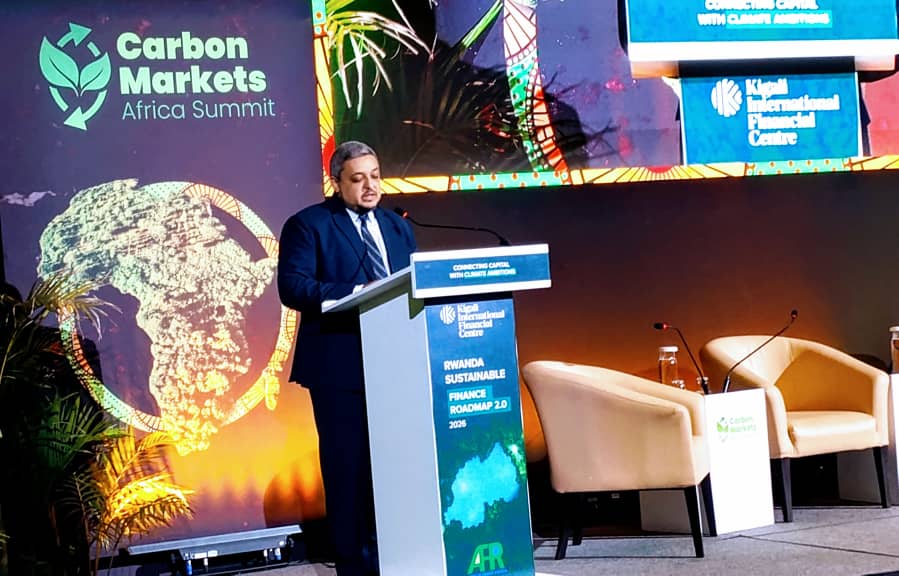
The plan builds on the first roadmap, launched in 2022, which helped advance measures including Rwanda’s Green Taxonomy, environmental, social and governance (ESG) guidelines, climate-related disclosure guidance and the Ireme Invest blended-finance facility.
Hortense Mudenge, KIFC’s chief executive officer, said the next phase would move beyond establishing policies and financial infrastructure to delivering results.
“The next phase is about scale and execution,” she said.

The roadmap prioritises making businesses and projects investment-ready, strengthening the market infrastructure needed to mobilise capital and developing carbon markets. Rwanda also aims to position itself as a hub for carbon aggregation and investment structuring.
Mudenge said the initiative’s success should be judged by what it delivers to the economy, rather than the number of frameworks developed.
“We will not just be measured by the frameworks we produce, but by increased capital deployment, more investment ready enterprises, stronger private sector growth, greater resilience, and ultimately better jobs,” she said.
A central challenge is connecting available finance with businesses that need it. Eric Picard, chief strategy officer at Access to Finance Rwanda (AFR), said banks, pension funds, insurers and international climate funds represented potential sources of capital, but many green enterprises were not yet prepared to meet investors’ requirements.
“The task is now to bring this money closer to businesses,” Picard said.
The roadmap proposes a broader range of financing instruments, including local investment funds, blended-finance vehicles, smaller-ticket investments and more flexible arrangements. It also seeks to improve support for businesses developing the financial records, governance systems and other requirements needed to secure funding.
Picard said implementation would require financial institutions and other partners to incorporate the roadmap into their own plans and budgets, rather than treating it as a policy document.
“An important key, however, a document alone will not change anything,” he said.
The roadmap also highlights climate data as a foundation for credible carbon markets and better investment decisions. Proposed measures include shared climate-data repositories, common standards, Rwanda-specific climate scenarios and digital systems for measuring, reporting and verifying carbon projects.
Picard pointed to agriculture as an area where reliable information could support both emissions reduction and adaptation. He said nearly 60% of Rwanda’s estimated $12 billion in climate-finance needs related to adaptation, including efforts to protect farming livelihoods against droughts and floods.
For farmers and smaller enterprises, the challenge is not simply attracting investment but ensuring that financing is accessible and suited to their needs. The roadmap proposes greater attention to smaller financing requirements, including those of women-led and agricultural businesses.
Herbert Asiimwe, head of financial sector development at the Ministry of Finance and Economic Planning, said sustainable finance was directly linked to livelihoods and national development priorities.
“Sustainable finance, no doubt, is connected to the livelihoods of our people,” he said, citing farmers facing increasingly uncertain rainfall, entrepreneurs seeking finance and households exposed to climate shocks.
Asiimwe said the roadmap translates its strategic objectives into an actionable plan for 2026–2030, with clearer institutional responsibilities and delivery timelines. Priorities include mobilising domestic and international capital, expanding sustainable bonds and green lending, and using guarantees and local-currency solutions to improve access to finance.
The government also intends to advance work on the National Carbon Registry and explore carbon-project opportunities beyond forestry and clean cooking. Credible verification and transparent systems will be important to attracting investors and ensuring that carbon finance produces measurable climate and community benefits.
Asiimwe called on financial institutions, regulators and development partners to turn the roadmap’s priorities into products and investment decisions.
“The lasting measure of this roadmap will be the opportunities it creates for our people, but also the security it helps to provide for the future generations,” he said.