Households in Kabarore Sector, Gatsibo District, are set to benefit from a boost in livestock, thanks to a livestock distribution program by the Abdullah Kiromba Foundation (AKF) in partnership with the Zakat Foundation of America.
Since 2021, AKF has been supporting more than 500 families by distributing goats, sheep, and cows. The goal is to help families escape poverty, strengthen sustainable agriculture, and improve food security.
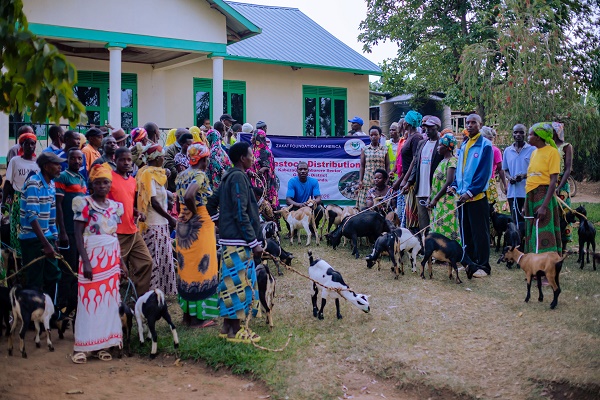
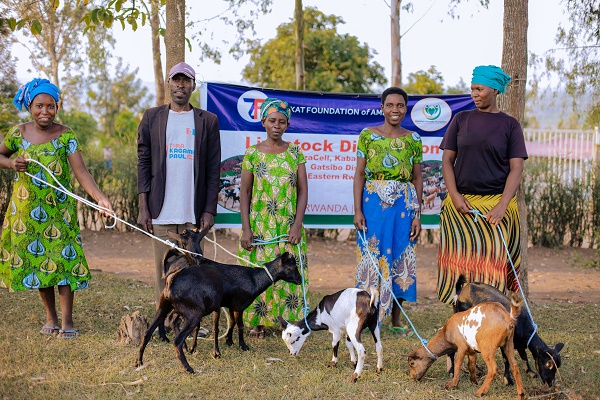
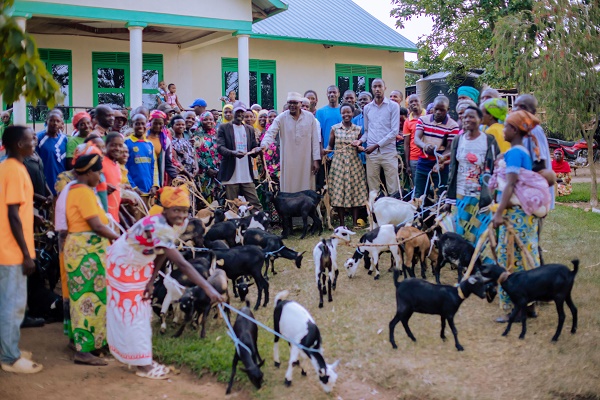
On Wednesday, January 7, 2026, 126 goats were handed out to families in Kabeza Cell, Kabarore Sector. Each household received two goats.
Vulnerable families are carefully selected with the help of local authorities at both the village and sector levels. Under the program’s unique model, the first female offspring of each goat is passed on to another family, keeping the support cycle alive. The remaining offspring stay with the original family to help build a sustainable livelihood.
Before the goats reach their new homes, veterinarians ensure they are healthy, vaccinating and deworming them to prevent the spread of disease.
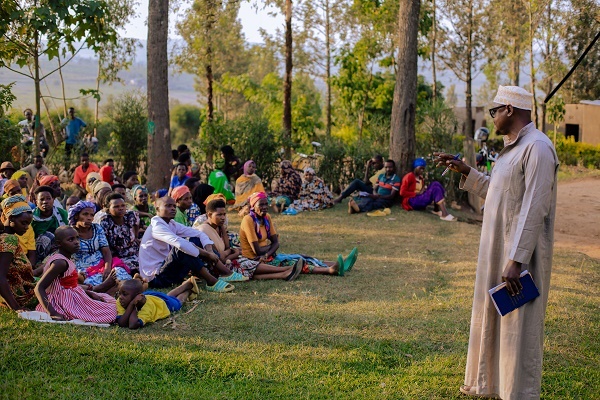
Haji Issa Higaro, Guardian and Founder of AKF, emphasized that the initiative is part of a broader effort to empower communities.
“This is one of many programs we run, from supporting orphans with school fees and supplies, to skill-building for teenage mothers, to community health initiatives. We also build mosques and assist communities during Ramadan and Eid celebrations,” he said.
AKF currently covers school fees for 150 orphaned children across 14 districts. “We began this livestock initiative by giving out 1,000 goats in four districts. This time, we’re distributing 126 goats and 124 sheep in Kinigi Sector,” Hadji Issa explained. “We encourage families to embrace the spirit of giving—the livestock isn’t meant for immediate consumption. We’ve already seen how it changes lives.”
He also urged local authorities to monitor the program, ensuring that families pass on the first offspring as intended.
Valasia Mukanaguga, an early beneficiary, shared how the program has helped her provide for her children and improve her family’s situation. Higaro added that families whose livestock fall ill will receive free treatment through local veterinary services.
To safeguard the program’s integrity, beneficiaries sign a contract agreeing not to sell or slaughter the animals. AKF staff, together with local authorities, follows up every three months for 18 months to track progress.
“This is still a pilot program,” Hadji Issa noted. “Once we confirm it works well, we plan to expand it, reaching even more families.”
Fred Mutabazi, Executive of Kabeza Cell, thanked AKF and the Zakat Foundation of America for their support. He reminded beneficiaries to care for the animals and give back to the community. “Those who didn’t receive livestock this time will have another chance in the next phase,” he said.

Mutabazi stressed that livestock should not be consumed immediately. “If you slaughter these animals, you miss out on long-term benefits like manure and new offspring. Two years from now, these goats will reproduce and sharing the first offspring ensure the cycle of support continues.”
Kanamugire Aloise, a Kabeza farmer, said the goats will provide much-needed manure for his crops. “Goats are expensive to buy, and I’ve learned how valuable they are. I’ll make sure they’re well fed so they can help my farm thrive,” he said.
Similarly, Akimana Donatilia from Mishenyi welcomed the goats, saying they’ll supplement the two young goats she already owns. “This will help my garden grow and provide additional livestock over time. I’ll make sure to pass on the first offspring to another family, just like the program intends,” she added.
In remote villages like Kabeza and Gatoki, farmers face poverty and growing threats to their livelihoods from social, economic, and environmental pressures. Access to livestock and affordable manure can make a big difference—and programs like this one are helping families move toward a more stable, productive future.