- “Essential services and a right”: young people press Rwanda on adolescent health
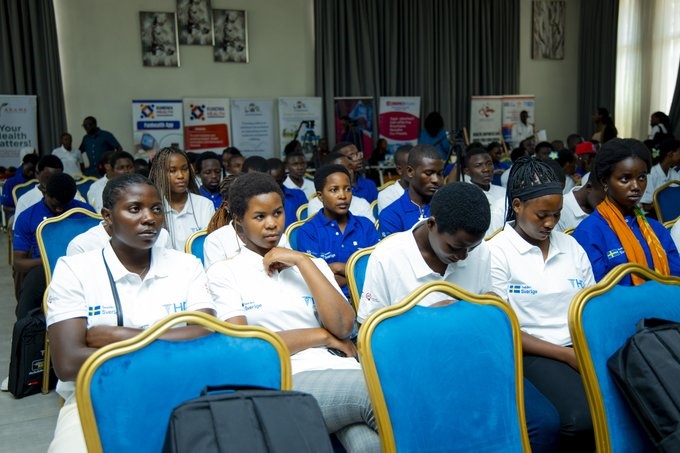
Young people have told policymakers that being invited to the room is not the same as being heard, as Rwanda’s 7th annual conference on adolescent sexual and reproductive health opened in Kigali on Thursday.
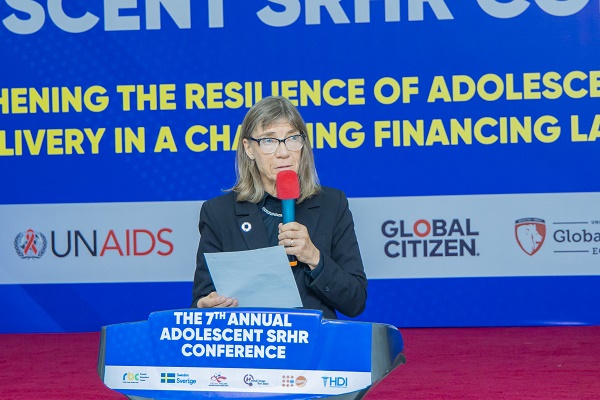
The two-day Adolescent Sexual and Reproductive Health and Rights (SRHR) Conference is organised by Health Development Initiative (HDI) with the Rwanda Biomedical Centre (RBC), the Swedish Embassy and UNFPA Rwanda. It is being held at Kigali Paramount Hotel and ends on Friday, 20 November. Adolescents, government officials, health professionals, development partners, civil society groups and private-sector representatives are all taking part.
The theme is “Strengthening the Resilience of Adolescent SRHR Service Delivery in a Changing Financing Landscape”. Put simply, delegates are asking how Rwanda can keep services running for young people when development funding is changing.
Ornella Imena, a member of HDI’s Youth Advisory Committee, spoke on behalf of young people. Consulting them, she said, is only the start.
“Being invited to a meeting is a good step, but it is not enough. True participation happens when young people’s ideas influence decisions and how services are delivered,” she said.
She called for reliable information, youth-friendly services and safe spaces where adolescents can ask for help without being judged. Adolescent SRHR services, she added, “are not optional extras to be introduced when funding allows. They are essential services and a right.”
Other young speakers shared their own experiences of getting contraceptives: where to go, what they are asked for and how health workers treat them. A family planning officer from the Ministry of Health also spoke at the meeting.
Dr Aline Uwimana, who represented the Director General of RBC as guest of honour, said progress in bringing services closer to young people has to be protected, even as financing priorities change.
“How do we make sure that our young person walking into a health centre in different areas, from Rusizi to Kigali, still finds accurate, prompt solutions to their questions and the right information when it’s needed?” she asked.
HDI Executive Director Dr Aflodis Kagaba recalled how the conference began in 2019 as a place to talk. It has since become a space where young people can put their concerns directly to the people making decisions about their health. He urged leaders to make sure policies become services young people can actually reach.
Kerstin Jonsson Cissé, Deputy Head of Mission and Head of Development Cooperation at the Embassy of Sweden in Kigali, said: “Investing in adolescents is not simply a social obligation; it is a strategic investment in Rwanda’s future.” Young people, she said, must be at the centre of decision-making, supported by sustainable financing and strong partnerships.
Charlotte Helminger, Chargée d’Affaires e.p. at the Embassy of Luxembourg in Kigali, also stressed national ownership and lasting funding. Spending on education, skills and health should go hand in hand, she said, and she pointed to the Kura Nawe programme, which supports young people in technical and vocational education and training (TVET) institutions.
UNFPA Rwanda Country Representative Dr Olugbemiga Adelakin said young people need “accurate information, quality services” and protection from all forms of violence. He noted progress so far, including comprehensive sexuality education in schools and the training of more than 800 TVET teachers.
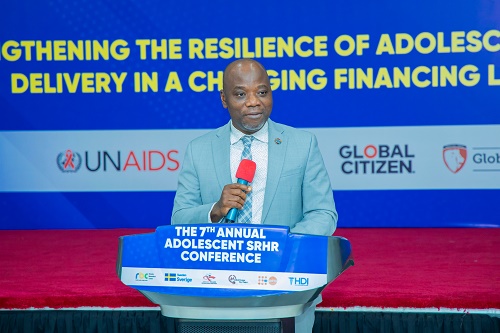
Senior Superintendent of Police Josine Mukakimenyi urged adolescents to report abuse and share information about threats to their safety. “We are here for you, to help you feel safe and grow up in your country in a safe environment,” she said.
The discussions come after Rwanda put a new legal framework into practice. In 2025, Parliament passed a health services law lowering the age of medical consent for reproductive health services from 18 to 15. Adolescents aged 15 and above can now seek those services, including contraception, without their parents’ consent.
Read More: The Law says 15 years. The Clinic says bring a parent
What remains unclear is how this plays out at health facilities. Do young people know their rights? Are health workers ready to offer confidential, youth-friendly care?
The 2025 Rwanda Demographic and Health Survey found that 8% of girls aged 15 to 19 had ever been pregnant, up from 5% in the 2019-20 survey. Among 19-year-olds, the share was 20%.
The Trump administration’s decision in 2025 to dismantle USAID and cut US foreign assistance disrupted health programmes in several African countries, and Rwanda was among those affected. In March 2025, UNAIDS warned that the cuts were hurting HIV prevention, treatment and community-based services across East and Southern Africa, including Rwanda.
Speakers at the conference argued that national ownership and domestic financing are now essential if services for adolescents are to last.
On Friday, participants will turn to budget priorities, ways for young people to take part in decisions, and how to raise more money at home.